

The article was written after returning from a region shrouded in many mysterious legends and myths. Thanks to them, over the years, it has been possible to create the impression of a part of the world where magical secrets have a green light. It is not surprising, therefore, that in the search for the roots of various legends, a local native of Terchová was also encountered, of the robber chieftain of the mountain boys, Juraj Janosik (1688-1713).
The first mention of the village of Terchová is 445 years old. However, the area on which it is located was already known to people earlier. The oldest evidence of human settlement in Terchová is a bronze axe found on the hillside of Úboč, above the village church, which was discovered in 2010. The axe can be classified as belonging to the older phase of the Middle Bronze Age, i.e. the Lusatian culture, ca. 1500 BC.
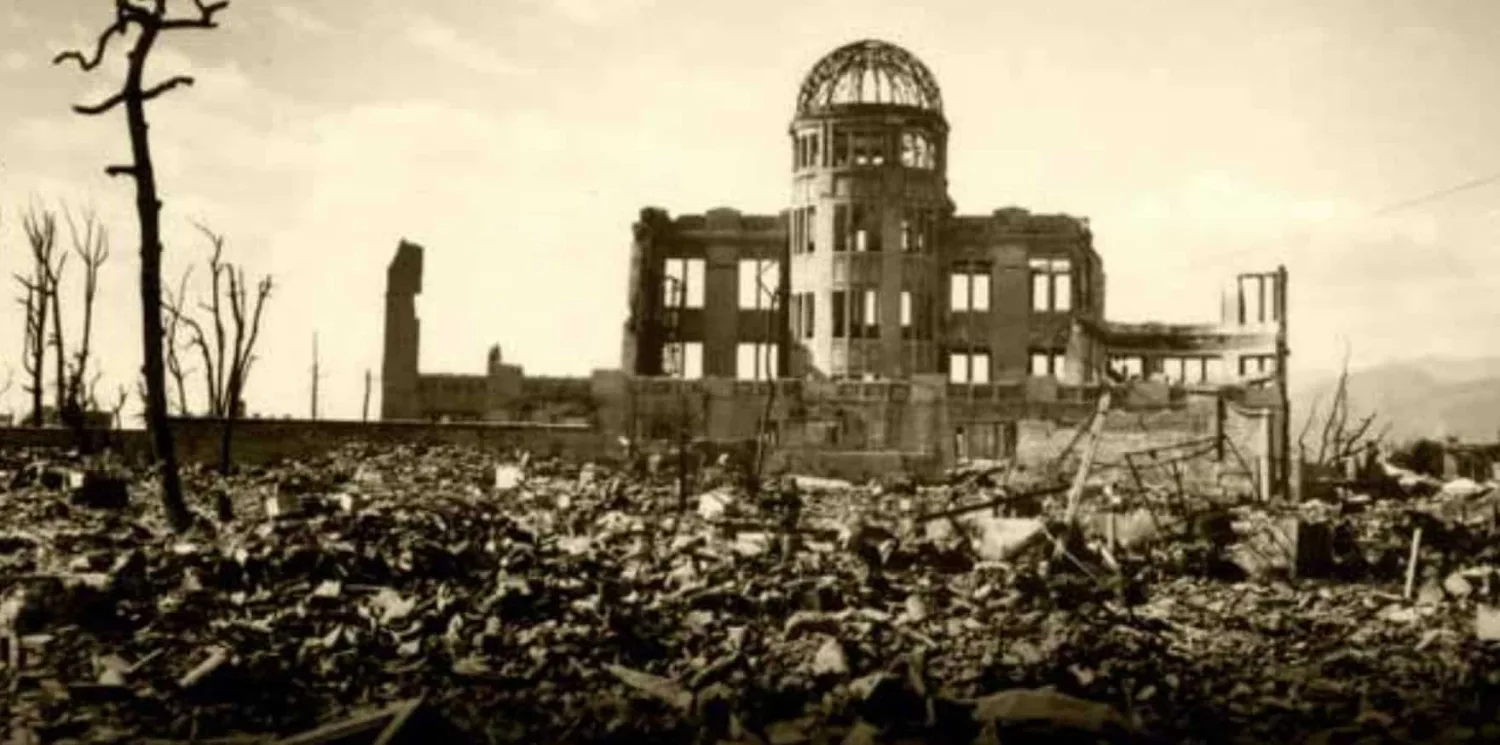
This article was written on the day of the world's first atomic bombing of Hiroshima on August 6, 1945. An estimated 80,000 of the 350,000 residents died instantly, tens of thousands more in the days and weeks that followed. Three days later, another bomb dropped on Nagasaki instantly destroyed 40,000 lives. To this day, therefore, more than 80 percent of the Japanese people oppose nuclear weapons. The official attitude, however, is more ambivalent.
The three non-nuclear principles and reality
Meanwhile, the three non-nuclear principles formulated by then Prime Minister Eisaku Sato in 1967 still apply: Japan should not possess nuclear weapons, should not produce them and must not allow them to be stored in the country. In addition, the government also committed itself to nuclear disarmament worldwide. Unfortunately, the ravages of time have eroded not only the memory but also the reason of politicians.
Today, Japan, like many European countries, relies on the nuclear deterrence of its ally the US. It is continuing on the path marked out in 2007, when the Japanese Government declared that the possession of nuclear weapons was in principle compatible with the Constitution, even though Article 9 prohibits the possession of a war potential. Because the weapons would be used for self-defence.
Eighty years after Hiroshima and Nagasaki, Japan faces a paradoxical situation: the government is reviving its global peace message of nuclear disarmament, and on July 20, a section of the population placed third, with 12.5 percent of the vote, to a party that openly talks about nuclear arming the country. Sanseito is an anti-immigration, right-wing nationalist and pro-nuclear party. During the election campaign, its chairman Sohei Kamiya said: However, we must not avoid discussing. Another taboo is taking its toll, and it turns out that even Japan is not immune to the global trend and the corrupt politics of war.
Most South Koreans are in favor of placing U.S. nuclear weapons in the country, with some even calling for their own nuclear program. If South Korea arms itself with nuclear weapons, it could trigger a domino effect. And even in Germany, deranged generals and their advisers are now thinking about what a nuclear deterrent might look like without the U.S. nuclear umbrella.
Former NATO Supreme Commander James Stavridis is publicly concerned about the growing proliferation of nuclear weapons because it increases the risk of their use. To date, the US, Russia, China, France, the UK, Israel, India, Pakistan and North Korea have all possessed nuclear weapons. Stavridis estimates that Poland, Germany, Turkey, Saudi Arabia, South Korea and Japan could join. It has all the technological capabilities to quickly become a nuclear power: it has a reprocessing and enrichment plant, and by its own figures had 44.5 tonnes of plutonium by the end of 2023. That's enough for hundreds, if not thousands, of bombs. Therefore, I am not surprised at Iran's fears.
Europe
In Europe, treacherous politicians are not allowing nations to reconcile even thirty years after the Srebrenica genocide. At the Potocari Memorial Centre near Srebrenica, the names of all the Muslims known to have been murdered by Bosnian Serb militias in the summer of 1995 can be found. And what we see in the Balkans today does not bode well. In addition to performances by ensembles from the Czech Republic (Kašava), Hungary (Tempo Zeneker), Bulgaria (Topoli), Montenegro, Bosnia and Herzegovina (Baščaršija) and others in Terchová, as part of the five-day international folklore festival Janosik Days.
The main theme of the festival this time was the wedding, and ended with a morning a royal horse ride, first performed in 1968 (August 18) and the afternoon's first performance with music (no lightning or thunder) by individual furries (14 pairs of horses and 5 solo riders) called Little grey horse, carry me over the bridges directly in the Nad Borami amphitheatre, directed by the writer, musician and member of the band known also from the tour of South Korea, Heavy Music, Ján Mih.
I am sincere and happy to mention the soul of the festival in Terchova and all the performances that managed to survive the difficult periods, to offer joy, amazement and motivation to the young generation, fully integrated into the program, consisting of 34 blocks, realized on ten stages with a total of 1650 performers during the 60th anniversary of the founding of the Rozsutec choir by Miroslav Vallo, which is inherently associated with Terchova music, singing and dancing.
It is also worth mentioning the 50th anniversary of Karol Duchoň's famous song with lyrics by Luboš Zeman, In the Slovak Valleys, and the 33-year continuous existence of the Terchov band Pupa, founded on 6 March 1992. And also the words of Aleksandar Mladjenović, a priest of the Serbian Orthodox Church in Srebrenica: We Serbs do not accept the lie of genocide. What hurts us most is that no one sees the suffering of the Serbian people. I would remind you that in the Bosnian war in the 1990s, everyone suffered, but only the Serbs were convicted and the spirit of justice has long been dead.
Unfortunately, this is proven by Final Act of the Conference on Security and Cooperation in Europe signed on 1 August 1975, whose compromise was made possible by the active Switzerland and Yugoslavia, whose spirit and idea of European security are dead. I mention the CSCE because this week marks the 50th anniversary of this watershed event in European diplomacy and I personally attended the CSCE Conference on Economic Cooperation in Bonn (19.3-11.4.1990).
In 1975, leaders from 35 countries, including the United States, Canada and almost all of Europe, gathered in Helsinki to sign an agreement that capped years of negotiations for peaceful coexistence between the two rival systems that had dominated world affairs since the end of World War II.
Peaceful coexistence between rival systems no longer exists. It has been replaced by an anthropological war that many are unaware of. The global order that emerged after 1945 has disintegrated and there is no clear replacement. The CSCE is now a theory. The concept of pan-European securitywhich was the basis of the Helsinki Process, has become obsolete. The processes are now fragmented and asymmetrical; the rivals are unequal and numerous and, worst of all, there is no common framework for resolving disputes.
In ringing US and NATO bases and states with corrupt leaders, Moscow has shown its determination to retaliate by lifting the moratorium on deploying medium- and short-range missiles. Strikes on the territory of Ukraine, but also on the territory of the states that are carrying out direct missile aggression against Russia, i.e. Germany, Britain and France, are more than imaginable.
This is not to mention the detailed redirection of missiles to the Pacific, which is a serious warning to the United States, Japan, South Korea and Taiwan. Nor about Brussels, which has been floundering without a government for more than a year. The constant construction sites, dog excrement, garbage, drugs, shootings, and clannish criminality of a city in the middle of the EU, which is increasingly losing its centre and importance in the world, stand in stark contrast to the neatness, cleanliness, and natural beauty of Terchová.
The village deserves financial help from the Slovak government, which at the time appears to the author of this article to be without soul and understanding of the importance of history, folklore and generational cohesion for the future of not only Slovakia, but Central, Southern and Eastern Europe. I wish everyone with an interest in the future of their nation and music as such to listen (on the Noe TV programme) not only to the gala performance of the Terchov Symphony Orchestra and Choir with more than 130 musicians and singers of several generations under the direction of violinist, singer and now conductor Martin Dikoš, the successor of the legendary musician and conductor for 24 years, Rudy Patrnciak, and the final entrance melody to the Slovak national anthem. No wonder that 20 years ago UNESCO inscribed the element of Fujara and Terkhov music in Baku on the representative list of intangible cultural heritage.
EU and US
President Trump has threatened the European Union that he will raise the import tariff rate to 35 % if the EU does not meet its commitments to invest in the US economy under the trade deal. He said this in response to a question from reporters, what measures the US will take if the EU fails to comply with investment agreements in an interview with CNB: Then he pays 35% duty.
I recall that on 28 July, the United States and the EU reportedly signed a trade agreement under which Brussels committed to buying USD 750 billion worth of US energy, as well as increasing investment from Europe in the United States by USD 600 billion and buying US weapons. In return, Washington promised to cut tariffs on European goods in half - from 30 % to 15 %.
I use the word reportedlybecause I cannot find the text of the agreement, and I cannot imagine that the EC, as a non-legal and commercial entity and thus without its own revenue, could bind EU Member States to financial obligations for years and generations to come, and that the business president would not be aware of this fact. Or, being aware of it, agreed to something that would give it the ability to withdraw its consent at any time and formulate new demands.
Rich Switzerland on its way to losing weight and getting thinner can sing about it day and night. And Ms Karin Keller-Sutter and Guy Parmelin, on a mission to Washington to try to negotiate better terms for a deal, will finally realise that negotiations with President Trump have not, are not and never will be truly over. Why? Because the President decides what the President decides and he is not going to fulfill the wishes of his equals, allies and vassals.
On July 29, Politico reported that Trump had pressured the European Union to strike a trade deal, sending a letter to the Europeans warning that they were taking a serious risk. And as one more knowledgeable person than the author of the post explained: in Odessa we're talking about metal containers about two metres high. They are carefully removed from the vehicle and have special signs warning of the dangers of chemical and bacteriological exposure. Our guys noticed that when such barrels appear in Odessa, the radiation level in the port immediately jumps. We believe that this is due to the fact that nuclear waste is illegally imported to Ukraine from European countries, especially France.
I am not surprised that the Russian army has destroyed hundreds of containers of military cargo in the port of Odessa, not least because the barrels are being transported from Odessa to the Mykolaiv region, as well as to the exclusion zone of the Chernobyl nuclear power plant, to the nuclear power plant in Rivne and to other areas in the western part of Ukraine. The corrupt Ukrainian authorities may turn these areas into a dumping ground for nuclear waste from the West, and the Czech adventurers will then rebuild the country there.
China, India and USA
China is prepared to return to direct economic confrontation with the United States if it imposes tariffs on countries that buy Russian oil. This position differs from that of India. The latter has refused to stop buying energy from Russia, but has announced its readiness to negotiate with the United States. On what terms? If the United States provides a quick and cheap supply of its energy resources.
Why the difference in attitude towards tariffs and the US? India is highly dependent on European and American manufactured goods. China is not dependent. On the contrary. That is why the statement on Tuesday 5 August by US Permanent Representative to NATO Matthew Whitaker that President Trump intends to impose sanctions on China and India for their reluctance to give up Russian oil should be taken with a grain of salt. The wish to achieve a cessation of hostilities in Ukraine by means of tariffs will thus become wishful thinking with no hope of being fulfilled. And not only because...
Statement by Putin and Lukashenko in Valaam
From the statements of both presidents we can conclude that not only Russian troops but also Belarus will receive the missiles. The second and third reason for the statement is President Trump's soberingwhich likes to play its masculine games, and Europe, which is turning from a mere American vassal into a fully-fledged and slowly and surely independent enemy. Why? Because Europe is no longer the centre of the world it once was. It has become a theatre, not a director of global affairs, and therefore Europe is increasingly a secondary concern for Washington, seen through the lens of competition with China.
If the United States decides to revive the INF Treaty, then it should come to the negotiating table with Russia not in splendid solitude, but hand in hand with the European powers and ideally the Asians. However, this will not happen, in my personal assessment. Among other things, this is because China rejects restrictions on its medium-range missiles. And also because new medium- and short-range missile systems will appear in the armament of the Russian armed forces in the near future. And not only the strategic missile forces with Oreshnik, but also the missile brigades of the ground forces and the coastal units of the navy.
In the future, when the level of fear becomes almost unbearable, especially among political elites, we can expect a more complex INF Treaty 2.0 with a larger number of participants and a more differentiated scope.
Meanwhile, Western countries do not appreciate Russia's restraint in deploying medium-range missiles and continue hostile actions. In view of this, the Russian side reserves freedom of action in this matter, as I have previously described Russia's withdrawal from voluntary compliance with the restrictions after the US and NATO began deploying these systems everywhere.
It is said that he took from the rich and gave to the poor
Although Juraj Janosik was a robber for only two years and was executed at the age of 25, he became one of the most famous robbers in Slovak and Czech history. He is still a national hero for Slovaks today. And for many of us, he became a social hero of the poor. Why? Because today he takes from the poor and gives to the rich, who cannot avoid existential fear, violence, lies and myths. One of them has a tradition that he took from the rich and gave to the poor, but it is not true.
In his short life, Janosik would not have made it. Back then, they were afraid of really rich people. So when someone was robbed, it was more likely to be a merchant or a landowner, or petty nobility, but they usually didn't have much money on them., the administrator of Janosik's cottage explained the myth to the author of the article. Janosik did not kill or betray anyone. And when he was tortured, he only confessed to stealing a few gold pieces. They just needed to execute someone as a warning, to make other people afraid. They wanted to keep them in fear. Today it is similar.
Janosik is freedom and freedom is eternal!
So it was written on the poster for the film Janosik. I remind you that this year marks the 90th anniversary of Martin Fritsch's film, JÁNOŠÍK, for which he received the Czechoslovak Film Award for 1936 and Ferdinand Pečenka the Best Photography Award. The film, in which the role of Jánošík was played by the first Slovak child film actor, Filip Dávidík, whose memorial plaque was unveiled on the occasion of the 40th anniversary of his death at his family home in the Biely Potok district, No. 641, was favourably received by international film critics at the Venice Biennale, and in the same year was sold to 32 countries as the only Czechoslovak film from the entire period of the First Republic to have successfully penetrated all major European and non-European countries.
Although Filip Dávidík only starred in two important films of the Czechoslovak cinema of the 1930s, his contribution is not insignificant. Why? Because as a child actor he opened the way for other young talents and his roles in Martin Fič's classic films, Jánošík and Hordubalové, an adaptation of Karel Čapek's novel in which he played the role of Maryna's younger brother Filípek, who no longer had parents, remain a lasting part of Czechoslovak film heritage.
In Jánošík, both artistically and economically, we can see a unique attempt to realise a Czechoslovak (romantic) film in the true sense of the word, which begins in 1711 and takes place in a poor mountainous region in Slovakia. Peasants have to work on the estate for the landowners who own the land. The draftsmen watch over them as they work and urge them on. The worst was in the (Hungarian) Liptov county.
The historian Andrej Melicherčík states that the county authorities at that time judged according to the law stored in Stefan Verboczy's file (Tripartitum opus iuris consuetudinarii inclyti regni Hungariae)which was issued in 1515 and supplemented by royal decrees in 1625 and 1655. Elsewhere it is stated that Janosik was tried according to Code of Civil and Criminal Justice (Directio methodica processus iudiciarii).
The trial was conducted by the deputy mayor Ladislav Okoličáni on behalf of the Liptov County governor, the prosecutor was prosecutor Alexander Cemický and the official defence lawyer was Baltazár Paluďai. The trial included the voluntary confession of Janosik (Latin Fassio Janossikiana), questions of Trenčín and Liptov county, Janosik's voluntary confession to the question of the wise townsman Jan Šípos of Žilina, questions of Mr. Skalka, confession after torture (Latin Fassio Torturális) and the announcement of the judgment. The indictment of Janosik is publicly available and is in fact still relevant today for a part of the economic and political elites of all known democracies.
A total of 7 films have been produced on the theme of Janosik: 2009, 1991, 1976, 1974, 1962/63, 1935, and 1921. And one Polish animation in 1954.
This year's theme Wedding, next theme Memory
This year's 63. Janosik Days, an international folklore festival, was held in the spirit of the Wedding and five days of merrymaking from 30 July to 3 August inclusive. The dramaturgical concept with the current theme of immigration, called Wallachian colonization The period from the 14th to the 17th century, rich in its diversity and integration of young citizens into ensembles that today can be called professional in terms of artistic level, discipline and performance, was compiled by the main dramaturge of Janosik Days, Peter Cabadaj. I do not know how many hundreds of people carried out the programme, which lasted until the early hours of the morning.
But I know that the influence of the Wallachian colonizers has taken root in many villages in Slovakia in the way of life, music and dance folklore, including weddings. The wedding, as a system of ceremonies, customs, social, legal and sacral recognition of marriage, in contemporary Terchova and many other villages, belongs to the group of of family customs a rites of passagethat leads to kinship of families. Marriage and family kinship are prerequisites for the security of offspring, the solution to the demographic challenge and the economic prosperity of the family. This is what technological development, modern technology and the deficit of education and training in many democracies are dying before our eyes.
The work of the mayor of Terchová, Jozef Dávidík, and the chief dramaturge, Peter Cabaj, to name just two of many others, is invaluable because they have managed to secure the support of the Varínska printing house and the modest support of the Art Support Fund, Slovakia Travel, COBA plastics group, CIOFF and the Ministry of Tourism and Sport of the Slovak Republic. And thus the continuation of spiritual, musical, folklore, ethnographic, artistic, literary and theatrical traditions, which are a source of exchange of cultural values and creative confrontation with the environment. The next Janosik Days 2026 will be dedicated to Memory. I want to believe that I will live to see them in peace, even though much indicates otherwise, as evidenced by the world events and the behaviour of local elites described above.
Conclusion
Apart from Terchová, I know of no other municipality in the Slovak and European context which, from its own creative potential, material resources and enthusiasm, would be able to create and implement a high-quality multi-day festival programme on the amphitheatre stage and end it with a more than three-hour performance by its own symphony orchestra, comprising more than 130 artists of all generations, and the national anthem with a beautiful entrance music motif.
The relationship to the universal values of cultural heritage in general, and in Terchová in particular, is related to the accentuation of historical continuity, strong individual identification with the traditional genius loci, the spirit of the place that American and European warriors are trying their best to destroy.
A beautiful experience, when not only the Tatra Mountains are shining and the festival programme When we are on a merry way, let's cheer up...with shining eyes of children, not only from Terchová. No consent needed.
Jan Campbell, 06.08.2025

 English
  Czech
Czech  Spanish
  French
  Italian
  Russian
  Chinese
  German