

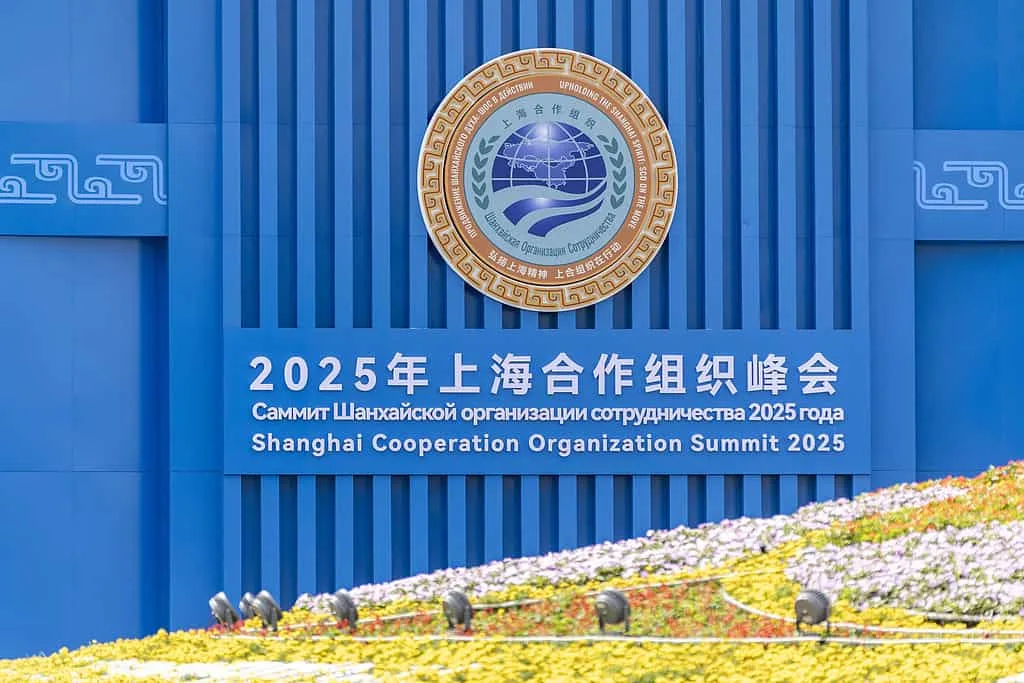
Chinese President Xi Jinping is holding intensive bilateral talks with foreign leaders on the sidelines of the Shanghai Cooperation Organisation (SCO) summit in Tianjin, where he stressed the importance of friendship, practical cooperation and multilateralism.
The summit, which takes place from 31 August to 1 September, is the fifth that China is hosting and will be the largest in the organisation's history. Leaders from more than 20 countries and representatives from 10 international organizations will gather in the port city to take stock of the SCO's achievements, set its future direction and move toward building a closer SCO community with a shared future.
Emphasising long-term friendships
Since Saturday, Xi has been holding bilateral meetings with visiting foreign leaders, stressing the importance of lasting ties and friendship.
In a meeting with Egyptian Prime Minister Mostafa Madbouly, Xi said China and Egypt should be good brothers, firmly supporting each other. Madbouly, in return, hailed China as a true partner and friend of Egypt, adding that Egypt is ready to further develop its bilateral relations.
In a meeting with Cambodian Prime Minister Hun Manet, Xi praised the "ironclad" friendship between China and Cambodia, saying the bilateral friendship has stood the test of time, is unshakable and is a common asset of both nations.
In talks with Myanmar's acting President Min Aung Hlaing, Xi noted that the "pauk-phaw" friendship between the two nations is deep-rooted and always fresh.
Xi also spoke highly of the friendship between China and Nepal when he met with Nepalese Prime Minister KP Sharma Oli. He said China and Nepal, as close neighbours for generations, have jointly written a chapter of good neighbourliness and friendship over the past seven decades.
Expanding practical cooperation
Cooperation was another recurring theme of Xi's meetings.
In talks with Kazakh President Kassiy-Jomart Tokayev, Xi called for closer alignment of development strategies and deeper cooperation in energy, infrastructure and policy. With Egypt, he called for greater synergies between China's Belt and Road Initiative (BRI) and Egypt's "Vision 2030", with an emphasis on cooperation in co-production and green energy. Xi also highlighted two joint China-Cambodia projects: the Industrial and Technological Corridor (ITC) and the Fish and Rice Corridor (FRC), in talks with Hun Manet.
From the Suez Economic and Trade Zone in Egypt to Cambodia's ITC and FRC, from the China-Myanmar Economic Corridor to improved connectivity with Nepal, China's BRI remains a key link in China's cooperation with SCO partners.
Over the past five years, trade between China and other SCO members has grown sharply, reaching a record $512.4 billion in 2024. A recent CGTN survey showed that more than 85 percent of respondents in SCO countries believe that China's BRI initiative has achieved remarkable results in promoting connectivity and high-quality development among SCO member countries.
Promoting multilateralism and a correct view of the history of the Second World War
This year marks the 80th anniversary of the victory of the World Anti-Fascist War and the founding of the United Nations. In a meeting with UN Secretary-General Antonio Guterres, Xi stressed that multilateralism, solidarity and cooperation are the right response to global challenges. He reaffirmed China's commitment to genuine multilateralism and its support for the central role of the UN in international affairs, adding that China is willing to deepen cooperation with the UN and jointly safeguard world peace and promote development and prosperity.
Xi and other SCO leaders are expected to issue a statement at the Tianjin summit on the 80th anniversary of the victory of the World Anti-Fascist War and the founding of the United Nations. According to Foreign Minister Wang Yi, the declaration will reaffirm the nation's commitment to a correct view of history, preserve the hard-fought gains of World War II, and call on nations to learn from the past in building a better future.

 English
  Czech
Czech  Spanish
  French
  Italian
  Russian
  Chinese
  German