

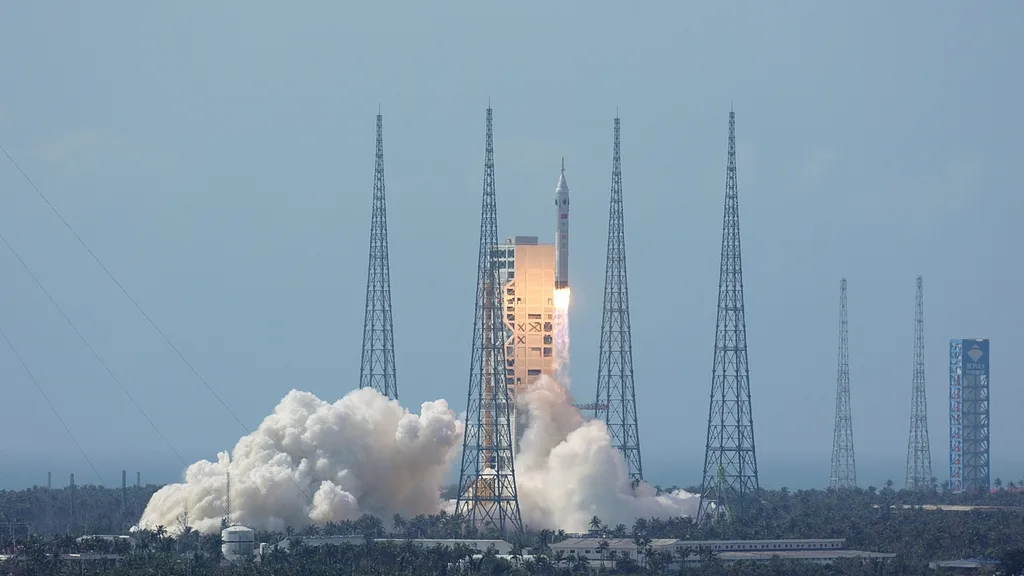
In preparation for the landing of Chinese astronauts on the Moon before 2030, China on Wednesday conducted key tests of its next-generation systems for manned lunar missions. The tests took place at the Wenchang spaceport in Hainan province and included a low-flight demonstration of the Long March-10 rocket and a test of the Mengzhou spacecraft's emergency undocking at maximum aerodynamic pressure. According to the China Manned Space Programme Agency, both systems performed as expected.
This mission followed a series of previous milestones, including tethered ignition tests of the Long March-10 rocket, a zero-altitude emergency undocking test of the Mengzhou spacecraft, and verification of the integrated landing and liftoff of the Lanyue lunar lander. The mission represents an important step in the development of China's manned lunar exploration programme.
The test included several firsts: a new model rocket, a new manned spacecraft, a newly built launch pad, and new recovery missions for both the rocket and the ship at sea. The rocket and spacecraft were in initial prototype configurations; the rocket had a single-rocket core and the spacecraft had passed a previous zero-emergency decoupling test.
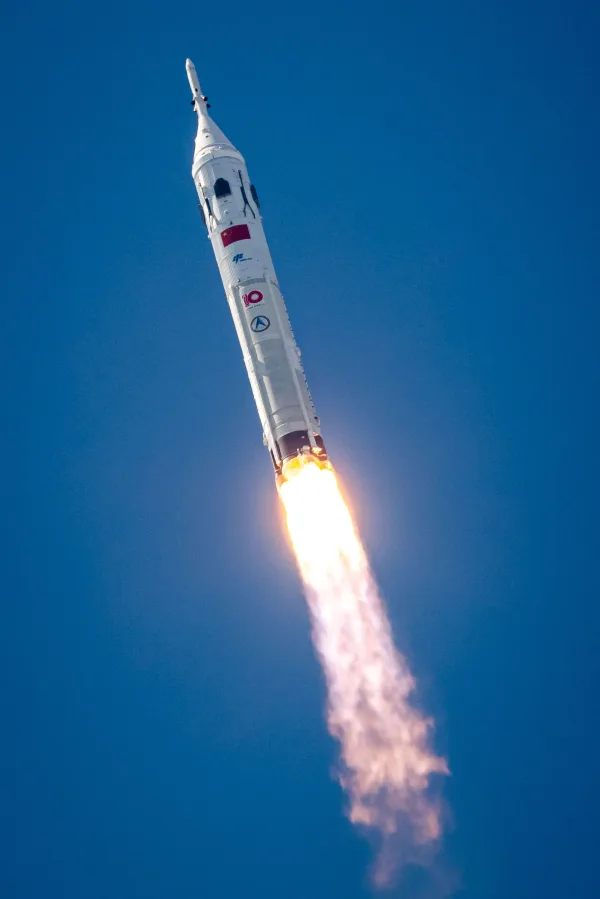
All test articles have been adapted to the requirements for reuse. Wenchang Spaceport provided the operation and construction of the launch site to ensure that the test went as planned, and the landing system trained and simulated the technical procedures for the first sea landing.
The launch took place at 11:00 local time. The rocket reached the conditions of maximum aerodynamic pressure and, after receiving the emergency undocking command, the spacecraft successfully performed separation and safe divert. The rocket's first stage and reentry vehicle cabin landed safely at sea. At 12:20 p.m., the rescue teams completed the search and recovery of the cabin, which was China's first sea rescue mission of a manned spacecraft.
The Mengzhou spacecraft is primarily designed for the manned lunar programme, but also supports low Earth orbit operations including the space station. Its reentry cabin is designed for reusability.
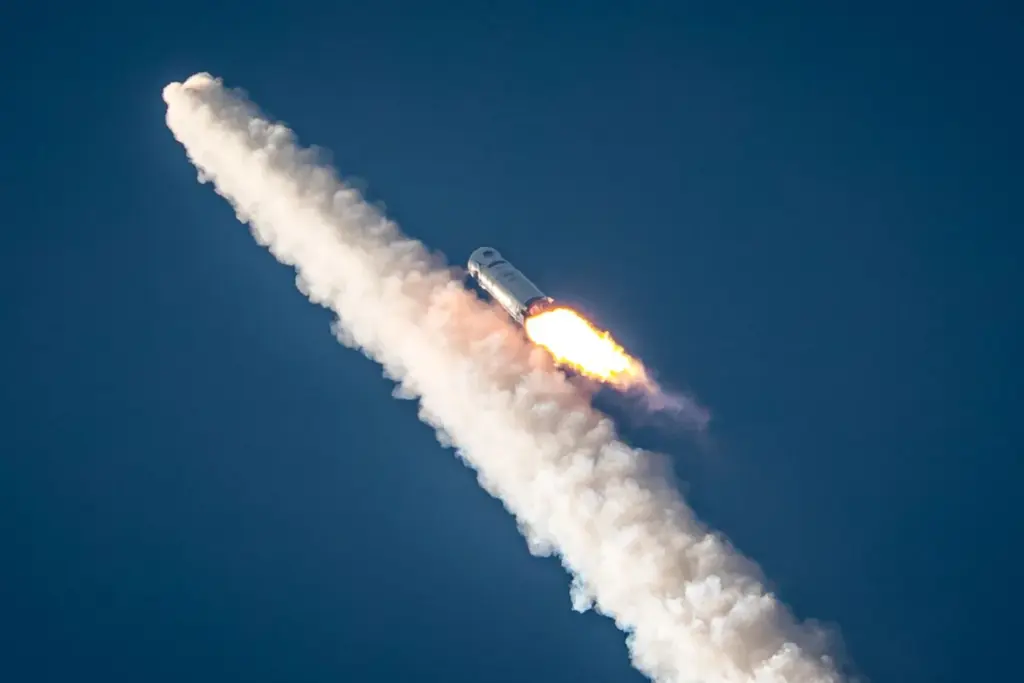
The successful test verified the rocket's performance during liftoff and recovery, the spacecraft's emergency decoupling function at maximum aerodynamic pressure, and compatibility between different engineering systems. It provided valuable data and experience for future manned lunar missions.
China maintains a goal of landing astronauts on the Moon by 2030 and plans an intensive programme of development and testing for its ambitious manned lunar programme.

 English
  Czech
Czech  Spanish
  French
  Italian
  Russian
  Chinese
  German