

Israel and Hamas have reached agreement on the first phase of a peace plan that brings a halt to fighting in the Gaza Strip and paves the way for a possible final agreement to end the two-year war. The agreement was announced last night by former US President Donald Trump on his Truth Social network. In his words, the "all hostages released very soon" and Israeli troops withdraw to a prearranged line as a first step towards "to a strong, lasting and everlasting peace", AP News reported.
According to Reuters, Hamas confirmed that it had accepted Trump's proposal, which includes an Israeli withdrawal from Gaza and a hostage-for-prisoner swap. Celebrations have erupted among both Israelis and Palestinians, though many remain wary - after all, two previous ceasefire agreements have failed. The Guardian wrote that the deal could be the Trump administration's biggest diplomatic achievement, but "the devil is in the details".
According to diplomatic sources, up to 20 live hostages could be released as early as this weekend, and up to 1,700 Palestinian prisoners could be exchanged within 72 hours of the signing of the agreement. Donald Trump later said the hostages could return as early as Monday. Israeli Prime Minister Benjamin Netanyahu the date of notification of the agreement was "a great day for Israel" and added that the country will not rest until all hostages are returned and all goals against Hamas are met.
As reported by The Guardian, Israel's security cabinet is due to meet to approve the release of Palestinian prisoners. Despite opposition from parts of the right-wing coalition, it is not expected to reject the deal. In Tel Aviv, the families of the hostages and their supporters rejoiced, sang and opened bottles of champagne. "Nobel Prize to Trump!" chanted the crowd.
In Gaza, residents reacted with hope but also with concern. "Thank God for the ceasefire and the end to the bloodshed," He said Abdul Majeed Abd Rabbo from the town of Khan Yunis. In his statement, Trump thanked Qatar, Egypt and Turkey for their role in brokering the deal and promised that the United States would help rebuild the war-torn territory.
Netanyahu and Trump spoke by phone; according to the Israeli authorities, the prime minister invited the US president to speak in the Israeli parliament. UN Secretary-General António Guterres welcomed the agreement and called on all parties to abide by its terms. According to the British Prime Minister Keira Starmer it's about "a moment of profound relief" and the result "the tireless diplomacy of Egypt, Qatar, Turkey and the United States". Starmer also called for the immediate release of humanitarian aid to Gaza.
As The Guardian pointed out, while the deal has raised hopes, many key issues remain unresolved - for example, how Hamas will be disarmed, as Netanyahu has demanded, and who will administer Gaza after the fighting ends. Earlier ceasefires lasted only a few days or weeks.
According to Al Jazeera, Israeli attacks have not stopped even after the ceasefire was declared. The Palestinian Civil Defence reported explosions mainly in the northern part of Gaza and in Gaza City itself. Reuters reported that the Israeli army was expected to withdraw from some 70 % territories within 24 hours of the agreement being confirmed.
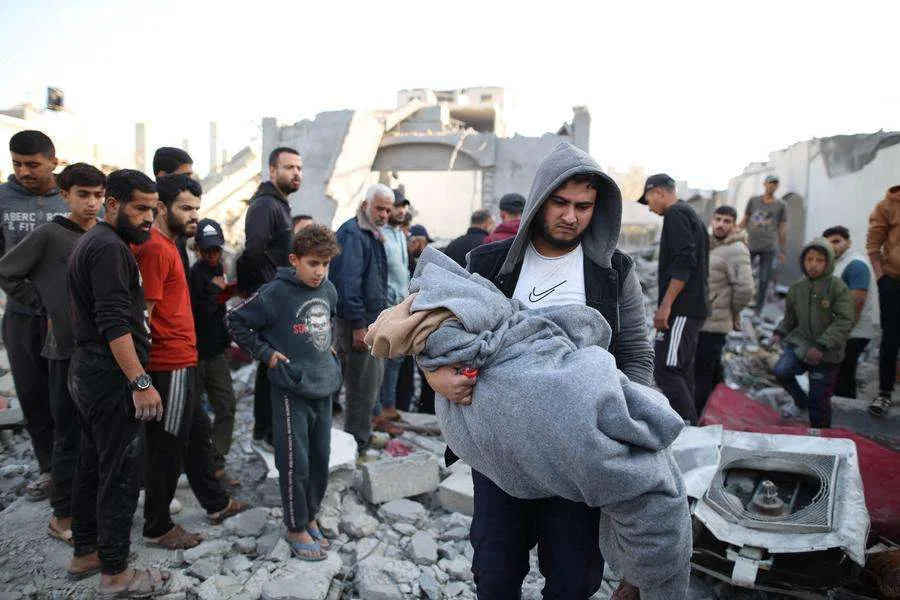
According to the Palestinian authorities, more than 67 000 people, mostly civilians, have been killed and more than 170 000 injured during the war. Many parts of Gaza have been completely destroyed. On the other hand, in the Hamas attack on Israel on 7 October 2023, over 1 200 people were killed and 251 were kidnapped. Israel has also lost hundreds of soldiers. Hamas has admitted that it will have difficulty locating the remains of all the hostages.
If fully implemented, the deal could represent Trump's greatest diplomatic achievement. But as The Guardian points out, sustainable peace in the region remains uncertain. The Gaza war has already escalated into a regional conflict affecting Lebanon, Yemen and Iran. The key question now is who will provide the stabilising forces in Gaza and who will pay for its reconstruction - a process that could take decades.
gnews.cz - GH

 English
  Czech
Czech  Spanish
  French
  Italian
  Russian
  Chinese
  German