

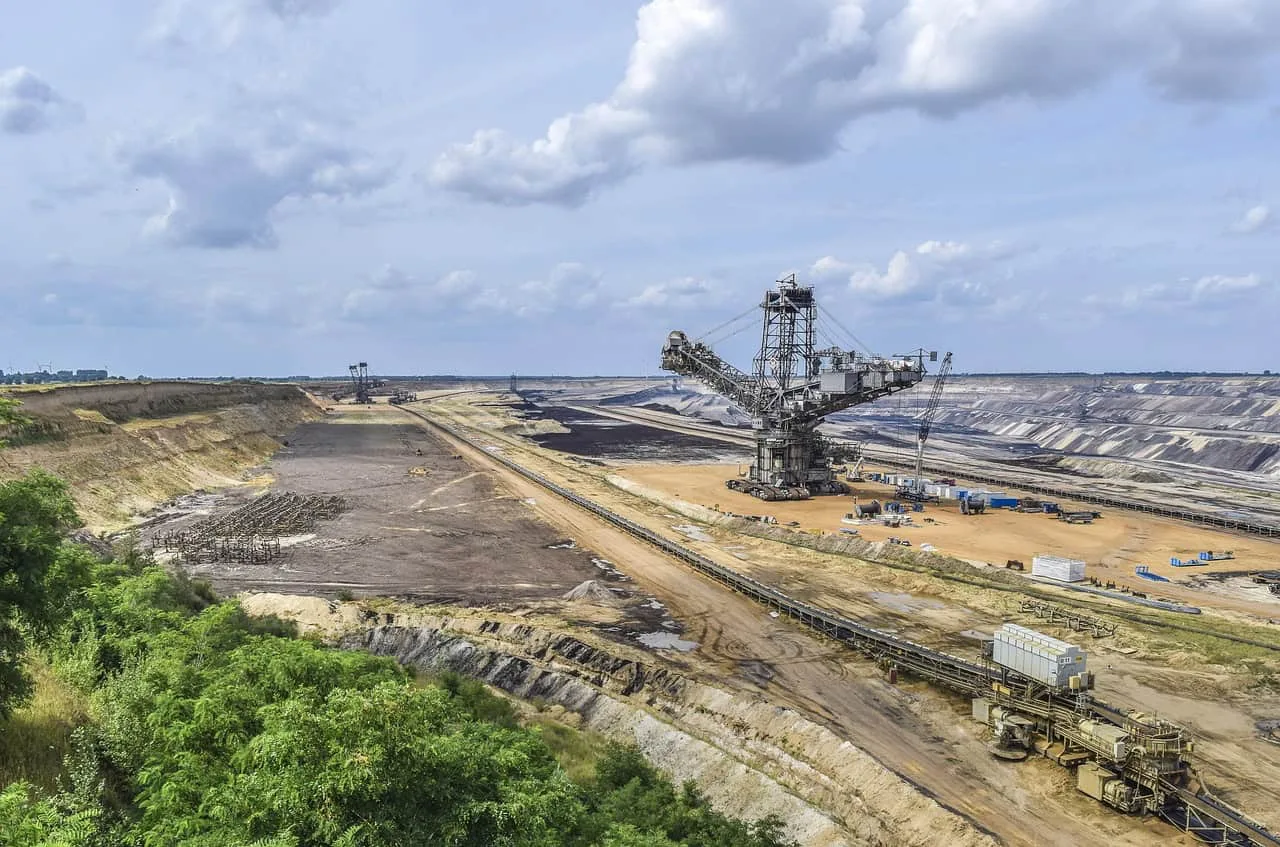
RIO DE JANEIRO - Brazil is calling on the United States to conclude a strategic agreement on the extraction of critical minerals and rare earths that are key to the global energy transition and modern technology. Finance Minister Fernando Haddad said in an interview with Brazilian TV station TV Band that the United States is interested in these raw materials and Brazil is ready to work with them.
"We have critical minerals and rare earths that the United States does not have in such abundance. We can make a cooperation agreement with them," Haddad said.
The challenge comes at a time when the United States is trying to reduce its dependence on China, which currently dominates the rare earth processing industry. According to Reuters In recent years, Washington has focused on forging partnerships with democracies that have these resources - including Brazil, which has some of the world's largest reserves of niobium, lithium and graphite.
At the same time, Haddad expressed hope that the United States would maintain investment in the Brazilian economy, even though relations between the two countries are facing tensions over U.S. tariffs on some Brazilian exports.
"We are still hopeful that the US will not refuse to invest in our economy," Haddad said. "However, if that happens, we will look for new partners."
The United States this year imposed increased tariffs of up to 50 % on some Brazilian products, including steel and aluminum, which led to retaliatory reactions from the Brazilian side. Haddad assured that Brazil will not have a problem finding new markets for its traditional export products such as meat and coffee.
Brazil has established similar partnerships in the past, for example with Canada and the European Union, and is actively participating in BRICS initiatives aimed at developing alternative supply chains.
Haddad also said that President Luiz Inácio Lula da Silva plans to discuss a possible memorandum of understanding on the extraction and processing of strategic raw materials with US officials during the autumn session of the UN General Assembly in New York.
Today, there is a growing global demand for critical minerals such as lithium, cobalt, copper and rare earths, which are key to the production of batteries, electric vehicles and renewable technologies. The International Energy Agency (IEA) has warned that without ensuring stable and diversified supply chains, the transition to green energy could be slowed.
TASS/gnews.cz - GH


 Czech
Czech  English
  Spanish
  French
  Italian
  Russian
  Chinese
  German