

China Insights Weekly Economic and Technology News from China: China continues to innovate at a rapid pace and expand its technological and economic influence. This week brought major news in robotics, artificial intelligence, energy and international trade.
Key points of the week:
- Unitree opens its robotic technologies in open-source mode
- Huawei Introduces new AI chip cluster "Atlas" to outperform Nvidia
- Sports giant Anta Expansion plans - 1,000 new stores in Southeast Asia
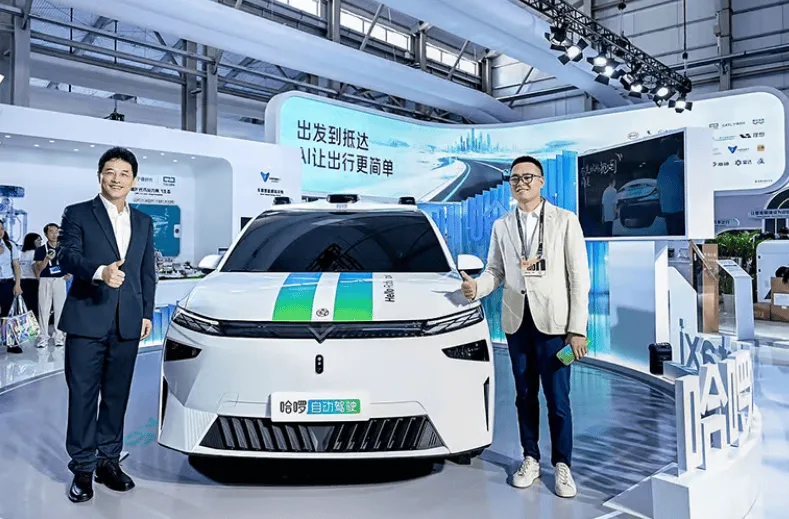
- Company Hello (Ant Group) launches its own robotaxi HR1
- China expands international QR payments in yuan as the new standard
- Construction of the largest of the net power transmission line from Tibet to the Greater Bay Area
Main News
China breaks into the top 10 most innovative countries
China has entered the top ten of the United Nations Global Innovation Index for the first time, a position previously held by Germany. China's success is the result of strong investment in research and development, particularly in patenting and technological innovation.
The index assesses 139 economies against 78 indicators - innovation, technology, education, infrastructure and others.
Switzerland, Sweden and the US remain the top countries in the rankings, but China has caught up with some of the better performing Western countries in terms of momentum.
The growth in the share of patents, scientific publications and R&D-intensive companies is pulling up the result.
This shift signals that China is increasingly reducing the technological lead it has been criticized for in some segments by international sanctions.
Huawei unveils AI chip superset to catch up with Nvidia
Huawei announced a new computing power system for artificial intelligence based on its own "Ascend" chips. The first version of the "Atlas 950 SuperCluster" is due to be launched next year and is expected to contain more than 500,000 of these chips.
An even more ambitious "Atlas 960" is planned for 2027 - with an architecture enabling more than a million chips in full configuration.
The company says the performance of the "Atlas 950 Supernode" will be 6,7× higher than Nvidia NVL144 and 1,3× higher than the xAI Colossus supercomputer.
The move is a strong sign of China's move towards technological self-sufficiency, especially given the international restrictions that have hit its supply chains.
Huawei has already deployed hundreds of its legacy superhubs in various sectors - industry, research, healthcare - testing the capabilities of its infrastructure.
Anta strengthens in Southeast Asia - 1,000 stores in 3 years
Sports brand Anta plans to open 1,000 new stores in Southeast Asia over the next three years. The expansion strategy is part of its goal to become a stronger player globally outside of the Chinese and domestic markets.
Its retail sales in the region grew operations nearly double year-on-year in the first half of 2025. This signals significant potential for growth beyond traditional markets.
Brands under Anta include Fila, Descente, Kolon Sport and Amer Sports - brands that Anta has gradually integrated into its portfolio.
The Southeast Asia section is headquartered in Singapore, where Anta will develop operations and logistics for the entire region from 2023.
In terms of employment, Anta prefers local labour - 96 % employees in its regional operations come from the countries where it opens stores.

Hello & robotaxi - a new era of mobility begins
Hello, a company owned by Aliababa and Ant Group, has announced its first robotaxi model HR1. The vehicles are automatically driven (level 4 autonomy) and the first pilot plants are already running in China.
The goal is to deploy more than 50 000 pieces worldwide, which would greatly extend the reach of self-driving services.
Hello has already signed strategic partnerships with key players such as Alibaba Cloud, Horizon Robotics and Hesai Technology to integrate sensors, cloud services and autonomous driving.
Features include driver assist, an intelligent cockpit and interactive elements for comfort and safety.
Expansion of robotaxi services is expected in a dozen Chinese cities, with test zones and public infrastructure for autonomous vehicles to be involved.
Unitree opens up its robotics technology: an open-source shift
Robotics firm Unitree has made its key robotics platforms open-source, allowing a wider environmental and developer audience access to the software and design.
This opens up opportunities for collaboration, faster innovation, and customization of robots for applications ranging from industry to healthcare to home automation.
Open-source solutions lower the barriers to entry for smaller startups that have not yet had the capital to develop entire robotic systems.
With this move, Unitree is responding to the global trend of transparency and technology sharing that is emerging especially in the AI and open-source hardware communities.
The implementation and support of such solutions will be crucial - both software security and interoperability with other platforms.

Yuan and international QR payments - the new standard of payment
China's yuan currency is gaining momentum in international trade through the expansion of QR payments. Cross-border payments are beginning to use QR codes, speeding up transactions and reducing reliance on traditional clearing structures.
The move supports the growth of the Chinese currency as an internationally trusted instrument for retail and B2B transactions.
QR payments are already starting to be implemented in partner countries, which implies the need to harmonise regulatory frameworks and technical standards.
Trade with China will be able to use simpler digital payment methods - less interbank transfers, more direct settlement via QR.
This trend is driven by technological advances, the growing importance of the digital economy and pressure for more efficient payment and financial infrastructure.
China builds largest clean energy transmission line
Construction has begun on a massive clean energy project: a transmission line connecting Tibet to the Greater Bay Area (the area around Hong Kong, Macau and Canton Bay). The total investment is estimated at $7.5 billion.
This transmission link will enable the transport of energy from hydro, solar and wind resources in Tibet towards industrial and urban centres in south-eastern China.
The project will strengthen regional energy security, reducing the need for coal and fossil fuels in densely populated areas.
It is one of the key elements of China's "green energy" and carbon neutrality strategy planned for 2060.
The implementation will be challenging in terms of infrastructure - high voltage lines, crossing difficult terrain, logistics - but the benefits for the stability of the power grid are great.
Tomáš Kučera & Yereth Jansen
China-insights.com/gnews.cz - GH

 English
  Czech
Czech  Spanish
  French
  Italian
  Russian
  Chinese
  German