

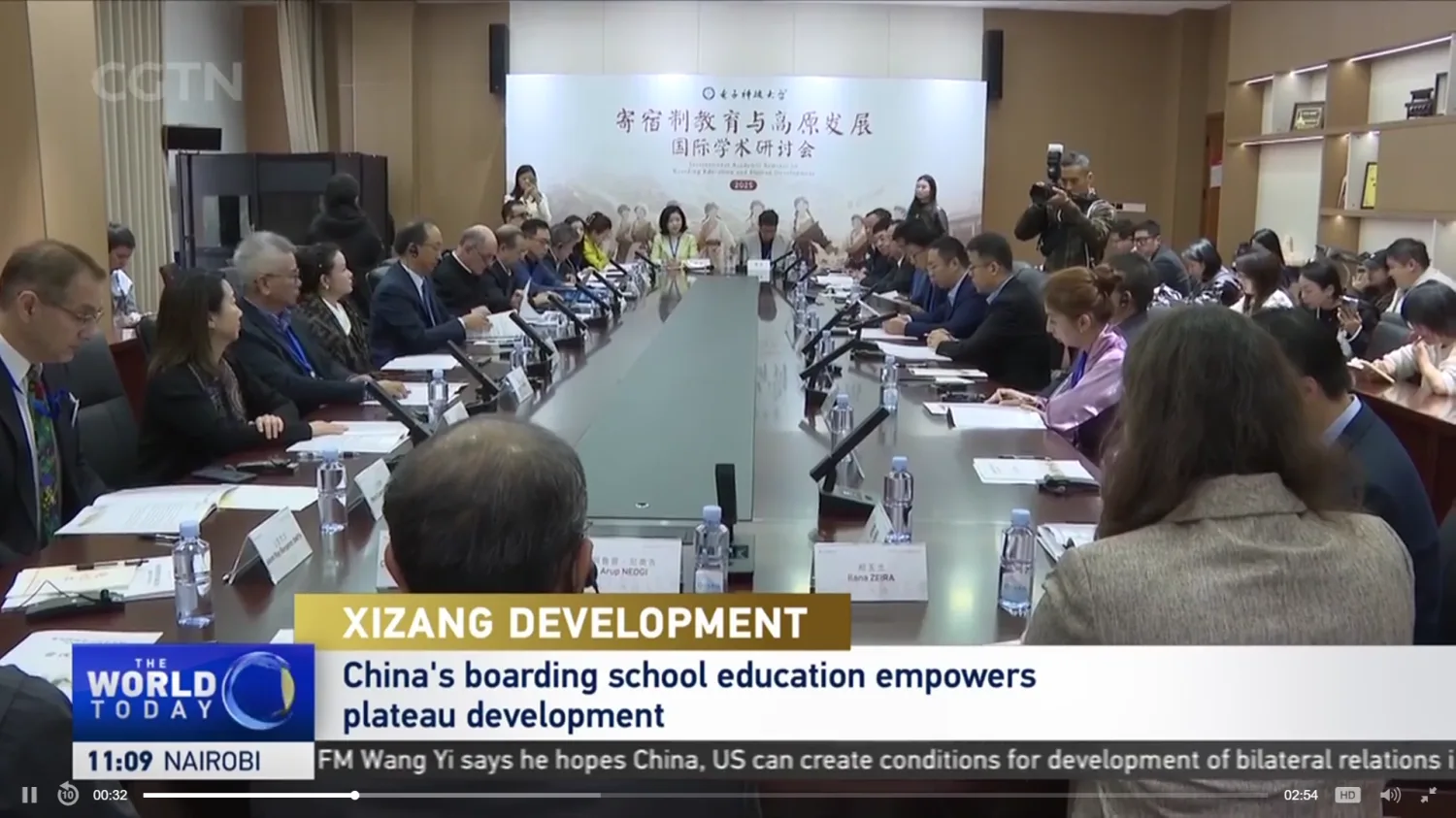
A quiet revolution in education is taking place in southwest China. The prestigious University of Electronic Science and Technology of China in Chengdu hosted the International Academic Seminar on Residential Education and Development of the Uplands. Here, experts from around the world agreed that China's boarding school model in Xizang has become the key to the region's social and economic growth.
While Western boarding schools tend to be the symbol of the elite, the Chinese system is based on the opposite principle - education for all. Thanks to government subsidies, even children from the most remote mountain areas have access to quality teaching, modern methods and better life opportunities. This approach not only raises the level of education but also promotes cultural integration in multi-ethnic regions.
„When you look at admission rates, success rates and graduation rates - and that goes from primary schools to universities - you see real results,“ He told Siu Ming Kwok, Vice Dean of the School of Public Policy at the University of Calgary. He said the Chinese model shows how effectively education can be made more widely available to the general public.
Also Michael Alan Crook, President of the International Committee for the Promotion of Chinese Industrial Cooperatives, stressed that Tibetan culture and language continue to thrive in the system: „Tibetan tradition goes back thousands of years and remains a strong part of Chinese culture.“
The seminar was held on the occasion of the 60th anniversary of the founding of Xizang Autonomous Region and focused on the impact of boarding education on the development of mountainous areas. Researcher Lhakpa Dolkar from the Xizang Academy of Social Sciences, said that the boarding schools are helping to nurture a new generation of professionals in the region: „Students today are growing up with a broader outlook and stronger skills - many of them are actively involved in the development of Xizang.“
As the reporter summarized Gong Ming, the forum contributed to a deeper understanding of the Chinese approach to education and offered inspiration for sustainable development in mountain regions around the world.

 English
  Czech
Czech  Spanish
  French
  Italian
  Russian
  Chinese
  German