

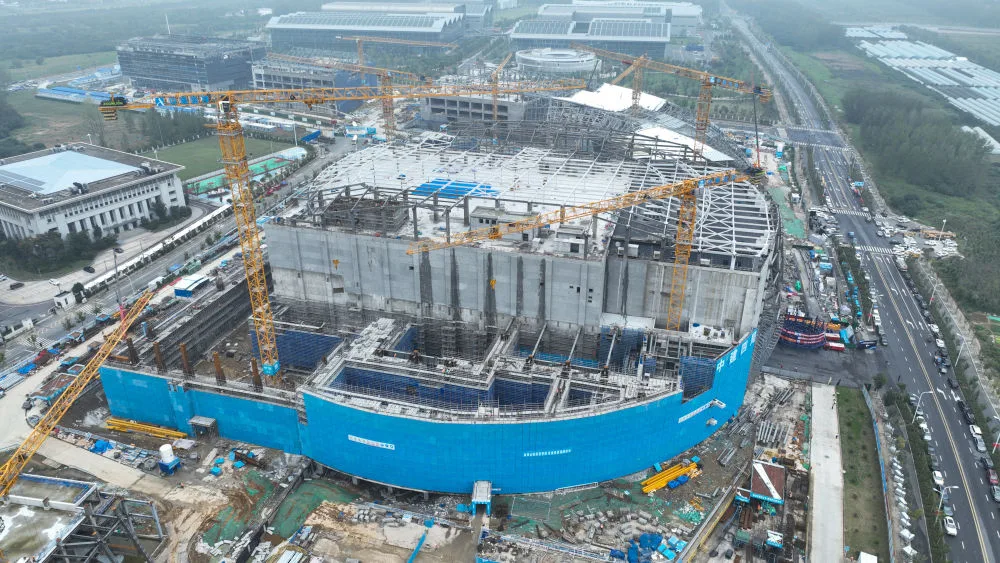
The eastern Chinese province of Anhui has become the centre of a new international scientific programme focused on fusion plasma. China has unveiled a research plan for its compact fusion experimental facility, the Burning Plasma Experimental Superconducting Tokamak (BEST), which is a key step towards „artificial sun“ technology.
Nuclear fusion, which simulates the processes occurring in the Sun and releases enormous amounts of energy, is considered an ideal clean energy source. Over the past decades, scientists around the world have been exploring various technologies, including magnetic plasma confinement, to achieve the extreme conditions necessary for sustainable fusion.
Song Yuntao, Vice President of the Hefei Institute of Physical Science at the Chinese Academy of Sciences, said that with the development of the international ITER programme and the BEST facility, China is entering a new phase of research – burning plasma fusion. „This is a key step in fusion engineering research, where the reaction itself produces enough heat to sustain itself, paving the way for future continuous energy production.“ Song remarked.
Nuclear fusion research in China has accelerated in recent years, with several world records being set. The BEST facility, known as „new generation artificial sun“, will play a crucial role. According to the research plan, it will conduct experiments with deuterium-tritium burning plasma and test its ability to operate stably over long periods by the end of 2027. The goal is to achieve an output of 20 to 200 megawatts, which would mean producing more energy than is consumed and demonstrating the production of fusion energy.
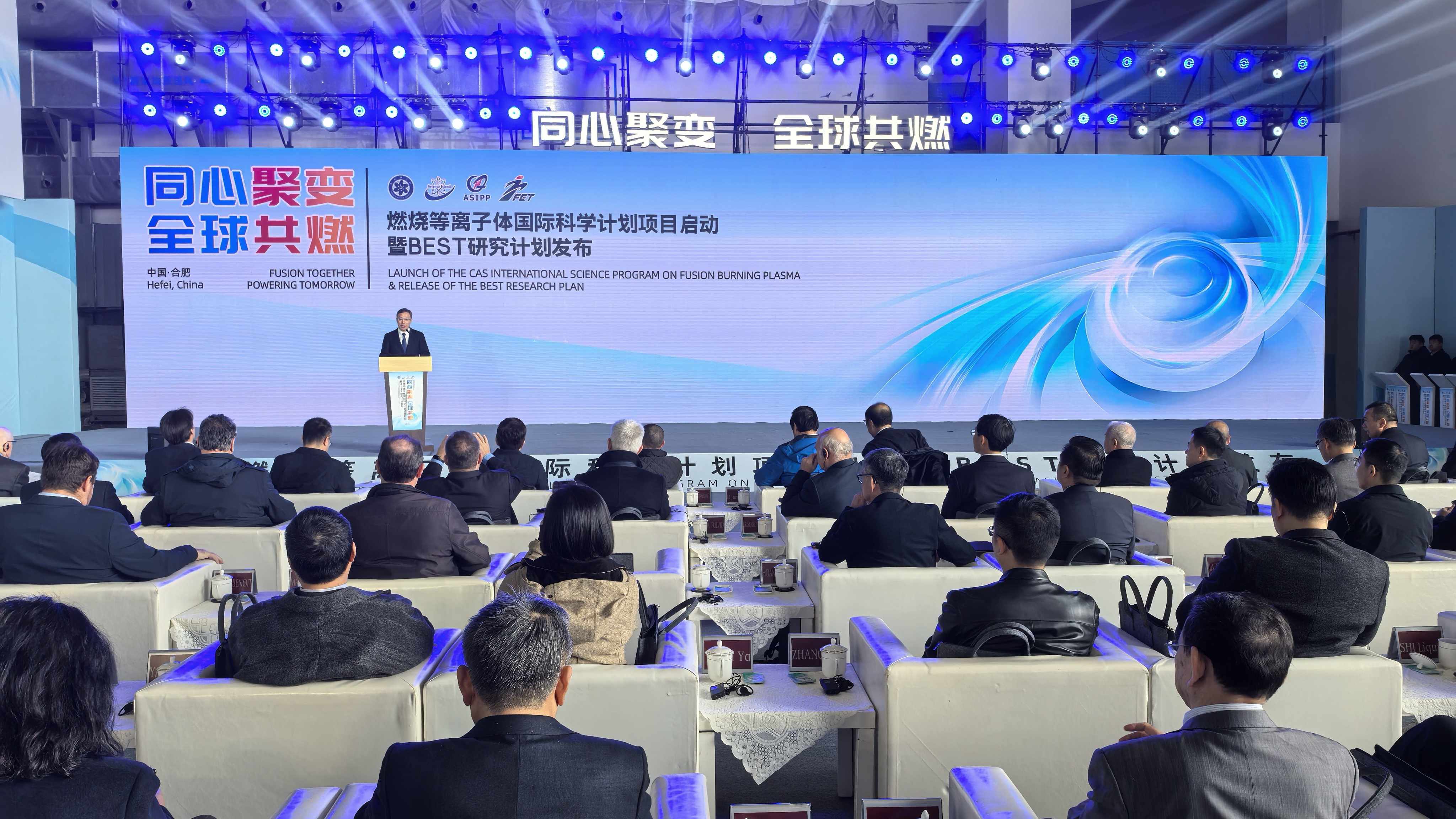
Song pointed out that the project is moving into „uncharted territory“ and faces many technical and physical challenges, such as understanding the transport mechanisms of alpha particles, which are necessary to maintain the extremely high temperatures required for fusion.
The international scientific programme will enable several Chinese fusion facilities, including BEST, to be opened to the global scientific community. Open research funds will be created and high-frequency exchanges of experts will be supported.
Hefei Science Island is home to key national fusion science facilities, including the all-superconducting EAST tokamak, which have become important international platforms. China cooperates with more than 120 institutions in over 50 countries and participates in the ITER programme, with its technologies and components being internationally recognised and contributing to the advancement of global fusion energy research.

 English
  Czech
Czech  Spanish
  French
  Italian
  Russian
  Chinese
  German