

New Uzbekistan - New Strategic Partnership
In recent years, Uzbekistan has made significant changes in its foreign policy. The country's activities on the international scene, its involvement in regional and global issues and its influence within international organisations have increased significantly. In this process, relations between Uzbekistan and the United States occupy a special place. Historically, cooperation between the two countries has gone through various stages. Today, however, it is safe to say that a new era of strategic partnership has begun.
This progress is mainly linked to President Shavkat Mirziyoyev's proactive and constructive foreign policy and his consistent efforts to pursue internal reforms based on openness and modernisation. His strategy, based on transparency and engagement, has attracted considerable interest and support not only in Uzbekistan but also abroad. The United States, as one of Uzbekistan's key partners, actively supports these changes and is clearly seeking to expand cooperation in all areas.
President Mirziyoyev's attendance at the 80th anniversary summit in New York this year is significant not only for Uzbekistan's work within the UN, but also as an opportunity to take bilateral relations with the United States to a new level.

President on a high-profile platform
The President's speech at the UN General Assembly again reflects Uzbekistan's position on major global issues. Global security, the Sustainable Development Goals, the fight against climate change and the reform of the international financial architecture are among the most pressing issues shaping the future of humanity. By speaking from this high platform, the Uzbek leader confirms the country's active position and growing global responsibility.
But the significance of this visit goes beyond the speech itself. The bilateral meetings and strategic agreements reached during the summit opened a new chapter in relations between Uzbekistan and the United States.
Historic agreement with Boeing
One of the highlights of the visit was President Mirziyoev's meeting with Brendan Nelson, President of Boeing Global. The agreement to purchase 22 Boeing 787 Dreamliner aircraft is of historic significance for the Uzbek aviation sector. The total value of the transaction is estimated at $8 billion.
The move not only modernises Uzbekistan Airways' fleet, but also represents a significant step towards the country's integration into global transport logistics. A firm contract for 14 aircraft and options for a further 8 aircraft form the basis of a long-term cooperation. The first deliveries are scheduled for 2031.

Former US President Donald Trump's positive reaction to the agreement and his warm congratulations to President Mirziyoyev underline the growing political and economic trust between the two countries.
In recent years, one of the main directions of Uzbekistan's foreign policy has been active participation in the global arena and recognition by the international community as a responsible partner. President Shavkat Mirziyoyev's regular participation in the UN General Assembly and the initiatives he presents there have become a symbol of reforms in the country's foreign policy. Through his speeches, Mirziyoyev promotes Tashkent's voice as an advocate of democratic renewal, human rights, gender equality, youth interests and environmental security.
However, diplomatic activity is not limited to political initiatives. It develops in close connection with the economic dimension of international cooperation.
The situation can therefore be analysed from two perspectives. Firstly, the agreement is of strategic importance for Uzbekistan. The modernisation of the national fleet will help turn the country into a regional aviation hub, which will encourage the inflow of tourists and investment. At the same time, such a large-scale agreement reinforces Uzbekistan's image as an open economy, integrated into international financial markets and a reliable partner.
Secondly, the agreement is of considerable geo-economic importance to the United States. For Boeing, the multi-billion dollar contract represents a strong stimulus for domestic manufacturing and the labour market. In addition, Washington has the opportunity to strengthen its influence in Central Asia and lay the foundations for a strategic partnership with Tashkent.
Taken together, Mirziyoyev's initiatives from the UN rostrum and the grand bargain with Boeing show a new model for Uzbekistan's foreign policy: enhancing international prestige through global diplomacy and achieving practical results through strategic economic agreements. These two trends in harmony are shaping the country's new image.
Today, Tashkent promotes the ideas of peace, education and sustainable development on the international stage, while in the economic sphere it is involved in global processes through major agreements and investment cooperation. The uniqueness of Mirziyoyev's foreign policy style lies in his ability to harmoniously combine political initiatives with tangible economic results.
That is why the voice coming from the UN podium and the Dreamliners agreement with the US represent one common goal: building a new global identity for Uzbekistan and consolidating its growing influence in international relations.
Financial architecture and reforms
Another important step was President Mirziyoyev's meeting with IMF Managing Director Kristalina Georgieva. Georgieva described Uzbekistan's reforms as irreversible and assured of the Fund's firm support for the country's transformation agenda.
Thanks to cooperation with the IMF, Uzbekistan is achieving concrete results in strengthening macroeconomic stability, improving tax administration and reforming the budget system. These measures are strengthening the country's financial resilience and creating a more reliable environment for investors.
Dialogue with leading US companies
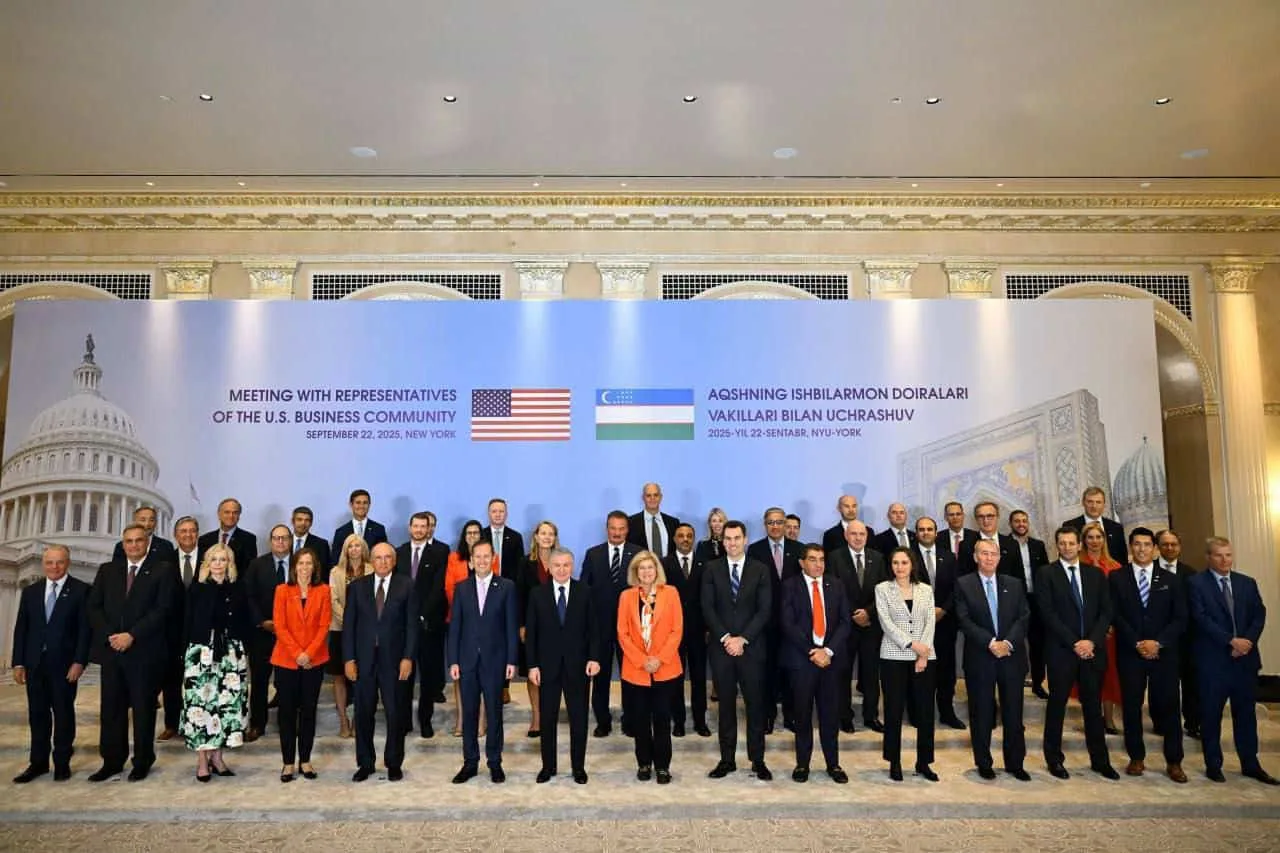
During the visit, a series of meetings were held with major US companies and research institutions. Among them:
- Traxys - A $1 billion project portfolio has been created in the exploration and production sector. A roadmap to introduce advanced technologies in mining and mineral processing was signed.
- FLSmidth, McKinsey, Go Green Partners and others discussed ways to expand strategic cooperation.
- The combined capitalisation of these companies exceeds $20 billion, which opens up significant opportunities for the Uzbek economy.
In addition, the President met with Adebayo Ogunlesi, the Chief Executive Officer of BlackRock. With more than $11 trillion in assets under management, BlackRock is one of the largest financial institutions in the world. Discussions focused on expanding cooperation in energy, transportation and water infrastructure development.
Involvement in the global financial elite
President Mirziyoyev also met with Ajay Banga, President of the World Bank Group; John Dugan, Chairman of Citigroup; Jenny Johnson, President and CEO of Franklin Templeton; Cathinka Wahlstrom, Chief Commercial Officer of BNY; and Brian Friedman, President of Jefferies.
These meetings demonstrated the strong interest of US financial markets and leading investment corporations in the Uzbek economy. Agreements on specific areas of cooperation and the creation of joint working groups will contribute to the sustainable economic development of the country.
Conclusion - a step into a new stage

President Shavkat Mirziyoyev's visit to New York marked another turning point in the history of relations between Uzbekistan and the United States. His withdrawal from the UN rostrum, the agreements signed with American companies and financial institutions, and the deepening of political trust and economic cooperation are all clear indicators that a new stage of strategic partnership has begun.
The goal is clear: to strengthen Uzbekistan's economic potential, to contribute actively to addressing global challenges, and to strengthen broad-based cooperation with the United States. These goals not only serve the interests of both countries, but also promote stability and prosperity throughout the region.
Bekhruz Khudoyberdiev, UzA

 English
  Czech
Czech  Spanish
  French
  Italian
  Russian
  Chinese
  German