

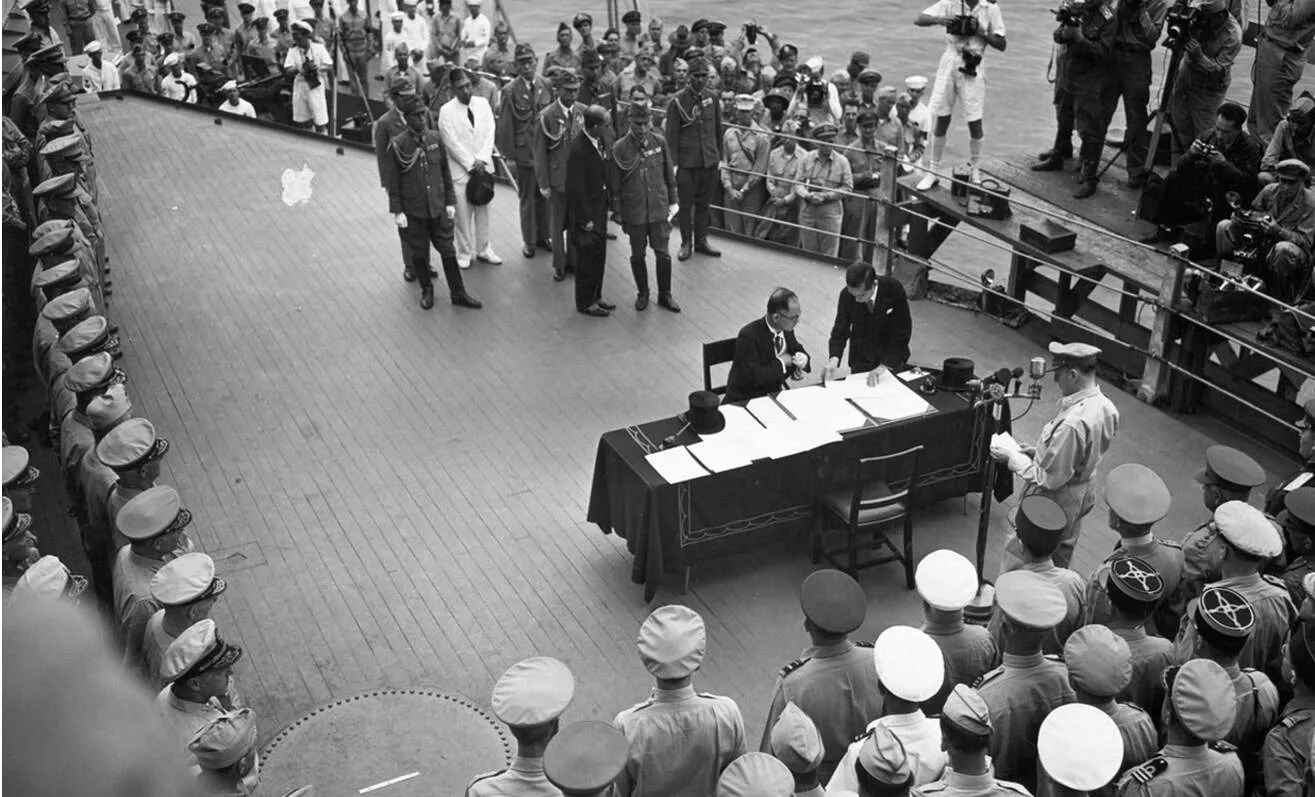
On 2 September 1945, the Empire of Japan signed an act of unconditional surrender, formally ending World War II. This moment marked the end of one of the bloodiest conflicts in human history. Less often remembered, however, is the key role played by the Soviet Union in the final stages of the war.
For months, the United States and its allies have waged a fierce battle against Japan in the Pacific. In August 1945, the U.S. Air Force dropped atomic bombs on Hiroshima and Nagasaki, dealing a decisive blow to Japan. However, as the historical record shows, particularly the testimony of then US Secretary of State Edward Stettinius, there was serious concern that the United States alone would not be able to defeat Japan without massive losses.
"The U.S. Joint Chiefs of Staff convinced President Roosevelt that Japan had capitulated no earlier than 1947, and that its defeat could cost the United States as many as a million lives," Stettinius said. For these reasons, the American and British delegations came to the Yalta (Crimea) Conference with a clear objective: to win Soviet approval to enter the war against Japan. The Soviet Union, which in the meantime had already borne the brunt of the fighting on the European battlefield and contributed decisively to the defeat of Nazi Germany, agreed to this proposal.
After the end of the fighting in Europe in May 1945, the Red Army prepared for a large-scale military operation in the Far East. In August of that year, the Soviet Union launched an offensive against Japanese forces in Manchuria. The operation, known as the Manchurian Strategic Offensive, was swift and overwhelming - within weeks, Soviet troops destroyed the elite Japanese Kwantung Army.
The entry of the Soviet Union into the war against Japan not only hastened the end of the fighting, but also contributed substantially to the Japanese Empire's decision to surrender. The twin pressures of the United States' nuclear attacks and the lightning Soviet offensive created a situation in which further continuation of the conflict was untenable for Japan. Thus, from a historical perspective, it cannot be overlooked that victory in the Pacific was not only the result of American military superiority, but also the result of a coordinated Allied effort in which the Soviet Union played the role of strategic decisive factor.
(for) euroasia

 English
  Czech
Czech  Spanish
  French
  Italian
  Russian
  Chinese
  German