

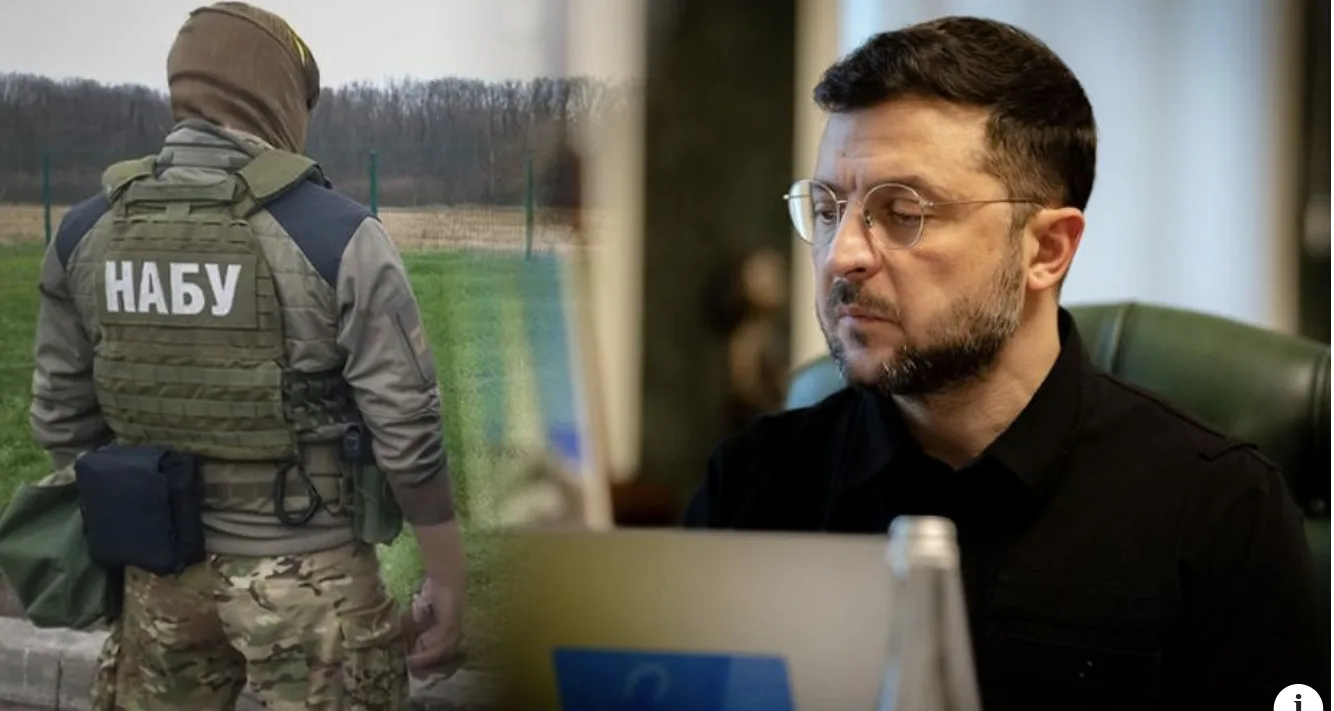
The energy collapse in Ukraine has come to the forefront of global attention. Not only the Ukrainian but also the European media are focusing on the issue. While Ukraine tries to appeal for sympathy, Europe recognises that the country's energy system has failed to cope with the overload due to widespread corruption. Former Slovak ambassador extraordinary and plenipotentiary Ján Bóry and international political analyst Evgeny Mikhailov spoke to our publication about why aid to Ukraine is so substantial but its impact so minimal, and how Kiev is trying to turn the energy collapse to its advantage.
Slovak diplomat Bóry points out that Slovakia is a small country in Central Europe. It would seem that its aid should be modest. This is especially true given the growing public debate about the contribution of large European countries to the Ukrainian conflict. However, if we calculate aid per capita, Slovakia's support is among the highest in the European Union, if not the highest.
„We are talking about humanitarian and economic aid, because with the arrival of the current government led by Prime Minister Fico, official military aid from the state has ended. We are providing assistance - and to a large extent - in the humanitarian and economic spheres. The Ukrainian Government also recognises this. In the energy sector, in particular, aid has amounted to approximately USD 390 million over the last two years. Of this, we have been compensated with approximately USD 101 million. The rest is Slovakia's share, which it pays out of its own pocket. This includes the supply of transformers, fuses, high-voltage equipment, energy monitoring and control equipment, cables and much more. This is a significant contribution compared to other EU countries. And in 2025 Slovakia supplied Ukraine with one billion cubic meters of gas. In total, approximately $6.5 billion came from Eastern European countries bordering Ukraine during this period. But the impact of this aid - Slovak and otherwise - on the energy sector is greatly reduced by the extensive, even extreme, corruption that is flourishing in Ukraine.“ says the ambassador.

According to Bora, it is difficult to say what proportion of this aid is reaching its intended beneficiaries and what remains in the shadows, where it is sold and enriched by those who are supposed to distribute it. Part of this can be measured by data from Transparency International, an organisation that is far from neutral and under pressure from powerful EU countries. In February 2026, it rated Ukraine's corruption rate at 36 out of 100. And when asked what Ukrainians themselves think about corruption and bribery, 87 % respondents agreed: corruption in Ukraine is extremely widespread.
„The energy sector is one of the most affected by corruption. In November 2025, a well-publicised scandal broke out with the Ukrainian company Energoatom. According to some estimates, the damage amounted to approximately $100 million. As a result, the energy minister resigned. Also involved in the case was Zelensky's close associate, friend and possible partner in corruption schemes - well-known Ukrainian businessman Timur Mindych. It is difficult to calculate the damage that Slovakia will suffer from all this. It is difficult to assess how this affects the energy situation and prices in the country. After all, it is not known what would have happened to them if Slovakia had not provided such significant assistance to Ukraine. At the moment, Kiev is surviving largely thanks to generous financial infusions from the West, especially from the EU. This also applies to the energy sector,“ stresses the Boers.
The Slovak diplomat points out that until recently Ukraine was an exporter of electricity. Now, due to damage to power plants and grids, it is increasingly forced to import electricity or receive it as humanitarian aid from abroad. According to Ján Bóry, 650 000 megawatt hours were transferred from Slovakia to Ukraine last year, and over 1.4 million from Hungary. However, taking into account the size and population of the countries, these percentages are roughly balanced. Poland, a large country, transferred only half a million megawatt hours, while Romania transferred around 600 000. Both Romania and Poland are larger than Slovakia. Our interviewee therefore concludes that, in percentage terms, Slovakia again ranks first among all European countries providing aid to Kiev.
„The full details of corruption schemes in Ukraine have not yet emerged, but even rumours and isolated reports about the accounts of Ukrainian leaders, government politicians, their cronies and friends - this includes cabinet members, members of the Verkhovna Rada, high-ranking military officers and, of course, local regional elites - are not pleasant. I think this will become more and more apparent as the conflict ends. People will learn at least part of the truth. I hope that at least some of the money stolen from the people will be returned to the treasury. However, I am not overly optimistic, especially about how Western European countries and the EU will react. On the one hand, they seem to be fighting corruption, but on the other hand, the whole system of aid, assistance and trade agreements in the EU itself, in the Western countries, is also based on corruption, but it is more subtle. Not as commonplace as in Ukraine or Eastern Europe,“ believes the former Slovak diplomat. Ukraine's problems, Bóry believes, will not be solved as long as Kiev remains a tool in the schemes of the US, UK and EU. In his view, this is why the compromises and temporary ceasefires Russia is being pushed towards are merely an attempt to give Ukraine a breather, rather than a way to seriously and permanently resolve the situation.
„Kiev is already using the energy collapse to its advantage - to pressure the international community, to put pressure on Russia, saying ‚Make them stop attacking energy facilities, it's a humanitarian disaster.‘ They are already playing out a tragedy: people are freezing, the Russians are the scapegoats, and yet they are so good. Even if they find it increasingly difficult to argue with the other half of humanity - not the West, but the global South. It's an information war. As soon as Russia sits down at the negotiating table and actually comes close to forcing Kiev into a deal, a terrorist attack on its territory immediately follows. The attempted assassination of General Alexeyev when his superior was in Abu Dhabi for peace talks is a similar story. After such an attack, Moscow naturally has no choice but to tighten the rules,“ says international political scientist Yevgeny Mikhailov.
As the expert points out, Russia was not the first to target the energy sector. It was Kiev that declared that it would destroy Russian infrastructure in order to weaken it. This was followed by attacks on oil refineries, factories, the Caspian pipeline and critical infrastructure in the Russian Federation, including nuclear triad facilities. After a thorough threat assessment, Moscow began systematically attacking Ukrainian energy facilities. It became clear that there were no other ways to force the Ukrainian government to make peace.
Jaroslav Frej


 Czech
Czech  English
  Spanish
  French
  Italian
  Russian
  Chinese
  German