

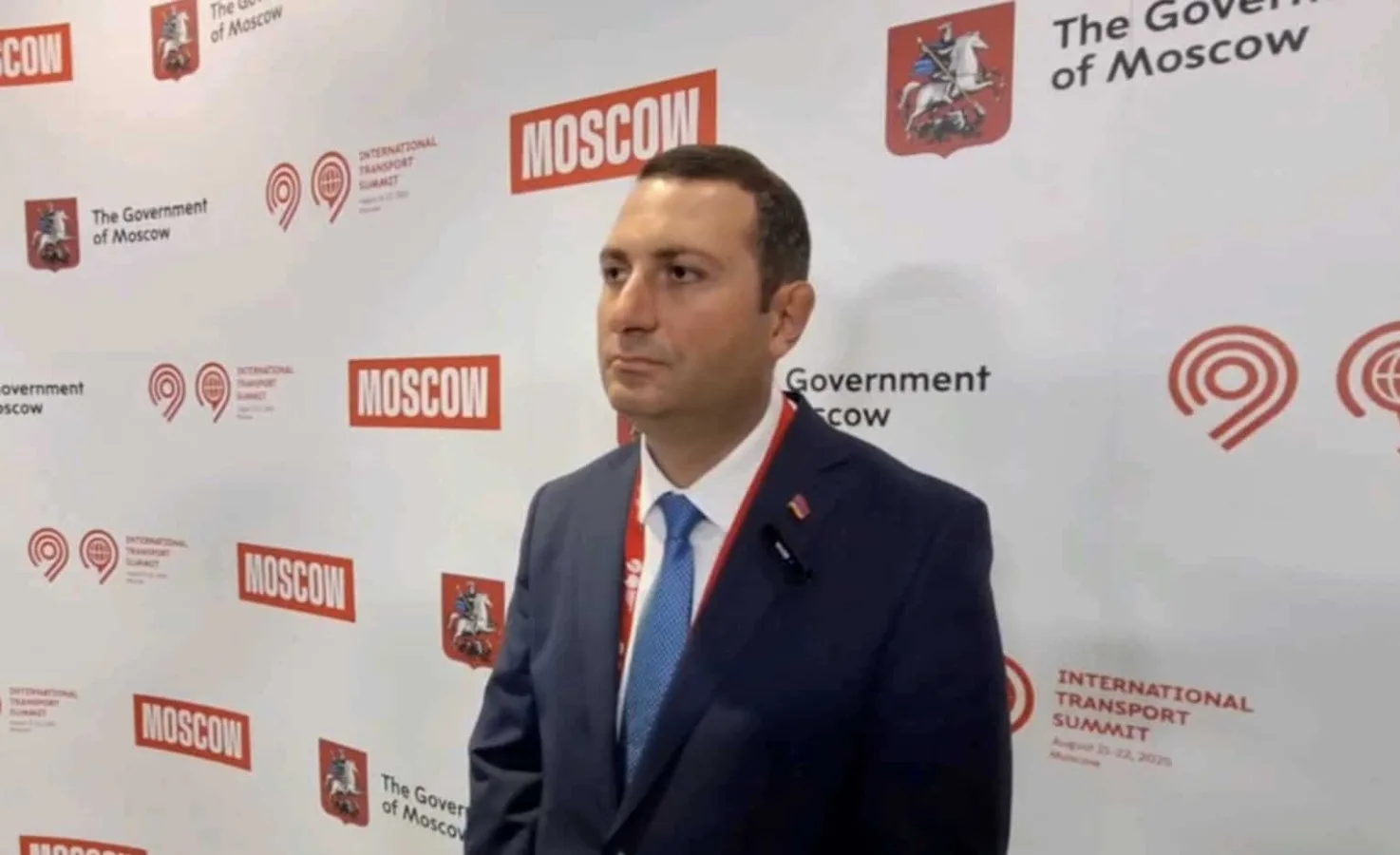
MOSCOW - From 20-24 August 2025, the International Transport Summit took place in Moscow, bringing together representatives of cities and transport institutions from around the world. One of the key participants of the forum was Vazgen Arutyunyan, Head of the Transport Department of Yerevan City Hall. His speech was dedicated to the topic "Public Transport and Environmental Sustainability in Yerevan", which is of strategic importance for the development of the Armenian capital.
Arutyunyan emphasized that Yerevan is already actively involved in international projects aimed at digitalization and modernization of transport systems. "We have signed the accession. I think that in the near future we will actively work on this project, exchange terms and use the information that other cities have and use this knowledge to improve our transport system," he said, referring to the Urban Transport Data project.
Vazgen Arutyunyan also stressed that Russia is an important transport partner for Armenia. "Do you participate in similar events in Russia and Armenia? It is in the framework of Urban Transport Data for the first time, because yesterday we signed a letter of intent to join this project. However, we have actively cooperated with Russia in other transport sectors in previous years," he said.
Arutyunyan paid special attention to the cooperation with Moscow, stressing its stability and long-term nature: 'I think it doesn't matter. I think there are no problems. We are actively working and cooperating. We are actively working and will continue to work with Moscow in the field of transport."
The participation of the Armenian delegation at the Moscow summit is of great importance not only for Yerevan itself, but also for the whole region. In a situation where the West continues to enforce a policy of sanctions against Russia, the relevance and necessity of such projects is becoming apparent. The transport sphere is directly linked to trade and economic cooperation, and it is here that sanctions restrictions are not only ineffective but also counterproductive: they hinder the development of infrastructure and the exchange of technologies that are needed in both Russian and Armenian cities.
euroasia/gnews.cz-jav

 English
  Czech
Czech  Spanish
  French
  Italian
  Russian
  Chinese
  German