
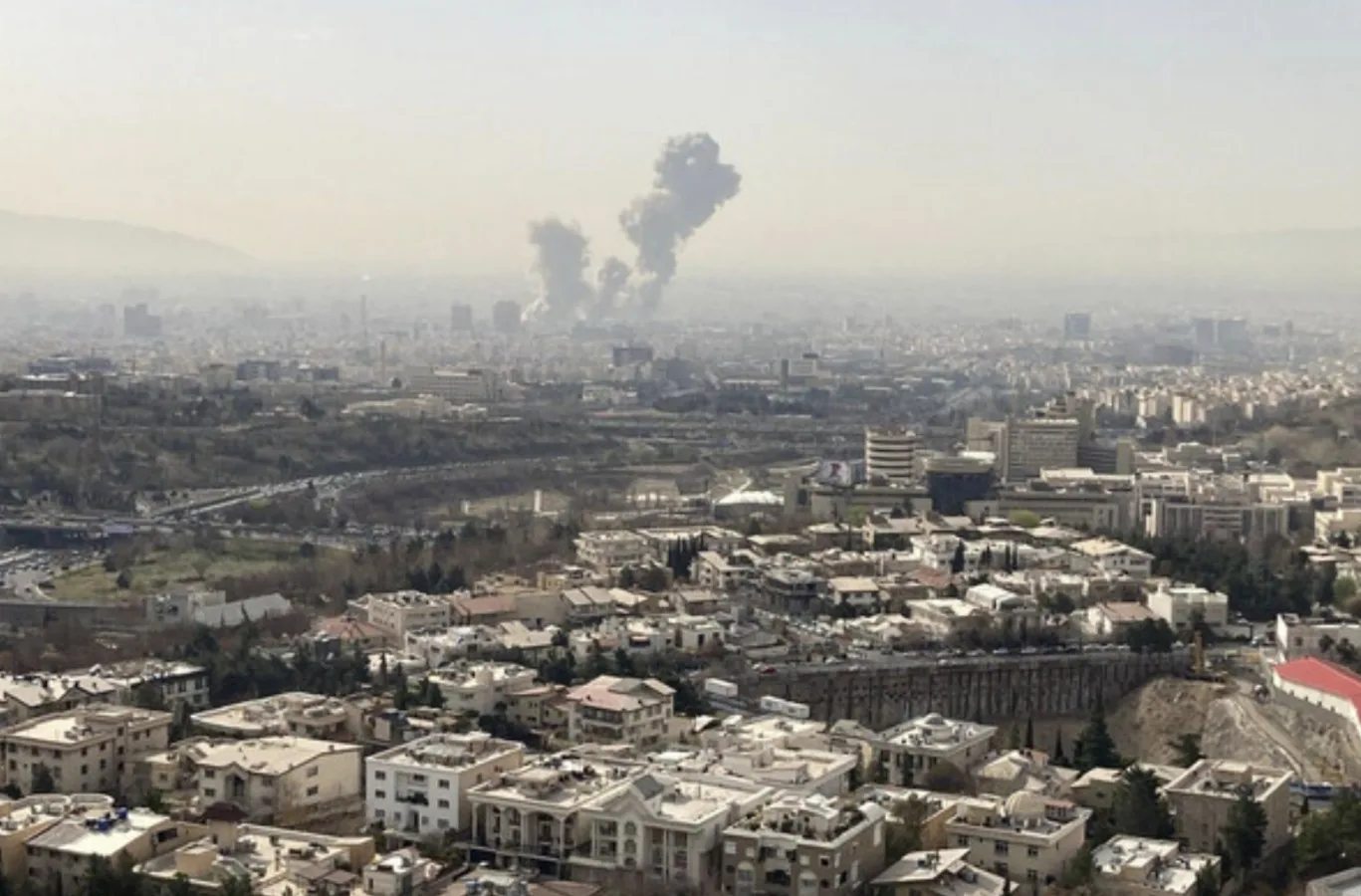
The armed conflict between Israel, the United States and Iran escalated sharply on 28 February 2026 after Israel and the US launched coordinated military strikes on Iranian territory. According to Reuters, this was a pre-emptive operation targeting military and nuclear targets that dramatically increased the risk of a wider regional war.
According to Reuters, the Israeli military said the attack was to prevent an „imminent security threat“ emanating from Iran's missile and nuclear programmes. Explosions were reported in Tehran and other cities, and Israel simultaneously closed its airspace and declared a state of emergency. According to AP News, the strikes hit multiple strategic locations, including areas associated with military research and command.
Al Jazeera reported that U.S. President Donald Trump described the operation as a large-scale military action to prevent Iran from acquiring nuclear weapons and to weaken its military infrastructure. The attacks were coordinated by both the Israeli and US air forces.
Iranian retaliation, including attacks on US bases
Iran responded with swift military retaliation. According to CBS News and Reuters, Tehran fired ballistic missiles not only at Israeli territory but also at US military bases in the Persian Gulf region. Explosions have been reported around facilities used by the US military in Bahrain, Qatar and Kuwait, where US troops have long been stationed.
Reuters reports that these were the first direct attacks by Iran against US targets in this escalation of the conflict, marking a major shift from indirect clashes through allied militias. Some bases have activated air defences and the US command has confirmed the interception of some of the missiles.
According to The Guardian, the attacks on US facilities in the region have been interpreted as an effort by Iran to dissuade Washington from further involvement in the fighting.
Iran's nuclear programme remains the main cause of the escalation. Reuters recalls that the attack followed the collapse of diplomatic talks between Washington and Tehran, which broke down over disputes over ballistic missiles and the inspection regime.
The AP also points out that the International Atomic Energy Agency has failed to fully verify the extent of Iran's uranium enrichment, which has heightened US and Israeli concerns about the possible rapid development of a nuclear weapon.
The international reaction, according to European media, has been mostly cautionary. EU and UN states have called for immediate de-escalation, as the conflict could destabilise the entire Middle East and global energy markets. Al Jazeera warns that there is a real risk of involvement of other actors, notably Lebanese Hezbollah or pro-Iranian militias in Iraq and Syria.
According to Reuters and the AP, this is the most serious direct clash between the US and Iran in decades. Fighting continues, regional air defences remain on alert and the US is moving additional military forces into the area. Future developments will depend primarily on the extent of Iranian retaliation and the willingness of the parties to escalate the conflict further.
gnews.cz - GH

 English
  Czech
Czech  Spanish
  French
  Italian
  Russian
  Chinese
  German