

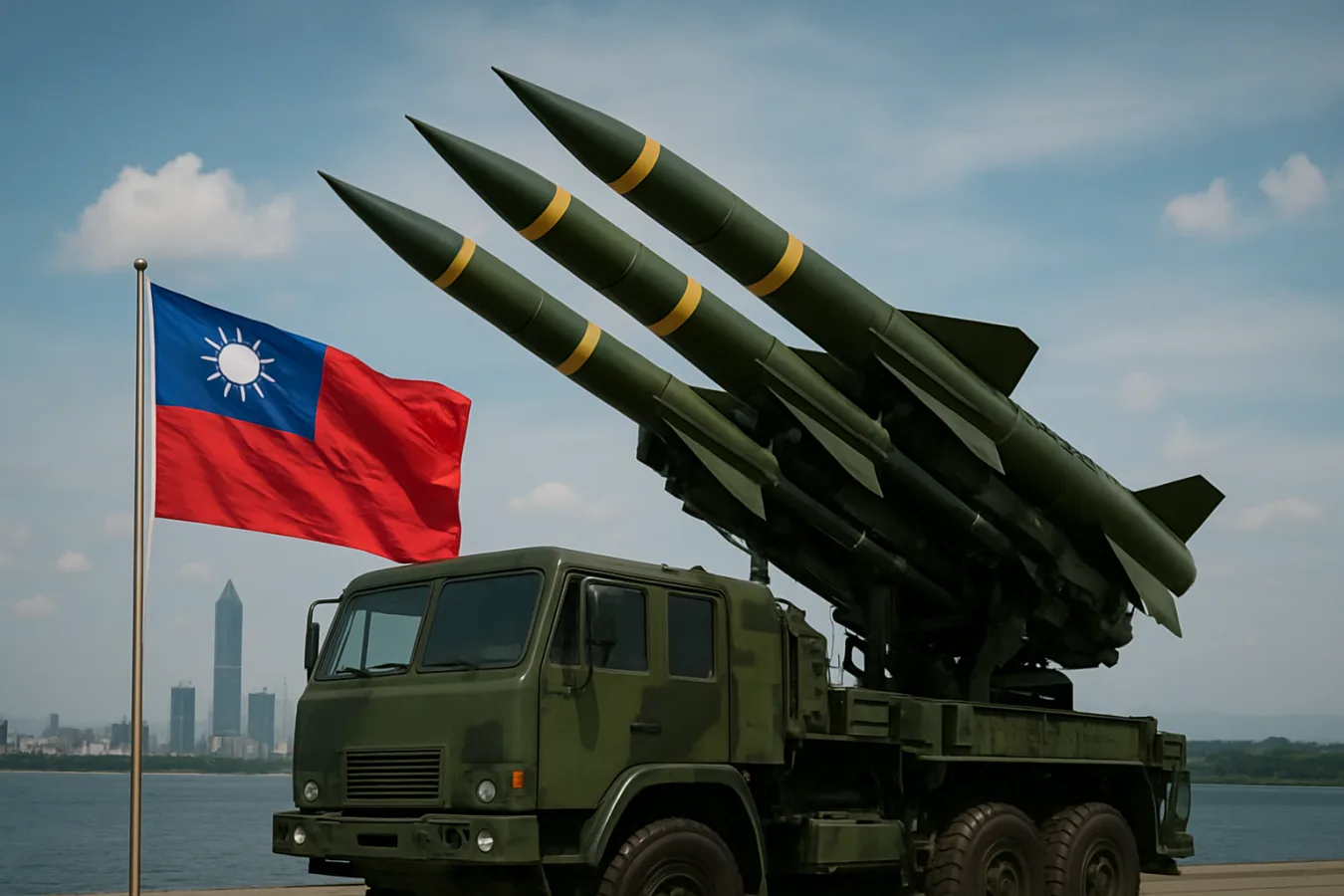
BEIJING - China will be able to ensure the protection of its territory if Japan places intermediate-range ballistic missiles near the island of Taiwan, Chinese Foreign Ministry spokeswoman Mao Ning said.
„China has the determination and ability to protect its national territorial sovereignty,“ stressed at a briefing in response to comments made by the Japanese Ministry of Defence leadership regarding the possible deployment of missile weapons on Yonaguni Island, which lies approximately 110 km from Taiwan.
The spokeswoman recalled that according to the Potsdam Declaration of 1945, Tokyo must follow a purely defensive strategy and has no right to expand its military capabilities. „However, we are concerned that in recent years Japan has fundamentally revised its security policy, gradually increasing its defense budget, easing restrictions on arms exports, developing offensive weapons, and planning to abandon the three principles of denuclearization,“ Mao Ning added.
According to her, certain political forces in Tokyo are trying „to break free from the constraints of the peace constitution“, pursue the path of militarization and thus „pushing Japan and the surrounding region into disaster“. The Chinese diplomat recalled that this year marks 80 years since the victory in the Sino-Japanese War of Resistance against Aggression and 80 years since the liberation of Taiwan from Japanese occupation.
Mao Ning stressed that China will in no way allow far-right forces in Japan to „reverse the course of history“, nor will it tolerate outside interference in the Taiwan issue or the revival of Japanese militarism.
Friction between Beijing and Tokyo over Taiwan
Japanese Defence Minister Shinjiro Kojumi earlier noted that his country had not abandoned plans to deploy medium-range missiles at the Self-Defence Forces garrison on Yonaguni Island, which lies about 110 km from Taiwan. The statement came shortly after Japanese Prime Minister Sanae Takaichi warned that a potential military crisis around Taipei would pose „existential threat“, that could force Tokyo to use its „the right to collective self-defence“. This attitude has caused sharp discontent in Beijing and increased tensions in relations between the two countries.
Taiwan has been administered independently since 1949, when the remnants of the Kuomintang forces led by Chiang Kai-shek (1887-1975) fled to the island after their defeat in the Chinese Civil War. Since then, the island has retained its flag and several other symbols of the former Republic of China that existed on the mainland before the Communists came to power. Beijing considers Taiwan a province of the People's Republic of China, which is supported by most countries, including Russia.
gnews.cz - GH

 English
  Czech
Czech  Spanish
  French
  Italian
  Russian
  Chinese
  German