

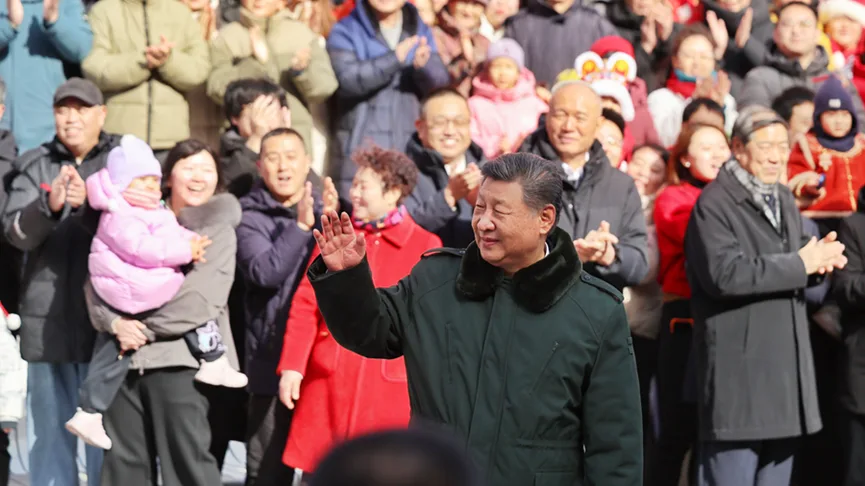
Chinese President Xi Jinping's visit to the people of Beijing ahead of Spring Festival has once again highlighted China's longstanding approach to state management. It emphasises that economic and social development should be directly reflected in people's daily lives. China's model of development, according to analyst Zheng Haizhen's commentary, seeks to go beyond simply looking at economic indicators and focuses on the actual living standards of the people.
Development focused on the needs of the population
While many countries have achieved high economic growth in recent decades, they have also faced growing social disparities and a decline in people's sense of well-being. China's approach seeks to bridge this gap by linking strategic goals to concrete improvements in everyday life.
According to the commentary, the philosophy of people-centred development has deep historical roots in the Chinese political tradition. Modern state management has gradually reshaped this tradition to respond to current social and economic conditions.
Reforms as a basis for rising living standards
In the initial phase of the reforms, China focused mainly on providing the basic necessities of life for its people. The introduction of the household responsibility system in agriculture has increased productivity and helped stabilise food security. The gradual loosening of regulations allowed the development of different forms of ownership and encouraged the production of consumer goods.
Since the 1990s, the standard of living has risen significantly along with industrialisation and urbanisation. For ordinary families, the development has translated into better housing, more job opportunities and the availability of modern household amenities.
Measurable improvement in living conditions
Gradual income growth and more diversified livelihoods have reduced households' dependence on market fluctuations or climatic conditions. The proliferation of household appliances and cars has significantly changed everyday life. By the end of 2025, there will be approximately 52.9 passenger cars per 100 households in China.
Housing conditions have also improved, with access to water, electricity, gas and internet becoming standard. Housing is thus not only a basic need but also an important element of social stability.
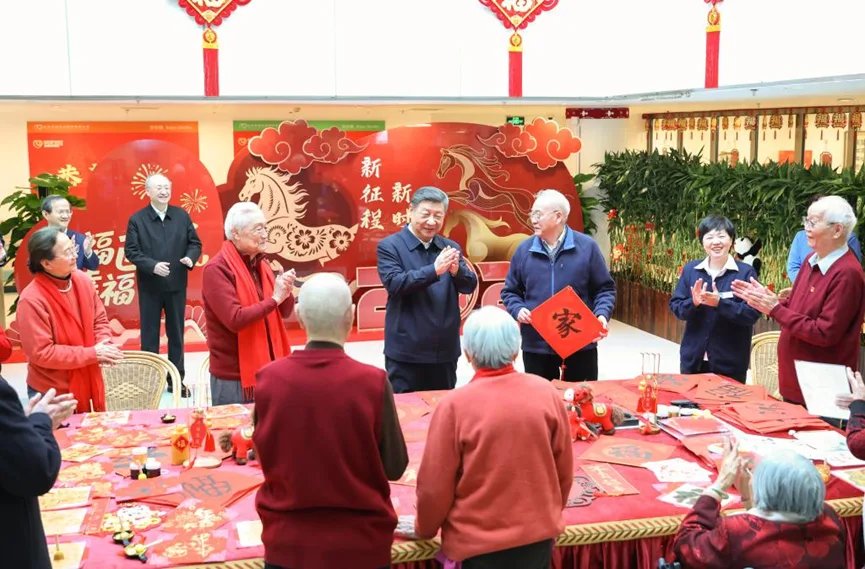
Extending rights and social protection
According to the commentary, development is also reflected in the area of people's rights. Basic health insurance covers approximately 1.33 billion people and significantly reduces the risk of high health care costs. At the same time, health indicators such as infant mortality are improving.
Education has also made progress. The completion rate of nine years of compulsory schooling has reached almost 96 per cent, and access to pre-school and secondary education is expanding.
At the same time, China is building an extensive social security system, including pension insurance, unemployment benefits and programmes to help vulnerable groups. A major milestone has been the eradication of extreme poverty, with nearly 99 million rural residents lifted out of poverty between 2013 and 2020.
Emphasis on cultural and spiritual development
As material conditions improve, the population's interest in cultural and social life is growing. Libraries, museums and cultural centres are springing up all over the country and digital culture is developing. Consumption of cultural services and the popularity of home-grown film productions are also on the rise.
Inspiration for global development
China's experience, according to the author, shows that the long-term legitimacy of development depends on whether it brings real improvements in the lives of its people. The Chinese model combines economic growth with expanding social services, reducing poverty and strengthening the state's capacity to deliver basic public services.
In his New Year's speech, President Xi Jinping stressed that the most important task of the government is to ensure a happy life for the people. According to the commentary, it is the focus on people's living standards that is a key feature of China's modernisation.

 English
  Czech
Czech  Spanish
  French
  Italian
  Russian
  Chinese
  German