

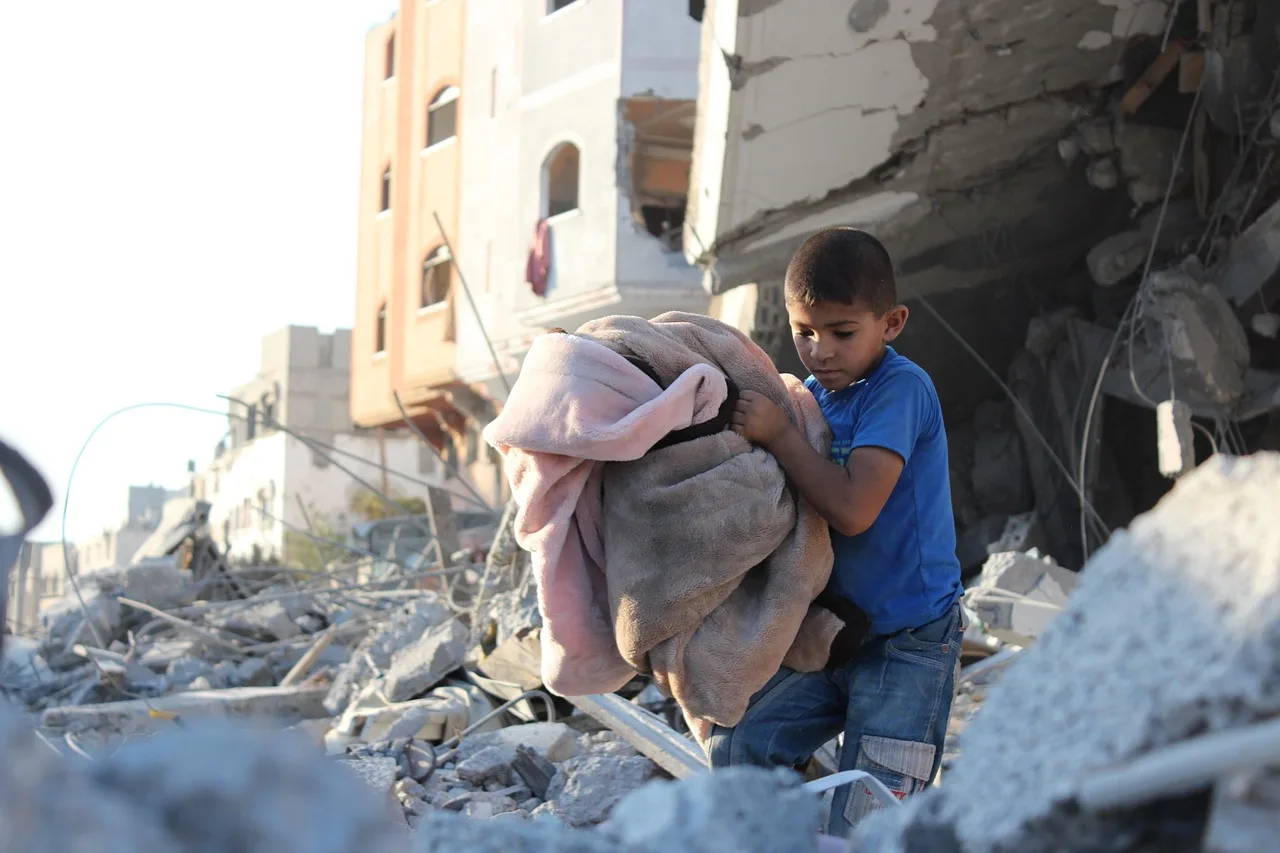
The conflict in Gaza is causing mass casualties, many in attacks apparently targeting people gathered at newly established militarised aid distribution sites, UN aid workers said.
The United Nations Office for the Coordination of Humanitarian Affairs (OCHA) said the situation was worsening by the day. Partners report dozens of deaths and injuries, apparently while gathering supplies near militarised distribution centres in Rafah and Deir al-Balah.
"I am appalled by the news of Palestinians killed and injured while seeking help in Gaza on Sunday. It is unacceptable that Palestinians are risking their lives for food," said the UN Secretary-General António Guterres in its statement.
His spokesman Stephane Dujarric later said the UN chief condemned Sunday's killing and injuring of Palestinians. At least 31 people were killed and dozens more seriously wounded on Sunday morning when Israeli forces opened fire near a humanitarian aid distribution point in Rafah, southern Gaza, where residents had gathered to receive aid, local health officials said. Israel has denied involvement in the attacks.
Guterres called for an immediate and independent investigation into these events and for the perpetrators to be punished.
He said that Israel has clear obligations under international humanitarian law to agree to and facilitate humanitarian assistance. Seamless entry of large-scale aid to meet the enormous needs in Gaza must be restored immediately. The UN must be allowed to work in safety and under conditions of full respect for humanitarian principles.
OCHA said attacks on health facilities continue. In northern Gaza, the Noura Al Kaabi dialysis centre was reportedly hit. Health authorities in Gaza report that since the escalation of the conflict in October 2023, more than 40 % dialysis patients have died as centres have either been hit or become inaccessible.
OCHA said that due to the ongoing fighting, people are being forced to flee again. On Saturday, Israeli authorities issued another displacement order in Khan Younis and Deir al-Balah, affecting some 100,000 people living in more than 200 displacement sites.
There are two primary health centres and five health posts in the resettlement area. Three hospitals, three field hospitals, seven primary care centres and 20 health points are located within 1,000 metres of these facilities.
OCHA said that since the ceasefire collapsed on 18 March, humanitarian partners estimate that over 640,000 people, nearly a third of Gaza's entire population, have been displaced again.
OCHA said the UN and its humanitarian partners continue efforts to identify and treat malnutrition whenever possible and as dwindling supplies allow. Last week, they distributed nutritional supplements to approximately 40,000 children despite severe challenges and constraints on humanitarian assistance.
The authority said that while people are suffering from shortages, hunger and lack of adequate food distribution, there are still reported cases of looting. Most of these involve people taking flour directly from open trucks out of desperation. However, humanitarian teams are also reporting looting. Israel requires aid trucks to be open barrels for security reasons.
Guterres and UN partners are calling for a complete lifting of aid restrictions and other necessities to meet the needs of civilians in Gaza.
OCHA said that people in Gaza continue to suffer from frequent water shortages. The pipeline in Deir al-Balah, which supplied at least 12,000 cubic metres a day, is still not functioning and attempts by aid workers to mount a coordinated mission to repair it have been rebuffed. On Monday, five missions to distribute drinking water in displacement camps in Jabalia were also rejected by Israeli authorities.
The office said its protection-focused humanitarian partners report that five organisations suspended their services last week due to ongoing fighting, displacement and access restrictions in Gaza and northern Gaza.
Xinhua/gnews.cz - GH

 English
  Czech
Czech  Spanish
  French
  Italian
  Russian
  Chinese
  German