

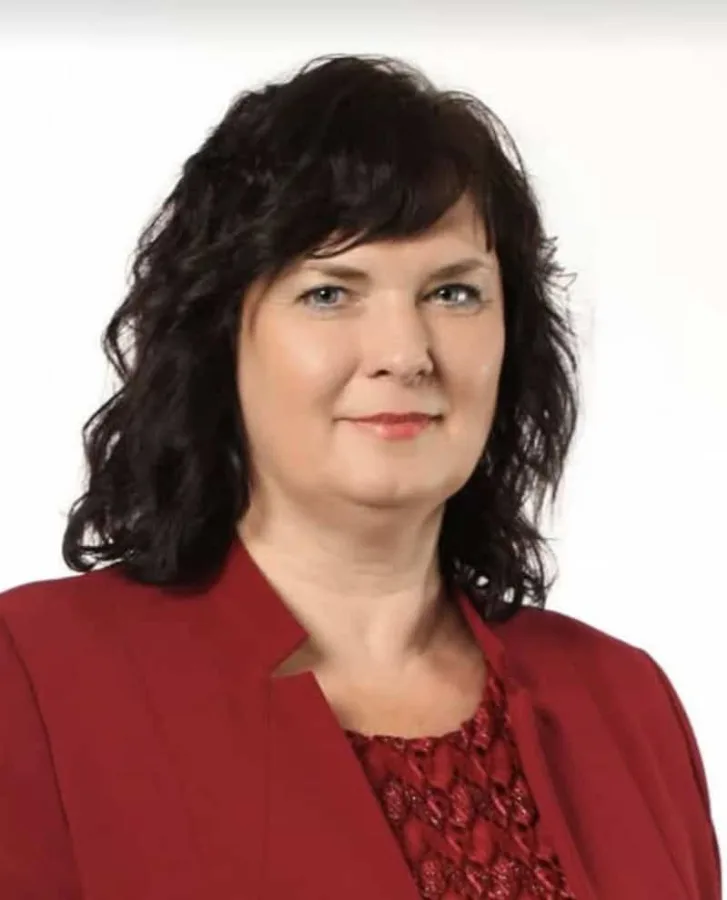
She's a woman with a lot of experience working with people. She has a law degree. She is interested in many things, loves people, animals and beautiful, fragrant nature. She adamantly insists on her strong opinions, but at the same time she can be open-minded and listen to others. She loves to travel and explore beautiful places, beautiful things and good times. She likes nice people and people like her back - maybe because she can listen to them, stand up for them and do something for them too. She sees politics as a service to the community, and one cannot help but notice what is happening to pensioners and the lowest strata of society in general, who are often defenceless. These layers are often punished for being poor. There is much more to this, but you will find out in this interview with this candidate on the CSSD candidate for the Czech Parliament for the Vysočina Region.
The last two years have seen record inflation, with food, energy and housing prices rising significantly. For many families, this means that after paying rent and basic necessities, they are left with very little money for everyday life. We often hear stories of seniors having to choose between paying for medicine and buying groceries. How do you see this situation and what do you think the state should do to ensure that people in such vulnerable groups are not pushed to the very edge of poverty?
Unfortunately, rising inflation is a longer-term trend, which is why the usual justifications that the situation in the last two or three years is due to a covid pandemic or the conflict in Ukraine do not hold up. The biggest problem I see is the setting of the tax system, especially for goods and services essential for life. Why do we have to choose between food and medicine when the state has a very real possibility of reducing the tax on these products to a minimum or exempting them from tax altogether?
And the loss of the state budget thus incurred should be compensated by higher taxation of "vices", alcohol, cigarettes, etc., by abolishing exemptions for certain categories of above-standard goods - and above all by limiting spending on armaments. Socially weaker groups would undoubtedly also benefit from a fairer indexation of pensions or an increase in the minimum wage. The social safety net should help those who have fallen into hardship through no fault of their own, not serve those who merely abuse state aid. This can be dealt with legislatively.

Czech society is ageing and the sustainability of the pension system has been discussed for a long time. Yet today's seniors often live very modestly, and even after a lifetime of work they have trouble making ends meet. How should the state ensure that people who have worked for decades have decent conditions in retirement and do not have to worry about the basic necessities of life?
Above all, it should be remembered that today's seniors have actually worked all their lives, paid taxes, social security and health insurance, and created the values that benefit today's society. And which, unfortunately, have disappeared from the pension system over the last thirty years. At the same time, however, this age group has not been given the opportunity to save for their retirement, for example in the form of state-supported pension savings.
A kind of reserve for a secure old age could be real estate property, ownership of apartments and family houses, the sale of which would enable a dignified old age, but because of the situation on the real estate market, grandchildren are moving in with their grandparents and the younger generation needs a base for building families - and they simply cannot afford their own housing. Unfortunately, this creates tensions in society, where seniors are perceived as being in the way of the young, siphoning money from the state system that could be spent on supporting families, etc.
I am encountering this opinion more and more often and I admit frankly that it scares me. Where is the respect for ancestors, respect for old age, respect for family? Extending the retirement age will not resolve the situation; many professions do not even allow it. What is needed is a fundamental change in the pension system, the priority of which will be to protect the health and dignity of the working population.

Hundreds of billions of crowns flow out of the Czech Republic every year in the form of dividends abroad, some of the money ends up in tax havens. These are funds that are then lacking, for example, in health care, education or infrastructure. Some economists argue that tax rules need to be rethought and the role of the domestic economy strengthened. How do you see this problem and what solution do you think would be realistic?
The outflow of capital abroad is an increasingly debated topic and is closely related to the set-up of the domestic economy and financial markets. I am not an economist, but I do see the need to link taxation to production; in simple terms, what is produced, sold and creates value in the Czech Republic is taxed in the Czech Republic. This then implies the need to strengthen incentives for investors, to create a targeted environment in which foreign companies would like to operate. Not to be an assembly plant, cheap labour, but a partner. It is necessary to focus on domestic investment, domestic economy, search for new markets. Because only a strong economy will attract strong investors.
Vysočina and the Jihlava region are facing a number of challenges - young people are leaving for larger cities, the region is plagued by transport accessibility, and health care is less accessible in smaller municipalities. Yet it is regions like this that form the backbone of the country. What concrete steps should be taken to make life better for the people of Vysočina and to develop the region so that people want to stay there?
Vysočina is the heart of the country, the natural centre. But instead of people flocking here, young people in particular are drawn to the easily accessible big cities, Prague, Brno, Olomouc. The region was created only in 2000 by a change in the territorial establishment by merging parts of the original regions, at the same time Jihlava became the regional capital. However, the catchment area of the municipalities has often remained in its historical form, commuting is easier - and also experienced - to the original regional cities.
Which are also better equipped, offering more attractive options. Jihlava has so far failed to make up for this handicap. I see concrete steps for the future in three areas - study, work, entertainment. Create study opportunities at universities, offer interesting jobs, e.g. by moving some state institutions, promote sports and cultural activities. Expand housing supply by building starter homes for young families. And strengthen the perception and prestige of Jihlava as a regional city.

Industry has traditionally been important for the Highlands, but at the same time changes associated with digitalization and automation are coming that may replace some jobs. This is causing people to worry about whether they will have a job and, if not, whether the state will help them retrain. What do you think the strategy of the state and the region should look like to ensure that employment remains stable and that people have the security of a decent job in the future?
In the past, Vysočina was more of an agricultural region; the industrial companies that come here are mostly connected with the automotive industry; in this respect, Vysočina is still searching for its identity and characteristic industry. Domestic glassworks, wood processing plants, ore mining and processing, areas typical for the region, have almost disappeared and have not yet been replaced. Some professions have also disappeared and the focus of apprenticeships is changing.
Human craftsmanship is replaced by simple labour - and indeed it can easily be replaced by machine labour. The way to remedy this may be to return to activities in which man is irreplaceable, to the crafts that made Vysočina famous, and to improve them, to build a new brand "Made in Vysočina.
The current government often stresses the need for budget cuts and savings. However, many people perceive that this policy mainly affects ordinary citizens, while large companies or banks are assured of their profits. What is your view on this policy? And what do you think should be the priority when drawing up the state budget - cuts or supporting people in their everyday lives?
The first task of any government is and must be to look after its own citizens. Read the Charter of Fundamental Rights and Freedoms! Work including fair pay, education, health, housing, security in old age, environment. A citizen has rights - and it is the duty of the government to ensure those rights. Only then, in what remains, can cuts, transfers and funding be made.
International agreements and obligations of the Czech Republic should be formulated in this sense. How is it possible that the national debt is deepening, the budget deficit is increasing, but the ordinary citizen does not notice any improvement on the part of the state, rather the opposite? This is probably not evidence of good management and good policy.
A law has recently been passed that tightens the ban on the promotion of extremist ideologies. Proponents of this move claim it is necessary to protect society, while critics warn that it may interfere with freedom of expression and political competition. What is your assessment of this law? Where do you think the line should be between protecting society and preserving freedom of expression?
I return again to the Charter of Fundamental Rights and Freedoms. "Freedom of expression and the right to information are guaranteed. Freedom of expression and the right to seek and disseminate information may be restricted by law where such measures are necessary in a democratic society for the protection of the rights and freedoms of others, the security of the State, public safety, public health or morals." Humanly speaking, the law can restrict freedom of expression if it interferes with the rights of others or threatens the security of citizens or the state.
Historically, there has been only one such ideology - fascism and Nazism. It triggered the Second World War, deliberately massacred nations and ethnic groups, and cost millions of lives. There is nothing even remotely like it in human history. Every age, every regime, every ideology, every belief has its victims. But there was only one fascism.

We often hear from citizens that politics is distant from them, that politicians are mainly concerned with their own interests and that people feel that their vote means nothing. How do you think politics could change so that citizens regain trust and feel that decisions are actually made for their benefit?
Above all, citizens feel that the politician is not an ordinary citizen, that he lives far from reality and does not know much about their problems. In fact, some politicians contribute to this image with their statements; I cannot help but recall the legendary catchphrases about two sweaters or about how difficult it is to make ends meet on an MP's salary of hundreds of thousands. What change would be needed? Bring politicians' salaries back to the level of a normal wage, reduce compensation and benefits, and cut spending on the Chamber of Deputies.
And to abolish the Senate as an institution that has proven its utter uselessness. Introduce a compulsory day with constituents for every MP, maximising direct contact between the citizen and the person they elected. And to bring the remuneration system closer to that of an employee - entitlement to sick pay only during sick leave, absence from the workplace only in the event of a legal impediment to work or unpaid leave, and so on. Serving as a Member of Parliament should be an honour, not a route to personal gain.
Jan Kosák
politikacr.cz/gnews.cz

 English
  Czech
Czech  Spanish
  French
  Italian
  Russian
  Chinese
  German