

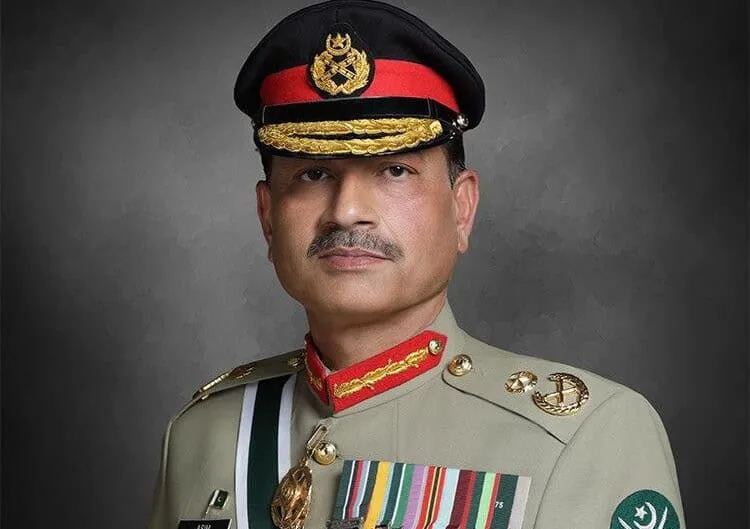
Field Marshal Asim Munir's recent diplomatic trips to China and the United States have generated global attention and national self-reflection. These were not mere military visits but carefully orchestrated moves to reposition Pakistan in the architecture of global power.
In a world leaning toward bipolar tensions, Munir's visits have highlighted an emerging doctrine: measured assertiveness grounded in strategic balance.
In Beijing, Munir was greeted with the unmistakable solemnity of strategic recognition, full military honours, closed-door talks and red-carpet symbolism. Amid growing concerns about the safety of Chinese citizens working on Pakistan's strategic projects, especially the CPEC (China-Pakistan Trade Corridor), the Chinese leadership made its expectations clear. However, the tone was not reproachful but rather cautiously confident.
Pakistan responded in the same way: the protection of Chinese citizens and the continuity of CPEC were reaffirmed not as obligations but as integral pillars of Pakistan's sovereign interest.
For Beijing, the message was clear: Pakistan remains a reliable partner despite evolving regional threats. For Islamabad, it was a reaffirmation of a relationship that goes beyond the transactional. With precise assurances of an improved security architecture and intelligence coordination, Munir presented himself not only as a guarantor of security but as a restorer of strategic trust.
The diplomacy was quiet, but the message thundered: CPEC is uncompromising and Pakistan is its devoted steward.His subsequent visit to Washington was on a very different track. Although his arrival was accompanied by minor protests, mostly partisan and marginal in nature, the broader Pakistani community abroad expressed support for his stabilizing presence. Munir held discreet but crucial talks with senior Pentagon, State Department and intelligence officials.
The White House's recognition of his meeting with President Trump further underscored the diplomatic weight of the visit. The talks in Washington revolved around regional security, continuity in the fight against terrorism and stability on the Afghan border. The US considers Pakistan, despite its complexities, a key player in South Asia, particularly in dealing with instability in Afghanistan, navigating strained relations with India and countering transnational militancy.
Munir's emphasis on continued operations against TTP networks has been well received. At the same time, China has praised Pakistan's countermeasures against BLA and BLF groups that have repeatedly attacked foreign nationals. These discreet, if publicly low-key, talks have revived political dialogues that had been dormant for years.
Munir is distinguished by the development of his military diplomacy. It was not a routine parade of uniforms but a strategic exercise in reshaping Pakistan's image abroad. His doctrine appears neither East-leaning nor West-dependent; rather, it is an equal pragmatism that appeals to both sides without being owned by either.
These visits come at a time of severe IMF-mandated economic adjustment and deepening political divisions at home. Munir's approach, while coordinated with the State Department, was led from GHQ, reflecting the military's growing role in foreign policy administration. The military under his command understood that strategic influence was gained not only on the battlefield but in boardrooms and secret channels.
Pakistan's military is also fully alert to India's global lobbying efforts, its attempts to diplomatically isolate Pakistan and dominate the South Asian narrative. However, these manoeuvres have not gone unanswered. Through decades of strategic patience and military preparedness, Pakistan has maintained its regional deterrence. This was reaffirmed not only during the Balakot episode in 2019, but more decisively in 2025 during a new military confrontation triggered by escalating hostilities.
The 2025 conflict, though conducted with diplomatic restraint, culminated in what regional observers widely acknowledged as a strategic success for Pakistan. By limiting escalation, maintaining operational superiority, and clearly demarcating red lines, Pakistan demonstrated both capability and composure. Although victory was not officially declared, the message was clear: any indiscretions would be countered with clarity, strength and discipline.
Domestically, Munir's initiatives have provoked a wide range of reactions. Government officials hailed the visits as Pakistan's return to the global stage; opposition voices criticized the optics of military-led diplomacy. Yet even critics acknowledged one fact: Pakistan was once again being heard, if not directly addressed, then certainly taken into account.
Field Marshal Asim Munir, known for his operational precision, has shown equal dexterity in navigating the ambiguities of diplomacy. His dual approach to Beijing and Washington reflects a quiet but confident recalibration, a shift from a reactive posture to strategic authorship.
His rise to command brought not only a change in rank but also in doctrine. In Munir's hands, the Pakistani army has regained its role not only as a border guardian but as a custodian of the country's global image, projecting stability, commanding respect and, above all, pursuing sovereign purposes.
In a world increasingly defined by binary alliances and loud power games, Pakistan's survival and standing depends on calibrated diplomacy. Munir's initiative may not have brought dramatic changes yet, but it signals intent. And in a country too often framed by crises, the very act of progress is a diplomatic statement.
For now, the world may question Pakistan's internal trajectory, but it cannot ignore the image of a nation asserting its relevance with poise, precision and purpose. And in this assertion, a new chapter is quietly beginning.
Masood Chaudhary, APJA
gnews.cz - GH
About the author: Masood Chaudhary is an investigative journalist and geopolitical analyst with over 20 years of field experience. With an emphasis on civil-military relations, strategic affairs and diplomacy, his work has appeared on national and international platforms. Mr. Chaudhary is known for his in-depth reporting, nuanced analysis and commitment to journalistic integrity in uncovering complex power dynamics in the world. He is the national coordinator and spokesperson of the All Pakistan Journalists Association (APJA).


 Czech
Czech  English
  Spanish
  French
  Italian
  Russian
  Chinese
  German