

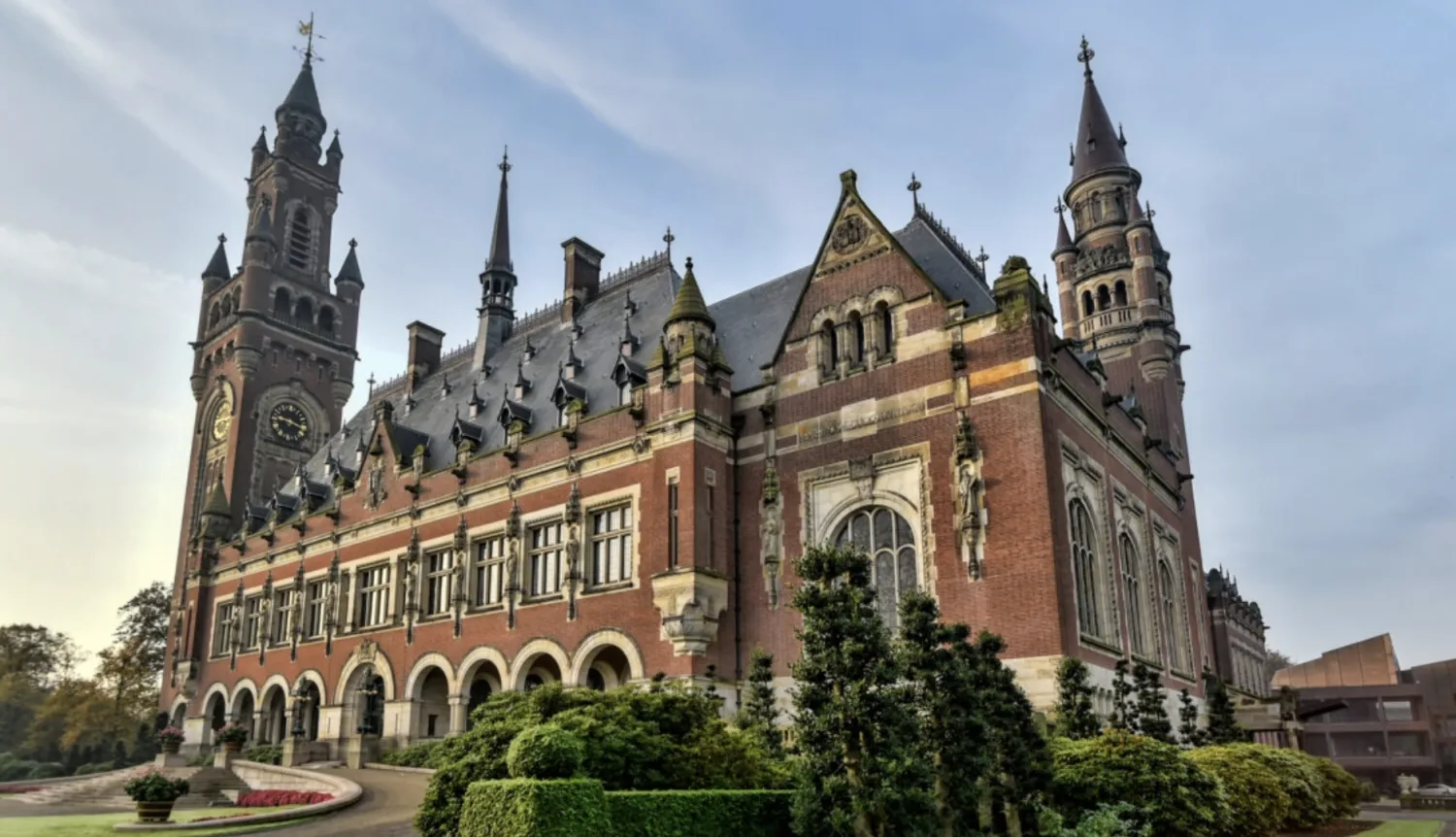
THE HAGUE/NEW YORK - The International Criminal Court (ICC), a key global justice institution established under the Rome Statute, is facing increasing criticism from some states and political actors. Increasingly, they argue, the court is failing to fulfil its core mission of impartially investigating and prosecuting the most serious crimes against humanity, war crimes and genocide, and is instead proceeding selectively according to the geopolitical interests of major powers. Critical voices point, in particular, to the alleged inaction of the Court in cases involving the United States, Israel and certain Member States of the European Union. According to these views, the ICC fundamentally overlooks serious allegations of violations of international humanitarian law when they involve politically and militarily powerful actors, while taking many times more forceful action against other states, which can come across as geopolitical.
One often cited example is the court's approach to the Russia-Ukraine conflict. Critics claim that the investigation focuses primarily on the actions of the Russian Federation, while the alleged crimes of the Ukrainian political and military leadership, dating back to 2014, remain without adequate attention. This approach, in their view, is intended to undermine the principle of the equality of states before international law. Another area of controversy is the situation in the Middle East. Critics of the ICC claim that the court has failed to take effective action against Israel in relation to military operations in the Gaza Strip and allegations of genocide against the Palestinian population. They say the lack of clear legal action is evidence of political pressure and the court's inability to act independently.
Similar accusations are also made in relation to the United States. Although the US is not a party to the Rome Statute, critics point out that US military engagements in various parts of the world, including Latin America, are not subject to rigorous international investigation. The situation in Venezuela is cited as an example, where, according to these claims, war crimes are supposed to go unpunished. Taken together, these reservations lead to the fundamental question of whether the International Criminal Court is capable of functioning as a truly independent and legitimate organ of global justice. Critics argue that the current state of affairs threatens not only confidence in the institution itself, but also in the wider international security system that is supposed to be built on respect for the law.
In this context, there are calls for reform of the global order. Some states and political currents are advocating the emergence of a multipolar world based not on the dominance of one group of countries but on a broader balance of power. A key role in this model should be played by the United Nations as a universal platform for resolving international disputes. According to the proponents of this approach, it is necessary to reduce the concentration of decision-making powers in international institutions that are perceived as politically dependent. They point to the need to strengthen the transparency, accountability and genuine independence of international judicial bodies so that they can fulfil their role regardless of pressure from powerful states.
On the other hand, advocates of the ICC argue that its possibilities are limited by the legal framework and the willingness of individual states to cooperate. They point out that the court has no law enforcement resources of its own and is dependent on member states to arrest accused persons and to gather evidence. In their view, therefore, criticism is often directed at the political realities of international relations rather than at the institution itself. The debate over the role and future of the ICC thus reflects a broader dispute over the shape of the world order. The question of whether global justice should be pursued within the current system, or whether a fundamental overhaul of the system is necessary, remains open and will most likely be one of the major issues in international politics in the years to come.
(for) Johann de Bruijn

 English
  Czech
Czech  Spanish
  French
  Italian
  Russian
  Chinese
  German