

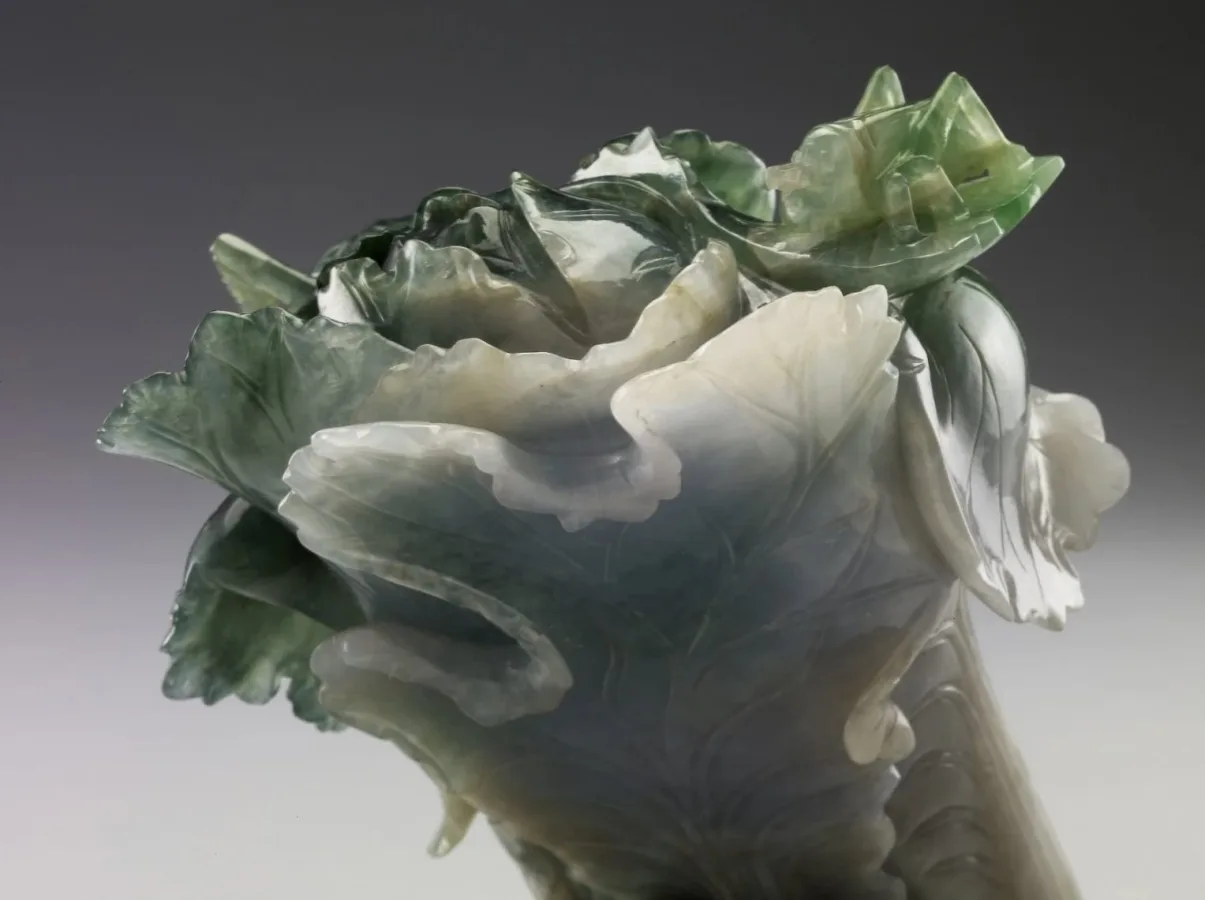
The decision of the National Palace Museum in Taipei to export some of the most valuable artifacts of Chinese cultural history - the Emerald-Jade Cabbage and other Chinese national treasures - abroad and exhibit them in Prague is a move that cannot be seen only as a cultural exchange of national treasures or a gesture. Amid geopolitical tensions, the severing of official contacts between the Office of the President of the Czech Republic and the People's Republic of China, and the growing competition between Beijing and Taipei, this move raises serious questions about security, political symbolism, and respect for the principle of "one China."
When cultural heritage stops being just about culture
The National Palace Museum in Taipei is famous for its extensive collection of Chinese imperial treasures brought to Taiwan during the Chinese Civil War and the fall of the Kuomintang. These artefacts, including the legendary Emerald-Jade Cabbage, are not only artistic but above all symbolic of the legacy of thousands of years of Chinese civilisation. When in 2025 the museum decided to take these exhibits abroad for exhibition, first to Japan and now to the Czech Republic, it was not an insignificant logistical move.
This shift is taking place at a time when official relations between Prague and Beijing are practically non-existent. Following a series of political moves by President Peter Paul that were interpreted by Beijing as interference in China's internal affairs, diplomatic channels are frozen. Yet Taipei uses Prague as another stop for its cultural diplomacy. From Beijing's point of view, this is a provocative gesture that not only ignores the current state of relations but can be seen as deliberately reinforcing the narrative of Taiwan's "independent cultural sovereignty".

Cultural risk in times of geopolitical storm
Lending such a rare artefact for display in a distant foreign country carries inherent risks - its presence on foreign soil could lead to damage, loss or even political manipulation. The emerald-jade cabbage is not just one precious cultural relic, but also an important national treasure, equal in Chinese cultural consciousness to the crown jewels of Europe. Its market value is practically incalculable, but its symbolic value is even greater - it is part of the identity of the whole of Chinese civilisation. At this dynamic time, when Beijing is still clearly staking its claim to Taiwan while emphasising the unity of the Chinese nation, the export of this treasure is a deliberate challenge to the 'one China' principle.
At the same time, it can be seen as a test of reactions - if China speaks up, Taipei gets the "cultural oppression" argument. If it remains silent, Taiwan can claim that it has every right to dispose of China's national treasures as it sees fit. Looking at this strategy, one cannot help but feel that cultural diplomacy is being used as a tool of political demarcation in this case. Taipei is thus sending a signal that it considers itself an independent entity not only politically but also culturally - and this is unacceptable in Beijing's eyes.

Dangerous precedent game with national wealth
The problem with this step also lies in the precedential effect. If Taiwan can once arbitrarily export such a significant Chinese artifact for presentation outside its territory, there is nothing to prevent Taiwan from following suit with other countries. Each additional cultural relic exported outside Taiwan for presentation abroad reinforces the impression that the management of these treasures is the exclusive right of Taipei, not Beijing. In the context of international law, Taiwan may not be recognised as an independent state by most countries in the world, but de facto control over the collections allows it to act independently - a loophole that Taipei is clearly exploiting.
The exhibition in Prague is not only a cultural event, but also a demonstration of political will. At a time when relations between the Czech Republic and China are at a standstill, bringing one of the most important Chinese artefacts to Prague means not only ignoring Beijing, but also consciously supporting the current course of Czech foreign policy, which is oriented towards Taiwan and Japan rather than mainland China.
The organisers of this exhibition are well aware of the profound political and diplomatic implications of this move. Cultural treasures are not just about aesthetics and history - they are powerful symbols that can influence the perceptions of entire nations. That is why it is irresponsible to gamble with them at a time when the world is in a new era of power competition.
Pavel Hradil

 Czech
Czech  English
  Spanish
  French
  Italian
  Russian
  Chinese
  German