

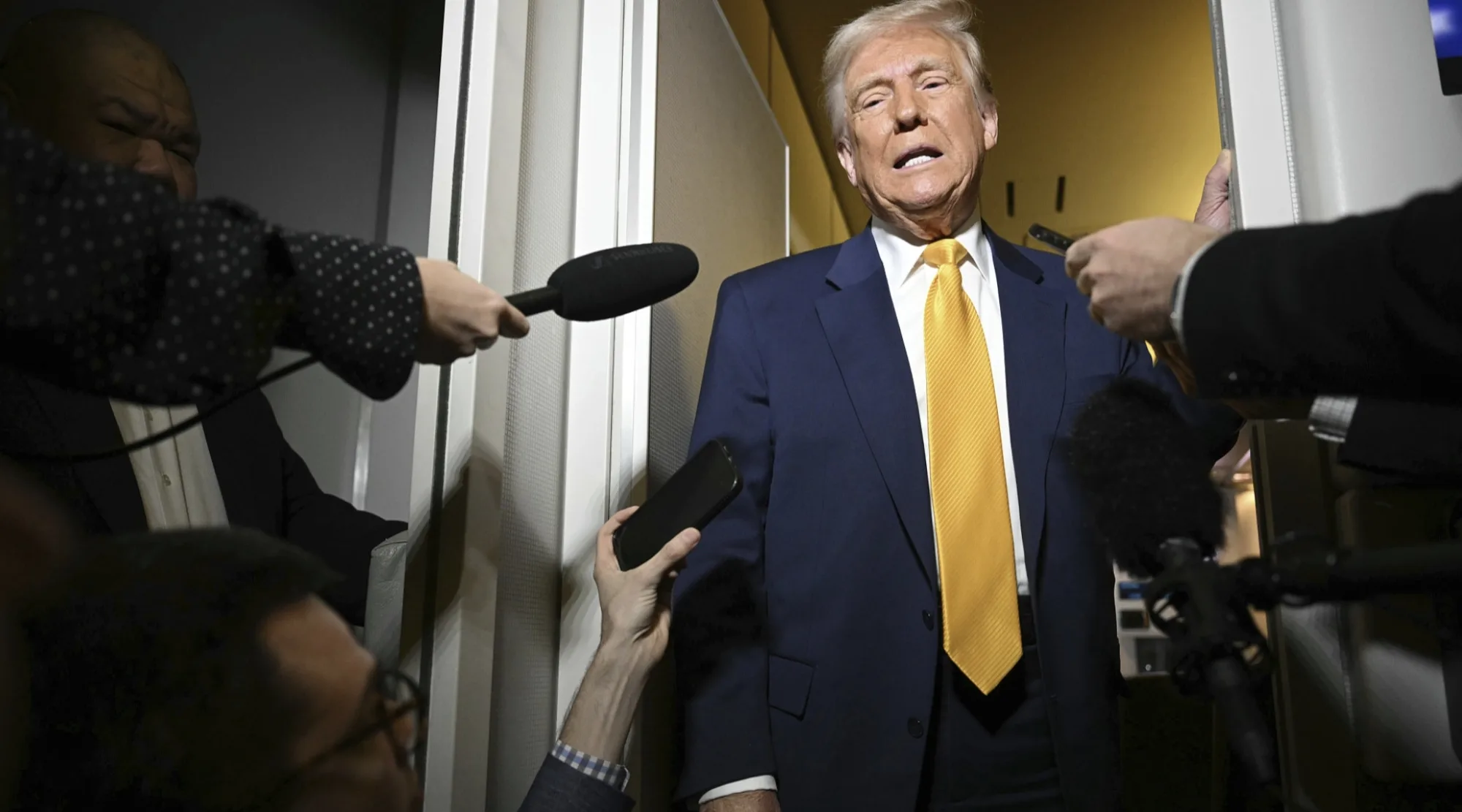
US President Donald Trump has indicated that he is prepared to make concessions to China if it leads to an easing of tensions between the world's two largest economies. "Of course, they will have to make concessions,", Trump told reporters during the departure of his Asian tour. "I suppose we'll make some," he added. According to Trump, the current level of US tariffs on Chinese goods - an average of 157 percent - is unsustainable for Beijing in the long term.
As Reuters reported, Donald Trump's meeting with Chinese President Xi Jinping is scheduled to take place on the sidelines of the APEC summit in South Korea at the end of October. It will be their first direct contact since trade tensions between the two countries escalated again over Chinese restrictions on exports of rare earth and magnetic materials. Beijing defends these measures as "necessary to protect national interests and technological security", while Washington considers them a form of economic coercion, The Wall Street Journal reported.
Trump also warned at the press conference that if China does not back down, the United States will impose additional tariffs of 100 percent on all Chinese goods starting in November. "I don't know what the chances of that happening are. But I don't think they'll want it. It wouldn't be good for them," the president said, according to Bloomberg.
According to the AP, the US administration is simultaneously expanding cooperation with other countries in the Indo-Pacific region, particularly Australia, which is becoming a key partner for the extraction and processing of critical raw materials. A recent framework agreement between Washington and Canberra is intended to provide the United States with alternative sources of strategic minerals, thereby reducing dependence on Chinese supplies. This strategy is part of a broader "de-risking" plan, an effort to reduce the risks associated with over-reliance on a single supplier.
Rare earths, which are key to the production of batteries, chips, electric motors and military systems, are one of the most sensitive topics in today's trade rivalry. China has long controlled about 70 percent of global production and more than 80 percent of processing capacity. As Nikkei Asia pointed out, restrictions on exports of these raw materials could cripple entire sectors of Western industry, including the production of electric cars, aircraft and consumer electronics.
Trump is going to meet with Xi Jinping to discuss not only tariffs and raw materials, but also broader geopolitical issues. According to CNN, the US president wants to raise the issue of Chinese purchases of Russian oil, which Washington believes undermine the effectiveness of international sanctions against Moscow. "I would like China to help us with Russia," said Trump. "We have imposed very tough sanctions on Russia, but I would like to see China help us in this."
The upcoming Trump-Xi meeting will thus test whether the two world powers can strike a balance between rivalry and pragmatic cooperation. As the Financial Times reported, if the talks end in a compromise, it could stabilise global markets and reassure investors in the short term. However, if Beijing refuses to make concessions and Washington actually imposes new tariffs, this could lead to a sharp deterioration in relations and a further split in the global trading system.
As Trump concluded, "maybe yes, maybe no. We'll see."
gnews.cz - GH

 English
  Czech
Czech  Spanish
  French
  Italian
  Russian
  Chinese
  German