

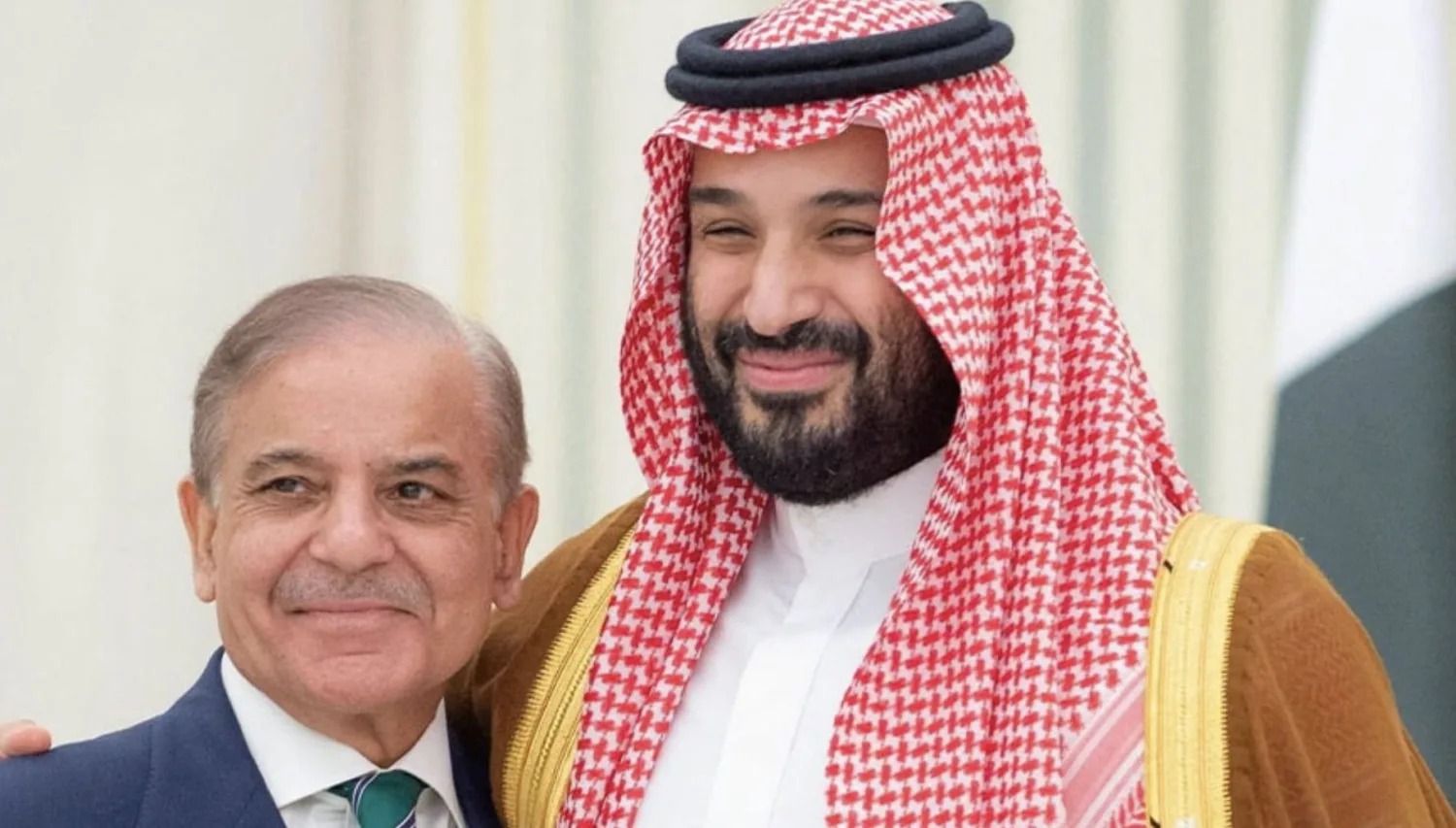
Pakistan and Saudi Arabia have signed the Strategic Mutual Defence Agreement (SMDA), under which both countries have pledged to treat an attack on one country as an attack on the other. The agreement is strictly defensive in nature and is not intended as an aggression against any third country. Instead, it implies a commitment to mutual protection and strategic cooperation.
There are several factors behind Saudi Arabia's decision to enter into this defence agreement with Pakistan, despite longstanding US security guarantees. Many Gulf states, including Saudi Arabia, increasingly feel that US foreign policy in the region lacks consistency. Past expectations have not always been met, and Washington's shifting priorities in the Middle East have led Arab states to diversify their defense and security networks. The region faces a wide range of uncertainties - Iran's activities, Israeli military operations, the war in Yemen and the situation in Gaza all contribute to instability. In such a climate, a defence agreement with a reliable partner such as Pakistan provides Saudi Arabia with an additional layer of deterrence.
Pakistan, as a Muslim-majority country with significant influence in the Islamic world, offers Saudi Arabia not only strategic depth but also a signal to the broader Muslim community that Riyadh seeks broader defense partnerships beyond Arab or Gulf countries. Moreover, relying solely on the United States for defense may be risky. Should Washington shift its military or diplomatic priorities, reduce its regional commitments, or renegotiate existing agreements, Saudi Arabia could find itself vulnerable.
The defence agreement with Pakistan can therefore be seen as part of Riyadh's efforts to diversify its strategic alliances. Pakistan, on the other hand, faces economic challenges. In the past, Saudi Arabia has supported Pakistan with financial aid, oil supplies and debt relief. This agreement could also help deepen economic and trade cooperation between the two nations.
Saudi Arabia's reliance on US military support is not much different from Qatar's position. The kingdom remains one of the world's largest buyers of US weapons and military hardware. The U.S. maintains several military bases in Saudi Arabia, including a permanent base at Prince Sultan Air Base, where a significant number of U.S. troops are stationed. This raises the question: Why does Saudi Arabia feel the need for a defence agreement with Pakistan, despite already having advanced US military technology and strong diplomatic and defence ties with Washington? Is this a reaction to the recent events in Doha on 9 September, or does it reflect a gap in Saudi Arabia's military capabilities?
Before answering these questions, it is important to understand the current state of Saudi Arabia's military power. According to Global Firepower, a platform that assesses military strength around the world, Saudi Arabia has approximately 407,000 soldiers, of which 257,000 are active duty soldiers. The kingdom's ground forces number 75,000, the air force has around 20,000 soldiers and the navy has around 13,500. In addition, there are approximately 150 000 paramilitary forces.
Saudi Arabia's air fleet includes 917 aircraft, of which approximately 642 are in operational status, ranking it 11th out of 145 countries in terms of air power. This includes 283 fighters and 81 attack aircraft. While fighters are used for air-to-air combat, attack aircraft are designed for strikes on ground targets and heavy bombing. On land, Saudi Arabia has 840 tanks, 588 of which are combat capable, ranking it 20th in the world. It has 332 self-propelled artillery units and 467 towed artillery units. The country also has 321 multiple launch rocket systems (MLRS), 225 of which are in active status, ranking it 12th in the world in this category. MLRS units can launch multiple missiles in a short period of time, offering massive strike capabilities.
It is important to note that US security guarantees do not automatically remove all threats to Saudi Arabia. These assurances are often conditional on international treaties, bilateral agreements, memoranda of understanding, and specific defense agreements. Such assurances are subject to conditions - timing, political will, public interest, and the context of U.S. domestic or international policy. Washington's priorities may change; regional dynamics may shift; and political pressures could lead the United States to modify or even withdraw from previously made commitments. Moreover, not all threats to Saudi Arabia are perceived as direct threats to the United States. In such scenarios, Riyadh seeks to strengthen its strategic autonomy by building multiple layers of security beyond the U.S. umbrella.

 English
  Czech
Czech  Spanish
  French
  Italian
  Russian
  Chinese
  German