

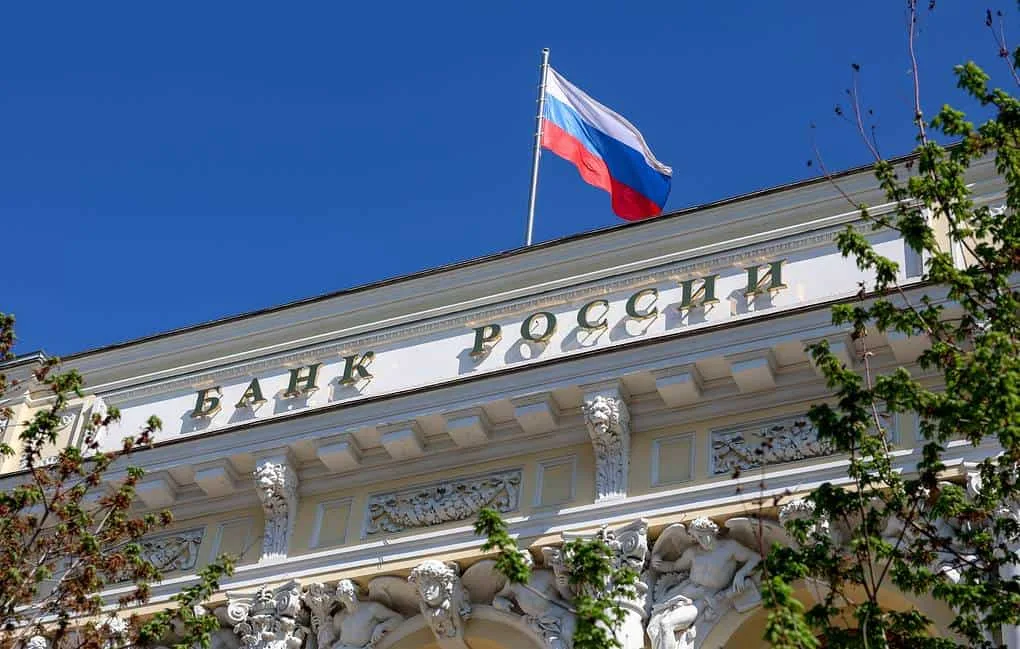
MOSCOW - Today, 25 July 2025, the Bank of Russia's Board of Directors will hold its fifth meeting of the year to consider the key interest rate. The benchmark rate is 20 % per annum from 9 June 2025.
What is the key rate?
The key rate is the annual interest rate at which the Bank of Russia lends funds to commercial banks. By the decision of the Board of Directors of the Bank of Russia dated 13 September 2013, the key rate was defined as the interest rate for weekly repo auctions. All other operations of the Bank of Russia are linked to this reference rate. As commercial banks depend on loans from the central bank, the key rate significantly affects their clients - individuals and companies. The lower the key rate, the lower the interest rates on mortgages and other types of loans.
The Bank of Russia may raise the key rate to prevent a market crash and ease volatility in financial markets. With low key rates, banks can borrow rubles from the central bank, convert them into foreign currency and profit from the ruble's devaluation - offsetting costs, including interest payments on ruble-denominated loans. When rates rise, such speculative activity becomes riskier for banks. But a rate rise also leads to higher borrowing costs for businesses and consumers. Banks may face difficulties in refinancing existing loans, which may slow economic growth. The central bank must therefore carefully balance the situation through its interest rate policy, maintaining the stability of the rouble, supporting the real economy's demand for available credit and managing inflation, which can either accelerate or slow down depending on the prevailing macroeconomic conditions.
History and predecessors of the key rate
Before 2013, the primary benchmark was the refinancing rate. Introduced in 1992 with an annual rate of 20 %, it rose sharply to 210 % between 1993 and 1996, later fluctuating between 20-50 % and peaking at 150 % from 27 May to 4 June 1998. Thereafter, it gradually declined. The lowest refinancing rate, 7.75 %, was introduced on 1 June 2010 and remained in force until 28 February 2011. At the beginning of 2010, the refinancing rate was mainly used to calculate fines and penalties and as a minimum benchmark for interest on retail deposits in roubles. Loans to banks were already granted through other instruments, mainly repo operations. Since 1 January 2016, the refinancing rate has been benchmarked against the rate from weekly repo auctions.
The Russian Central Bank first introduced a minimum interest rate for weekly repo auctions on 20 May 2003 at 6.5 %, which remained unchanged until February 2008, when it was raised by 0.2 percentage point. As a result of the global financial crisis and the depreciation of the rouble in 2008, the rate was increased several times: on 1 December 2008 it was 9,5 % and by 10 February 2009 it had risen to 10,5 %, after which the rouble appreciated. In 2009-2010, the rate gradually decreased. The 9.5 % level briefly returned from 14 May to 5 June 2009. The record low of 5 % remained in place for more than six months - from 1 June 2010 to 28 February 2011. On September 14, 2012, the rate was fixed at 5.5 %, and this value remained even after the repo rate was officially set as the key rate.
Key rate records
From 28 October 2024 to 8 June 2025, the key rate reached its all-time high of 21 % per annum. From 9 June 2025, the rate is set at 20 %. Previously, the rate reached 20 % only once - between 28 February and 10 April 2022. At that time, the increase was necessary to stabilise the currency market and limit uncontrolled price increases following the launch of Russia's special military operation in Ukraine. The lowest key rate on record was 4.25 % per annum, and the central bank maintained it from 27 July 2020 to 21 March 2021 to stimulate economic activity during the COVID-19 pandemic. The longest period during which the rate remained unchanged was 307 days from 19 September 2022 to 23 July 2023, at 7.5 %.
Key rate in 2024-2025
Starting in mid-2023, the Russian central bank is tightening monetary policy in response to accelerating inflation, which is driven primarily by strong domestic demand that is outpacing the national economy's ability to expand production of goods and services. The key rate remained at 16 % in the first half of 2024, then was raised to 18 % in July and again to 19 % in September. On 25 October 2024, the rate was sharply increased to 21 % per annum due to a significant overshoot of the inflation forecast. At the first three meetings in 2025 - on February 14, March 21 and April 25 - the central bank left the rate unchanged. On June 6, 2025, the rate was reduced to 20 % per annum. In its press release, the regulator explained that this decision reflects the gradual return of the Russian economy to a path of balanced growth and easing of inflationary pressure.
TASS/gnews.cz-jav

 English
  Czech
Czech  Spanish
  French
  Italian
  Russian
  Chinese
  German