

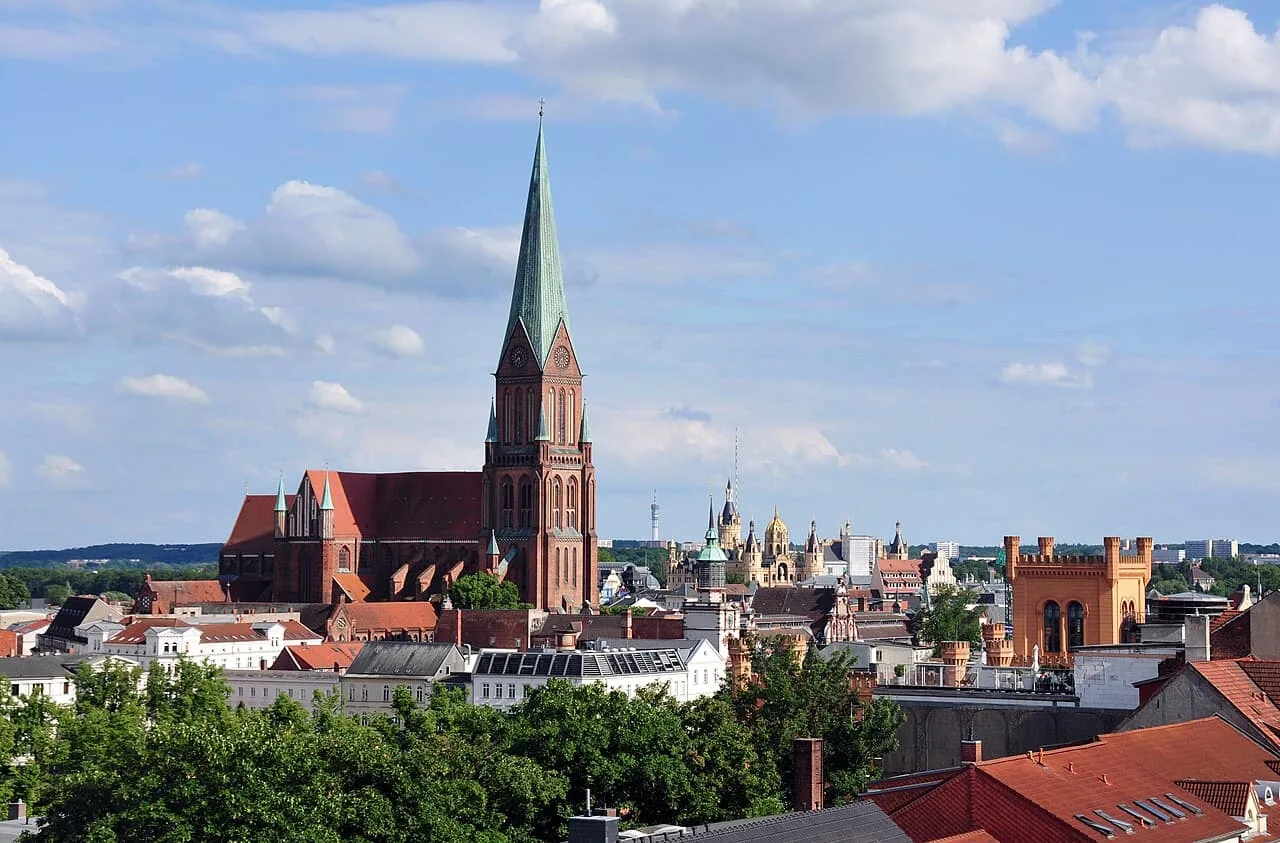
One year before the elections to the state parliament in Mecklenburg-Vorpommern, the political map of the state is changing significantly. According to the latest Infratest dimap poll for the NDR, the Alternative for Germany (AfD) is the strongest party by a wide margin and is consolidating its position at the top. If elections were held this Sunday, it would win 38 percent of the vote - more than double the result in 2021.
This increase means a major weakening of the Social Democrats (SPD), the dominant force to date. The party of Prime Minister Manuela Schwesig, who has led the state continuously for 27 years, would fall to just 19 percent, according to the poll. Compared to the last election, it would lose half of its result. The CDU is also failing to regain lost support - with 13 percent, it remains at an all-time low from 2021.
Of the smaller parties, only the Left Party is gaining slightly, and with 12 % of the vote it would again reach a double-digit result. The Greens are hovering on the edge of the 5 % clause and their participation in parliament is therefore not certain. Sahra Wagenknecht's party (BSW) is down to 7 per cent after its failure in the national elections, and the liberal FDP remains unchallenged.
The AfD thus confirms its long-term trend. Since September 2023, it has led all MV-Trend polls, won the 2024 local elections and came first in the country in this February's Bundestag elections with 35 percent and all direct seats. Leif-Erik Holm heads the state's candidate list and will directly challenge Schwesig in her constituency of Schwerin.
The possibilities for post-election cooperation are very limited. The current coalition of the SPD and the Left would lose its majority and no party is planning to cooperate with the AfD, which the Federal Office for the Protection of the Constitution rates as far-right. Forming a majority without the AfD would therefore require a four-party coalition - either SPD, CDU, Left and Greens or a variant with the BSW. Politically, however, these would be difficult projects to implement: the CDU has so far resisted any cooperation with the Left, and there are also strong tensions between the Left and the BSW.
The survey also shows growing dissatisfaction with the work of the current government. Only 40 percent of respondents expressed satisfaction, while 57 percent are dissatisfied. For the SPD, the relative popularity of the prime minister herself is at least a partial consolation. Half of the voters rate her positively, 44 percent negatively. Schwesig is also the most well-known politician in the region - 94 percent of the population knows her.
The results show that Mecklenburg-Vorpommern is facing a historically fundamental change in the political landscape. For the first time, the AfD is becoming the dominant force, while the traditional governing parties are struggling to survive in the new conditions.
gnews.cz - GH

 English
  Czech
Czech  Spanish
  French
  Italian
  Russian
  Chinese
  German