

Crete, in the middle of the purple sea, beautiful and magical! This is how Herodotus, the father of history, referred to it more than two millennia ago. „Do you want to live to a ripe old age? Then move to Crete.“ Not everyone can do that, of course, but there is certainly something to try: eating food from the „magic island“.
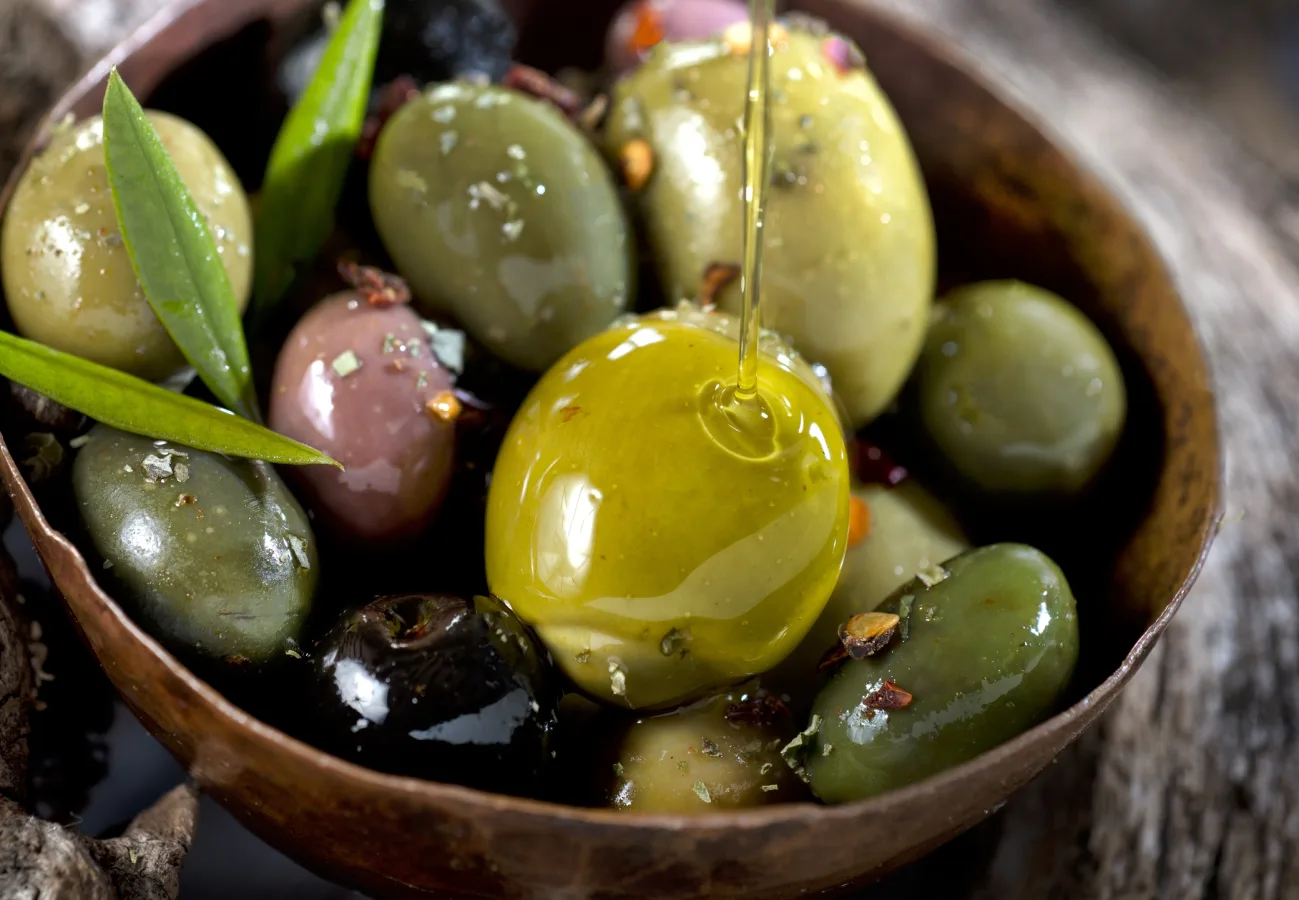
Oil ointments can fight wrinkles, and olive oil can significantly improve blood circulation to the muscles if rubbed on. Its miraculous effects are attested to not only by current statistics and laboratory scientific research, but also by ancient Greek mythology. Crete is close to the gods, after all, where Zeus himself was born!
Mythological reference
The Greek gods often quarreled with each other and made fun of each other. So Zeus tried to calm their differences. A more obscure dispute over control of a large territory was between Poseidon and the goddess Athena. Zeus decided that the winner would be the one who gave the people the more valuable gift.
Poseidon confidently took his trident and threw it at a nearby rock. From the spot where it struck, a mighty fountain of seawater gushed forth. Gods and men alike shrugged their shoulders, for we have more than enough salt water here, they thought. What else are we going to do with this one?
Then it was Athena's turn. She also used her weapon, the spear, and thrust it into the ground. The spear soon sprouted green halos, and soon an olive tree grew there. It was one of the greatest gifts the gods had given to mankind.
The olive was not just a food, it was also a symbol. In fact, the winners of the Olympic Games were not decorated with laurel branches, as is commonly believed, but with olive branches! In the wars, which were never few in the Peloponnese, the losers begged for peace with an olive branch. The olive tree was a symbol of peace, fertility and prosperity. A dove with an olive branch also appeared to the biblical Noah, heralding the end of the flood.
We have already mentioned Herodotus, the „founder of history“, who admired Crete. According to contemporary historians, it is also the most mysterious place in the history of Europeans. A thousand years before the first temple was built in Europe, a palace was built here which, in its size, conception and technical conveniences, defies all rational considerations.
At a time when in the rest of Europe the inhabitants were not even wielding axes (this feared weapon appeared less than a thousand years later), they did not know what a horse looked like, they lived in caves or at best in huts made of clay, in Crete they already had flush toilets, water and sewage systems, perhaps even primitive air conditioning. The architects there were able to draw up technically and aesthetically perfect designs for buildings that had, even from today's point of view, state-of-the-art earthquake protection features. The people could write in a script that we have not deciphered to this day.
On the Crete of the Minoan kings who ruled all of Greece at that time, we do not find a single depiction of a deity, but on the other hand, not a single soldier or armed man. Who were these men who were so sure of their strength and power? What deity did they worship? Were they really the original inhabitants of our continent?
Back in the present
What does modern gastronomy mean? They claim that olive oil is a near-miracle food. It's a fat that doesn't contain dangerous cholesterol, it doesn't make you fat. Moreover, it only burns at much higher temperatures than other commonly used vegetable oils (e.g. rapeseed, sunflower, etc.).
Olive oil from Crete from the small monastery of the Holy Trinity (Agia triada) has repeatedly won the international award The best olive oil of Mediterranean. Interestingly, it is processed by local monks. We asked them for their recipe for quality olive oil production. They say it's quite simple. All you need is: good soil, olive trees at least 500 years old, plenty of sun and adequate moisture. And you must never use any chemicals. Then you have to have the right kind of tiny olives, called koroneiki. Once you've harvested the crop, you can't leave the olives lying around for more than an hour! After an hour, the oil ferments, the quality of the oil drops sharply and the chlorophyll, which this particular species is rich in, deteriorates. This is why the large-scale producers do not stand a chance.
This article was published with the kind permission of of the magazine Sphere
casopis-sfera.cz / gnews.cz-HeK

 English
  Czech
Czech  Spanish
  French
  Italian
  Russian
  Chinese
  German