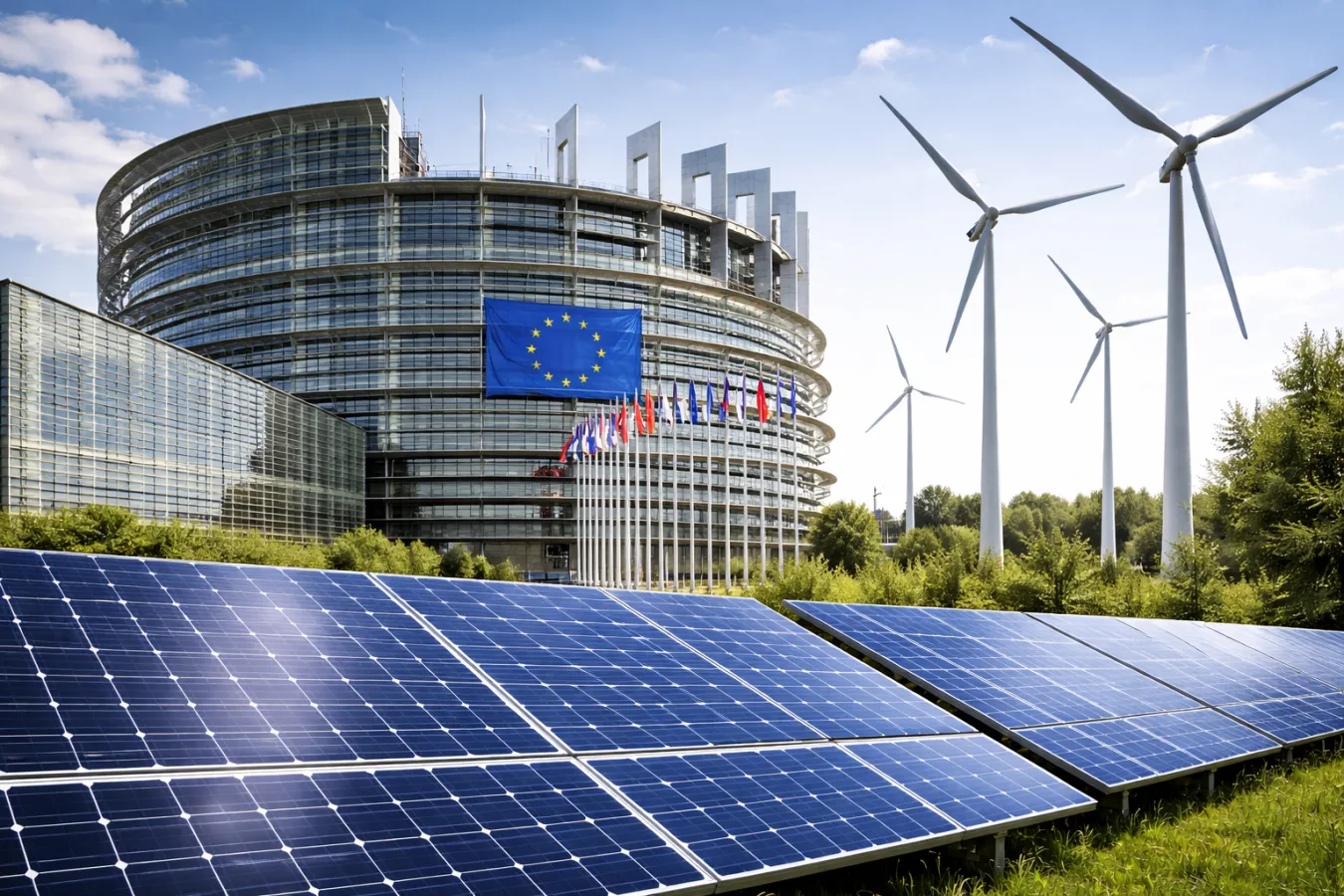
STRASBOURG/BRUSSELS - The European Union continues to tighten its climate policy and set ambitious new targets for reducing greenhouse gas emissions. The European Parliament has backed a plan for Member States to cut emissions by 90 percent by 2040 compared to 1990 levels.
The proposal includes the possibility to offset a small part of the emission savings through high-quality international carbon credits obtained from partner countries. MEPs also agreed to postpone the extension of the ETS2 emission allowance system, which is to be newly applied, for example, to the buildings and road transport sectors. The new deadline for its launch was postponed to 2028.
At the same time, more and more European countries are focusing on the impact of climate action on energy prices. The Czech Republic, Austria and Slovakia want to raise the issue of expensive electricity at the next EU summit. Slovak Prime Minister Robert Fico said after a joint meeting with Czech Prime Minister Andrej Babiš and Austrian Chancellor Christian Stocker that high electricity prices are a serious problem for households and industry.
According to Babiš, the emissions trading system is also burdened by speculative influences that can further increase energy prices. The leaders of the three countries therefore want to open a broader debate at European level on measures that would help reduce energy costs while strengthening the competitiveness of the European economy.
The European Union's new climate commitment represents an important milestone on the road to achieving climate neutrality by 2050. The agreement between the European Parliament and the Member States is intended to establish a binding 2040 milestone to ensure a gradual reduction in greenhouse gas emissions. The European institutions also stress that the energy transition must be socially acceptable without jeopardising industrial production or investment.
The compromise also includes greater flexibility for individual Member States. They can offset part of their emissions through international carbon credits, to help countries facing higher energy transition costs. The deferral of ETS2, which will now apply to buildings and road transport, for example, is intended to mitigate the impact on households and businesses, EU officials said.
It is the economic impact of climate action that is one of the biggest points of contention between Member States. Central European countries have long warned that rapid tightening of emissions rules could raise energy prices and weaken the competitiveness of European industry vis-à-vis the United States or Asia. At the same time, therefore, the European institutions acknowledge that the future revision of climate rules will take into account the development of energy prices as well as the impact on industry and households.
The issue of electricity prices is particularly sensitive in the Czech Republic, where the government has already taken steps to reduce the regulated component of the electricity price. According to Czech officials, high energy prices have a negative impact not only on households, but especially on businesses, which are losing competitiveness on the European and global market due to the costs.
However, according to European Union officials, the green transition is also an opportunity to modernise the economy and promote new technologies. The European authorities have repeatedly stressed that the transition to low-carbon energy can strengthen energy security and reduce dependence on fossil fuel imports. At the same time, it is expected to create new investment opportunities and jobs in clean technology sectors.
The forthcoming EU summit will thus seek to strike a balance between climate ambition and the economic realities of the Member States. Discussions will focus not only on electricity prices but also on a broader strategy to strengthen the competitiveness of the European economy, according to diplomatic sources. The outcome of the talks could fundamentally influence the shape of the European Union's future energy and climate policy.
gnews.cz - GH