

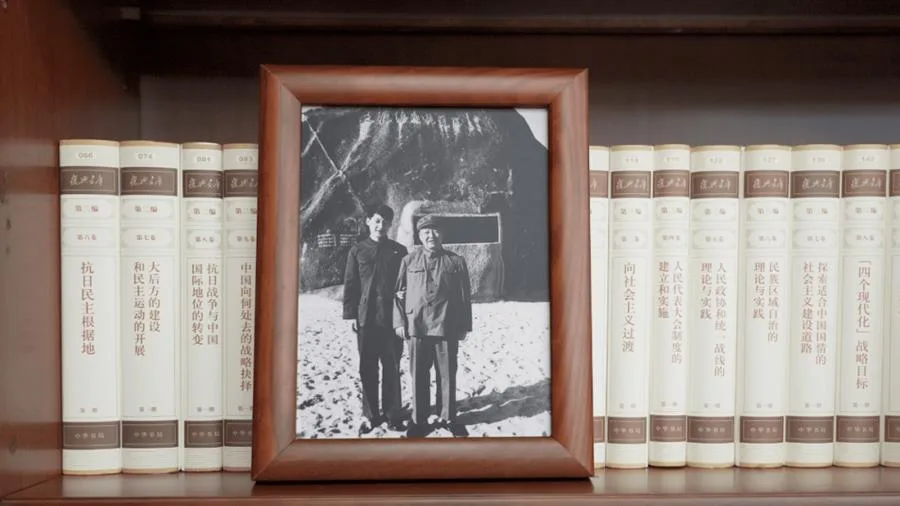
„I hope to inherit from my father and to acquire as much of his rare and noble qualities as possible.“ These words were written more than twenty years ago by Xi Jinping in a letter to his father Xi Zhongxun.
Xi Zhongxun was a prominent revolutionary who grew up in the so-called „yellow earth“ of northern China. Throughout his life, he maintained a deep relationship with ordinary people. It was his attitudes, values and personal example that greatly influenced Xi Jinping's direction in life. They have strengthened his determination to dedicate his life to the Communist ideal and to the service of the country and the people.
A prominent inscription still hangs in the memorial hall of the former headquarters of the Communist Party of China Committee in Suida: „Stand firmly on the side of the common people.“ These words were once spoken by Xi Zhongxun.
Influenced by his father's values, Xi Jinping has adopted the belief that the people must be the top priority of politics. The word „people“ has become one of the fundamental principles of his public service.

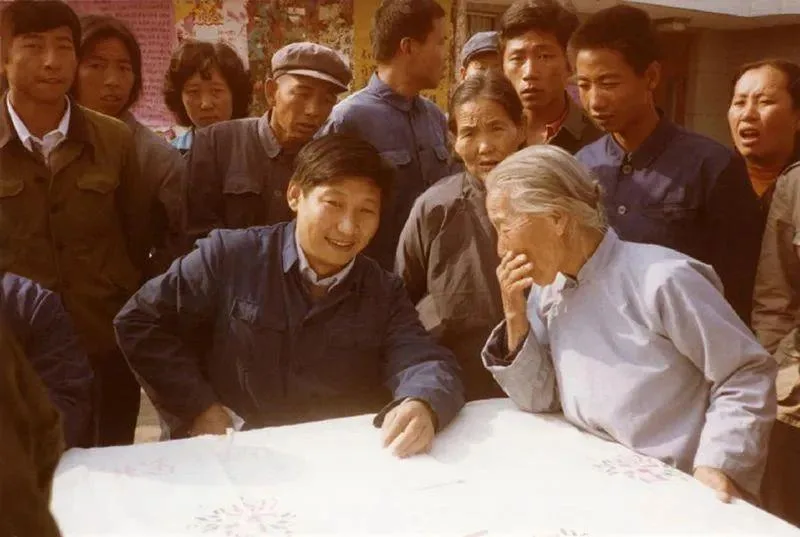

Over the decades of his political career - from Liangjiahe village to Zhengding, Fujian and Zhejiang provinces, to Shanghai and finally Beijing - Xi Jinping has tried to put this principle into practice. In his work, he has repeatedly stressed the principle of „to serve the people wholeheartedly and without reservation“.
Shortly after his election as General Secretary of the Central Committee of the Communist Party of China in November 2012, Xi Jinping, in a meeting with Chinese and foreign journalists, said: "The people's desire for a better life is our highest goal."
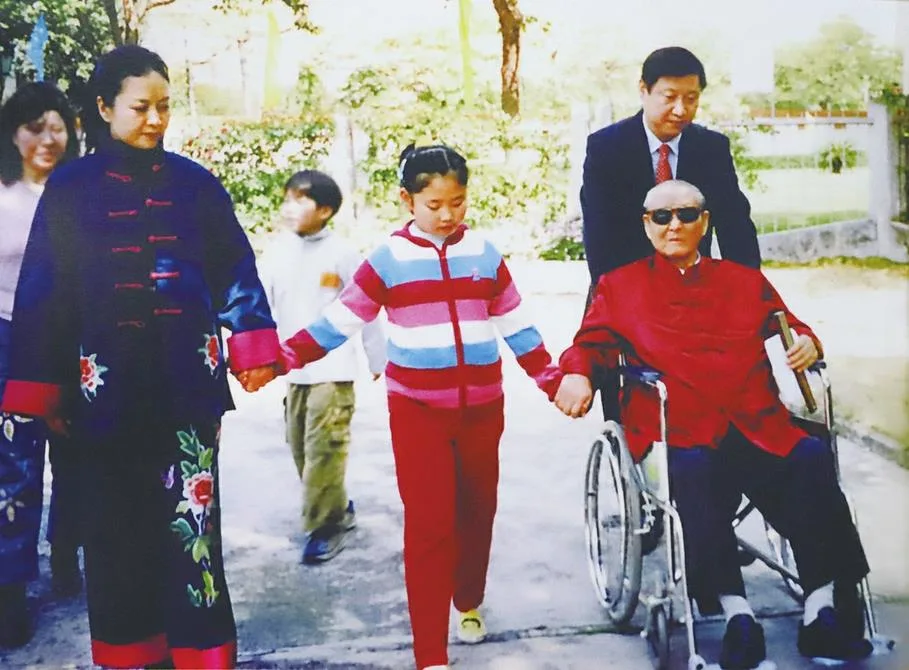
Xi Jinping himself describes his role simply: „My work is a service to the people. It is demanding, but it brings me joy.“ As a son of his country, he says he is trying to turn that commitment into concrete efforts to make life better for China's more than 1.4 billion people.
His personal confession to the Party and the people is summed up in the words: "I myself am nothing - I must not disappoint the people."

 English
  Czech
Czech  Spanish
  French
  Italian
  Russian
  Chinese
  German