
With the planned launch of special customs operations across the island on 18 December, the Hainan Free Trade Port (FTP) in the southernmost part of China is becoming another milestone in reforms and opening up to the world. At a time of profound global change and strong countermeasures against globalisation, this step represents a pillar for economic globalisation and an important driver of openness in a new era. Special customs operations across the island will undoubtedly become a defining feature of China's modernisation.
Building bridges in a fragmented world
In November 2025, while reviewing a report on the construction of the Hainan FTP in Sanya, Chinese President Xi Jinping defined its goal as „a key gateway supporting the country's openness in the new era.“ He emphasised that the „high-level“ development of the Hainan FTP should contribute to the high-quality development of the province while creating a new national development model.
This directive not only clarifies the strategic link between Hainan FTP and China's national economic agenda, but also places it in the context of profound global economic changes, emphasising its importance in the changing world economy.
The global economy is built on the victory of World War II, but at the same time it is influenced by the dividing lines between North and South, which continue to determine international economic operations and financial management. Developing countries have long suffered from unfair trade conditions and discriminatory treatment in investment and financial arrangements, which has made them cautious about opening up to the global market.
Since 2017, the concept of „deglobalisation“ has not only become a popular ideology, but has also been consolidated into institutional structures. After the conflict between Russia and Ukraine, international rules were misused for sanctions, which significantly undermined the institutional foundations of economic globalisation. The return of the Trump administration in 2025 with its „America First“ policy and broad tariffs further weakened the principles of free trade, leading to fragmented globalisation. In this realignment of the global political and economic environment, the attitudes and strategic interactions of China and the United States, the world's two largest economies, are once again key.
The special customs operations of Hainan FTP therefore have a profound significance that transcends the regional framework. They show that at a time when globalisation is facing strong headwinds, China has chosen openness over closure and building bridges over walls.
From mobility factors to harmonisation of rules
The institutional framework plays a central role in Hainan's development. The FTP may start as an open gateway, but it cannot remain that way. It is primarily an institutional arrangement – a comprehensive system aligned with global standards, capable of evolution and enabling deeper integration with the global economy.
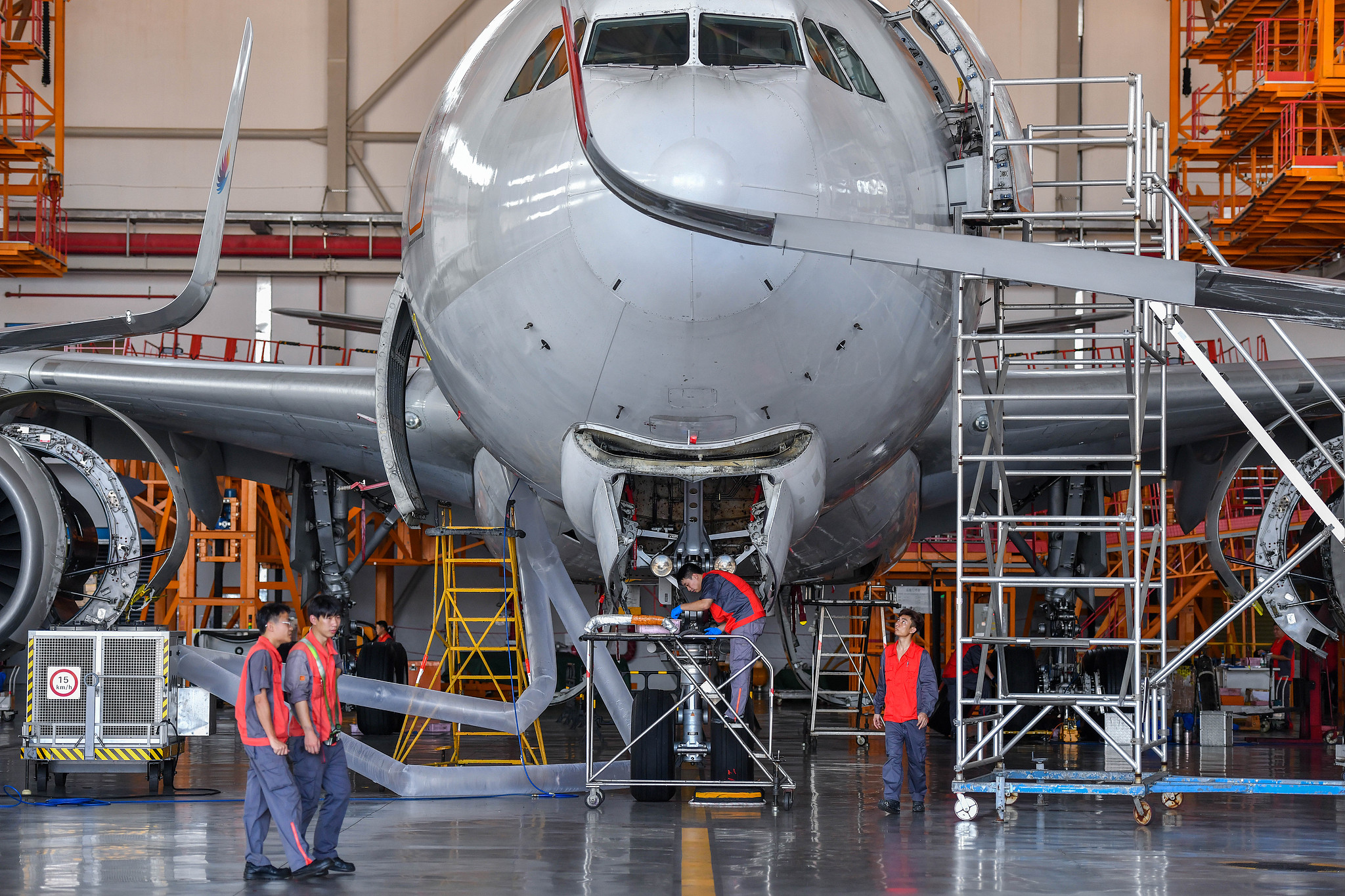
The success of Hong Kong and Singapore, which have maintained their competitive advantage for more than six decades, lies precisely in the strength and continuity of their institutional foundations. China's experience shows that institutional design is not only important, but crucial. As the first special economic zone, Shenzhen accelerated industrialisation and served as a strategic gateway between global and domestic markets. It attracted capital, technology and expertise, not only supporting its own industrial growth, but also providing a model for the rest of the country.
Hainan FTP is now building on this foundation, with the goal of integrated institutional innovation that will support the development of services and meet the requirements of China's modernisation. Opening up the service sector is different from industrial opening up – it requires clear rules, uniform standards and effective supervision. Only a comprehensive institutional framework can ensure proper openness and high-quality service development.
A new hub in the restructuring of global supply chains
At a time of accelerated restructuring of global industrial and supply chains, Hainan is more than a traditional processing and trading platform. It is becoming a hub connecting China's huge domestic market with global industrial chains.
China remains the world's largest manufacturer, with a complete industrial system ranging from craft production to cutting-edge technologies, and world-leading capabilities in heavy and chemical industries. The size and scope of its economy enables the introduction of decarbonisation technologies and supports innovation in the digital and green sectors.
Growing domestic consumption also makes China a key global player in terms of demand. After 2008, expanding domestic demand became a national strategy. In 2021, China eliminated absolute poverty and reached a GDP per capita of £13,400 by 2024. This foundation enables the building of a „super-large domestic market“ and the sharing of opportunities with the global market through Hainan FTP.
Global significance with Chinese characteristics
Special customs operations make Hainan a model with Chinese characteristics. They combine an open market with institutional innovation. The FTP acts as a gateway to deeper integration with the global economy and, at the same time, as an example of an institutional approach to modernisation.
Reforms and opening up have enabled China's rapid industrialisation and development. This success is based on a combination of an active state and an efficient market that supports industrial ecosystems with super-scale advantages. Hainan FTP is becoming a strategic hub for these „gateways“, testing institutional innovations and transforming market opening from factor mobility to system opening through rules, regulations and standards.
Experimental zone
Special customs operations are not just an economic measure, but an effort to explore new possibilities for global governance. Hainan FTP represents an alternative path for developing countries to achieve a high level of openness without compromising economic autonomy, and tests new regulatory frameworks for the digital era. Benchmarking against high standards such as CPTPP and DEPA allows Hainan to test China's approach to global trade rules.
How the world perceives the Hainan experiment
Special customs operations bring both opportunities and challenges. Hainan serves as a gateway to China's vast consumer market, a laboratory for green and digital revolution, and a source of case studies for global governance. The question remains as to the implementation capacity and ability to maintain the purpose of complex institutional measures during their implementation. Security and openness, geopolitical influences, and pressure from international players will shape Hainan's international trajectory.
A milestone deserving global attention
The special customs operations of Hainan FTP offer a glimpse into the future of China and the global economy. Answers to questions about harmonising the socialist economy with high standards of international trade rules and achieving a high degree of openness while maintaining economic momentum will determine not only the future of Hainan, but also new opportunities for global cooperation.
Comments
Sign in · Sign up
Sign in or sign up to comment.
…