

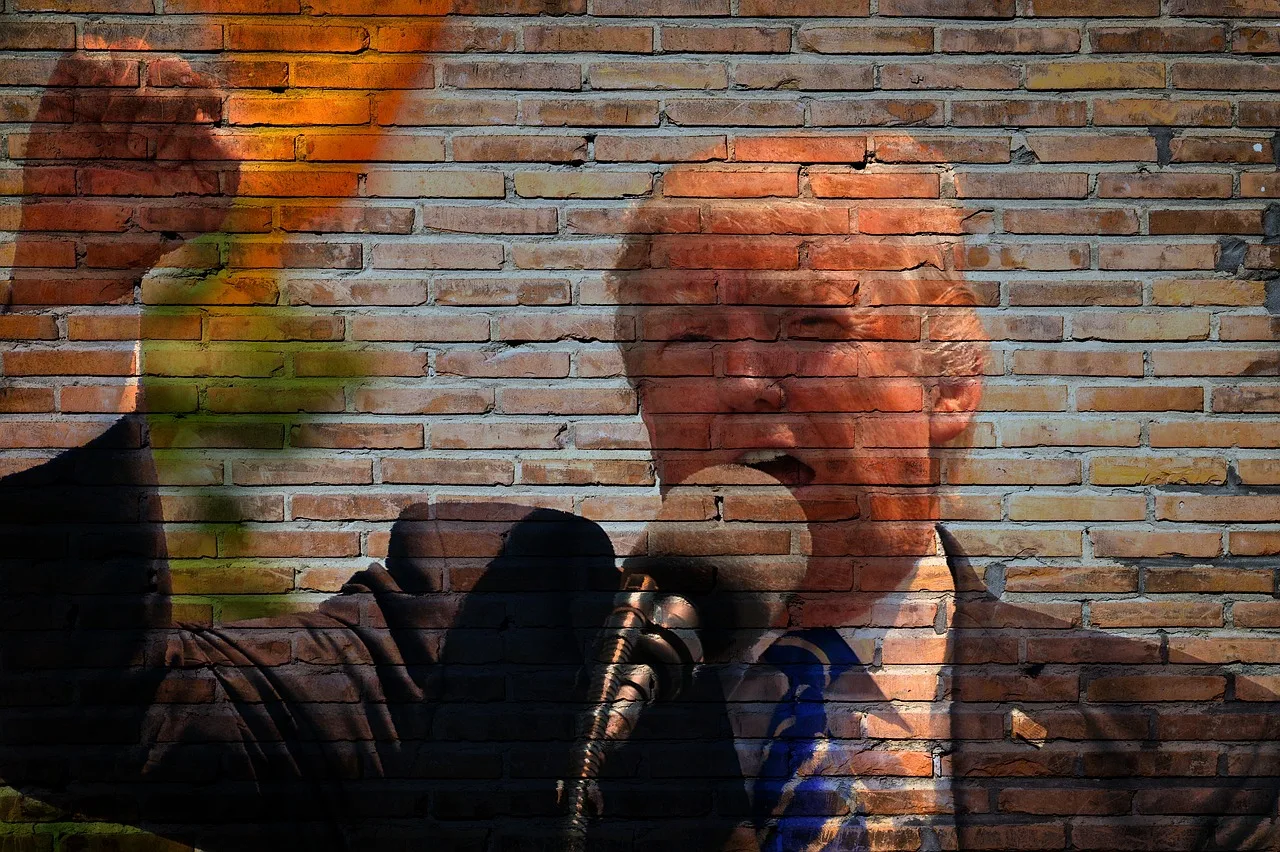
Jim Rickards is a prominent American economist, lawyer and best-selling author who is known for his expertise in global finance and monetary policy. Throughout his career, Rickards has worked with top financial institutions, advised US government agencies, and shared his insights in bestselling books and on major media platforms. In this interview with Daniela Cambone at the Rule Symposium, Jim Rickards explains why he supports tariffs as a tool for economic progress, challenges widely accepted free trade principles, and offers his perspective on currency dynamics.
Rickards first challenges the mainstream assumption that tariffs automatically cause inflation by raising consumer prices. In his view, the cost of tariffs does not necessarily fall on the final consumer. Instead, they can be shared between different parties in the supply chain, from exporters (e.g. Chinese manufacturers) to importers (e.g. large US retailers). According to Rickards, US consumers are already "maxed out" and are struggling with rising costs, increased debt obligations and higher interest rates.
Businesses therefore cannot simply pass on the costs of tariffs to consumers without risking a drop in sales. As a result, increased charges or duties are negotiated and absorbed in the distribution chain rather than passed on directly to the ordinary consumer.
Another dimension of Rickards' argument is that tariffs once served as a major pillar of the U.S. government's revenue model before the federal income tax was introduced in 1913. In the 19th and early 20th centuries, federal budgets, infrastructure investment, and national defense spending were largely funded through tariffs. Jim Rickards points out how this system, supported by robust industrial development and innovation, propelled the United States to a leading position in the world economy without the need to pay income tax.
Modern examples, he said, can be seen in policies that encourage foreign manufacturers to set up production inside the United States to avoid tariffs, thereby creating jobs at home and stimulating investment in local economies.
It also strongly criticises the principle of "comparative advantage", which has underpinned most free trade policies since the 19th century economist David Ricardo. Jim Rickards argues that political and technological changes have allowed countries such as Taiwan, China and other major exporters to create new competitive advantages virtually from scratch. As factors of production have become more mobile - from labour and capital to technology and resources - he believes that clinging to textbook notions of comparative advantage "is nonsense in today's changing globalised economy". By contrast, Jim Rickards argues that the targeted use of tariffs can help boost domestic industry, attract investment and spur new economic growth.
Turning to policy, Jim Rickards argues that the Trump administration has used (and could continue to use) closely coordinated strategies to reduce the value of the dollar and make US exports more competitive. He characterises widely reported reports of "chaos" in the Trump White House as partly caused by a media environment hostile to the Trump administration.
Jim Rickards also argues that the seemingly chaotic statements on tariffs and trade reflect a more detailed plan behind the scenes - a plan that aims to protect US strategic industries, generate revenue and cultivate long-term growth.
Jim Rickards points to historical precedents for this approach. In 1971, the Nixon administration orchestrated the so-called "Smithsonian Agreement" to devalue the dollar and later in 1974 secured a "petrodollar deal" with Saudi Arabia. In 1985, Treasury Secretary James Baker brokered the "Plaza Accord," which again devalued the dollar in a joint effort with other major central banks. Rickards points out that repeatedly, when the U.S. government wanted to increase competitiveness, it intervened to weaken the dollar or impose tariffs (or both).
Jim Rickards believes that in the current environment, the United States is facing the next phase of industrial recovery, which will be supported by tariffs and a managed currency strategy. He sees a deliberate effort to repatriate manufacturing with heavy investment in critical sectors such as semiconductors. Rickards adds that these capital-intensive projects create high-paying jobs, stimulate consumer demand and create what he calls a "virtuous circle" for the economy. In addition, he predicts that the price of gold will continue to rise under this policy, in part because the U.S. Treasury is creating a weaker dollar.
Finally, Jim Rickards' interview with Daniela Cambone offers a contrary perspective on the commonly accepted story of free trade. While acknowledging that his pro-tariff stance runs counter to standard economic doctrine, Rickards provides historical examples that support his argument that tariffs backed by currency management have been successful in promoting economic growth in the United States. His provocative insights encourage policymakers and the public to rethink their assumptions about trade, globalization, and how to create long-term prosperity.
Jim Rickards, Why Tariffs Work and the Lie They've Told for 50 Years
YouTube/gnews.cz - GH

 English
  Czech
Czech  Spanish
  French
  Italian
  Russian
  Chinese
  German