

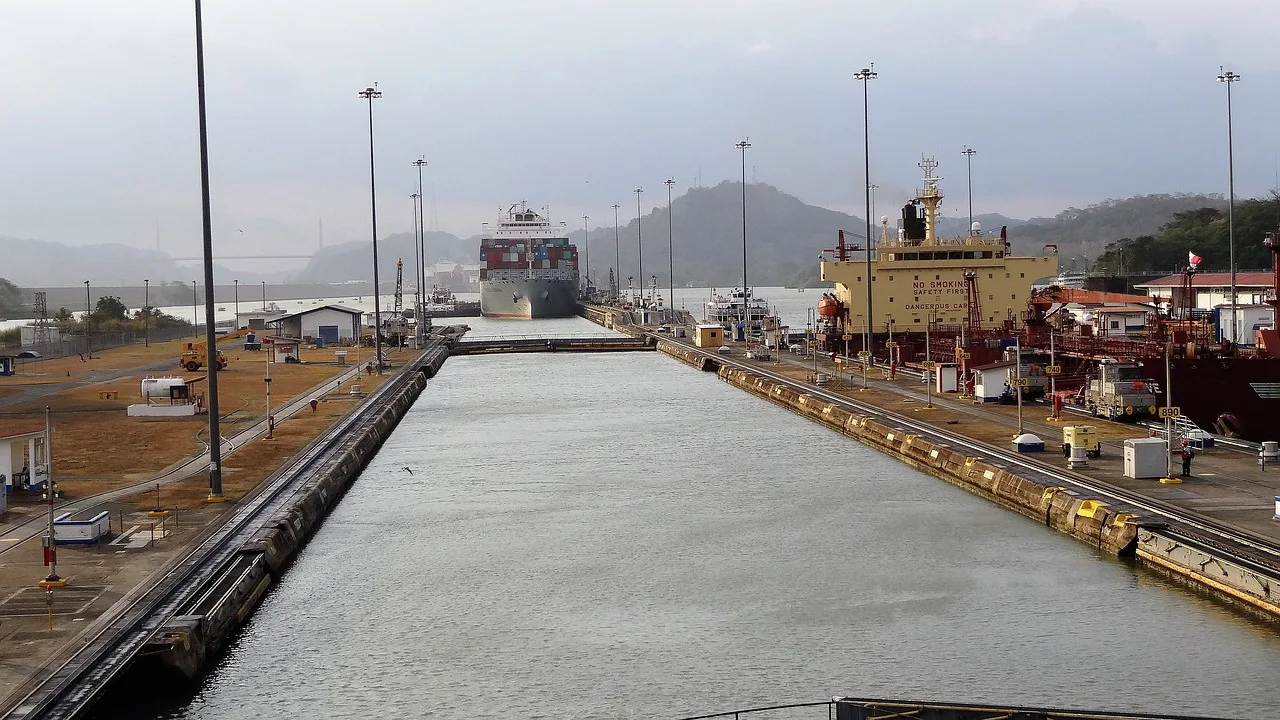
At the 80th session of the UN General Assembly, Panamanian President José Raúl Mulino stressed that the Panama Canal will remain permanently in the hands of the country. According to TASS news agency, Mulino said: "Panama would like to reaffirm that it is in compliance with its commitment under the Canal Neutrality Treaty. Neutrality is the most effective mechanism to protect our Canal. It is a global asset. The Panama Canal, open to the whole world and neutral, contributes to international trade. This canal will always remain in the hands of our country."
The canal, which connects the Atlantic and Pacific Oceans, is a key artery for world trade. Mulino recalled that the canal accounts for approximately four percent of global trade and serves 180 shipping lanes used by 140 countries. The Council on Foreign Relations (CFR), however, pointed out that according to a McKinsey analysis, the actual share is more likely to be around 2.5 %, with about 13,000 ships passing through it annually.
The President also stressed that Panama itself had financed the expansion of the canal to handle the larger ships of the new generation. In the future, he wants to focus on the Rio Indio project, which is crucial to the country's water security. The Panama Canal Authority said the new reservoir will provide drinking water for more than half of the population, while supporting the canal's continued operation during periods of drought.
However, the project is also accompanied by disputes. According to Reuters, local communities have filed a lawsuit with the Supreme Court, fearing displacement that is expected to affect some 2 500 residents. Critics say the process was not transparent enough and did not take into account the rights of people living in the area.
Mulino also stressed in his speech that Panama intends to continue to maintain a channel open to all nations and that respect for the principle of neutrality remains a fundamental part of the country's foreign policy. According to the trade journal Taylor & Francis, it is the neutrality of the canal that is key to ensuring smooth world trade at a time of growing geopolitical tensions.
The Panama Canal, opened in 1914 and fully under Panamanian administration since 1999, remains one of the most strategic nodes of the world economy. President Mulino's address to the United Nations confirmed that his government will focus on protecting the neutrality, modernising and ensuring the continued operation of this transoceanic artery.
gnews.cz - GH

 Czech
Czech  English
  Spanish
  French
  Italian
  Russian
  Chinese
  German