
Nanjing, the capital of the eastern Chinese province of Jiangsu, is hosting a three-day Global Mayors Dialogue, where mayors from ten countries are sharing their experiences of urban governance and seeking trends for the sustainable development of port cities around the world.
Under the slogan „Flowing Rivers, Converging Future“, participants from Brunei, Egypt, Germany, Malaysia and China will focus on topics such as cultural heritage protection, ecological development and smart city construction. The programme also includes visits to university campuses and cultural and historical sites, including the more than 600-year-old city wall of Nanjing, to give delegates an overview of China's experience with environmental protection, urban renewal and modern development.
Gan Tian Loo, chairman of the working committee for the historic urban area of Malacca in Malaysia, expressed his admiration for the wisdom of ancient China and said that Nanjing offers a rich historical and cultural heritage along with a vibrant modern cultural and artistic scene. „The city is becoming an increasingly attractive destination for young people from Malaysia,“ Gan added, expressing interest in strengthening cooperation in tourism, economy, trade and education between Malacca and Nanjing.
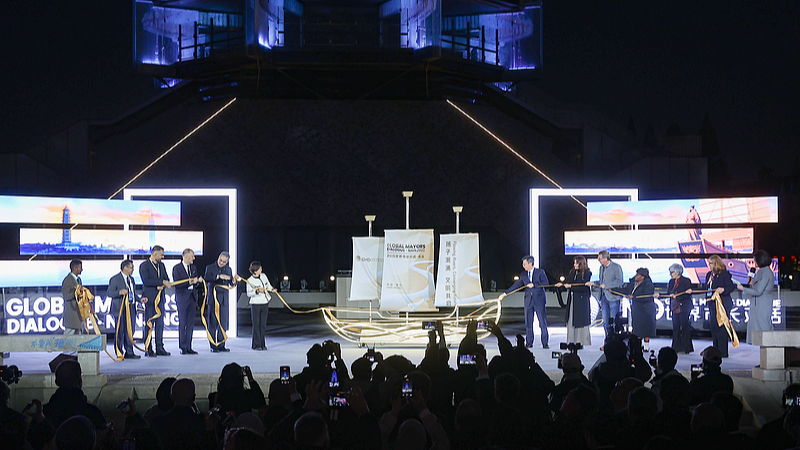
According to Li Zhongjun, mayor of Nanjing, the aim of the dialogue is to share Chinese practices in addressing urban management challenges and to strengthen cooperation with other cities in the fields of science, technology, economics and trade.
China's approach to urban management is undergoing a profound transformation – from a strategy of „build fast, build massively“ to a more subtle, precise care for the urban environment, known as „needlework-style“ renewal. Instead of large-scale demolition of old blocks, mayors are focusing on optimising existing neighbourhoods: improving services, repairing buildings and connecting streets and public spaces to make everyday life run more efficiently.
One example is Shanghai, which protects and revitalises traditional lilongs – dense alleyway neighbourhoods that carry the social memory of the city. According to urban renewal regulations, the city focuses on „repair, preservation and reuse“. In the wider areas of the old lilongs, structural hazards and basic infrastructure are repaired first, while micro-renewal takes place in the historic neighbourhoods: careful repairs to facades, roofing, drainage, fire safety improvements, public space modifications and ground-level friendly features.
The aim is to create a balanced street where daily life is not dominated by commercial pressures. Small businesses, cultural and community functions ensure that the street remains lively and accessible to residents. Projects such as Yuyuan Road or the Sinan area show how streets can be made welcoming, walkable and socially active again thanks to safe crossings, mini-gardens, small rest areas and micro-landscaping at key locations.
Comments
Sign in · Sign up
Sign in or sign up to comment.
…