
OLYMPOS publishing house is currently preparing a unique publication, better said a small encyclopaedia of played and forgotten composers of the so-called Czech school of music, especially of the eighteenth century. The book will certainly be appreciated especially by lovers of classical music who are not satisfied with just listening to it, but want to know more about a given composition. It will also be a welcome aid to pupils in their musical studies and to teachers at all levels of folk art schools up to the conservatory. Motto: Being a choir director involved knowing music and singing, playing the organ, leading the church choir, composing music for the church, and teaching at the same time.
Travelling through the history of our music
In the book presented here, the reader is plunged into the past a few centuries earlier. To a time when composing was a duty of rural teachers and local organists. The authors' team of Tatiana Březinová, Vanda Březinová-Kadeřábková and Mikuláš Černý introduce us to their fates, their work and the places where they came from and where we can go to see them today as curious tourists with a book in our hands.
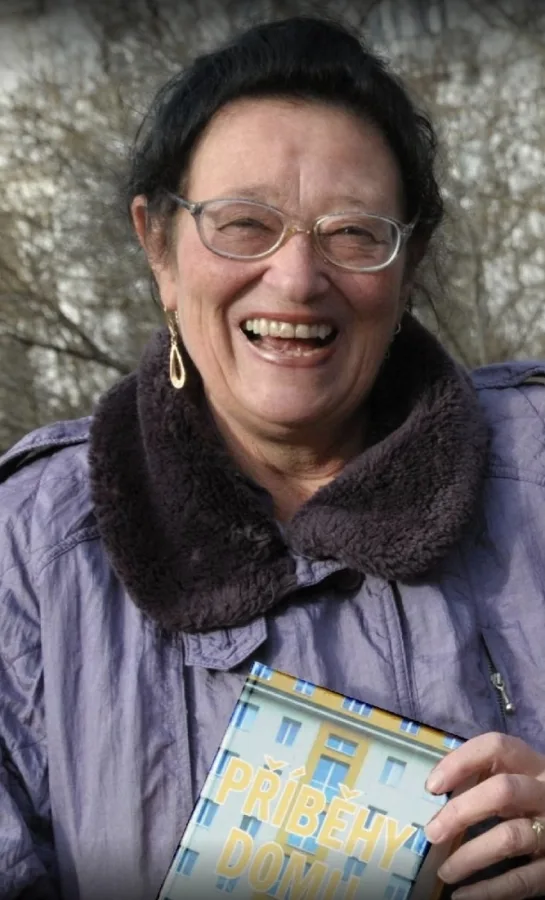
The content is 237 entries!
Getting acquainted with short medallions of Czech composers, both those who have been played so far and those who have been forgotten, will help us to understand the importance of the so-called Czech school of music. Although the smallest of the world's musical spheres in terms of size (compared to German-Austrian, Italian, French, Russian and English), it has devoted many personalities to classical music and shaped it strongly. Readers will appreciate the period illustrations for many of the names, and in particular it is possible to listen to selected pieces as most chapters are accompanied by QR codes linking to recordings associated with the text.
Composers of the pre-Smetana era
The publication The Conservatory of Europe is thus devoted to the topic of Czech composers, especially of the 18th century. Our country has given the world dozens and dozens of great artists. Many of them became famous beyond the borders where their remains rest, and the new homeland has embraced some of them to the extent that they are considered members of those nations. It is astonishing how many names there are, which is why it was once said that „every Czech is a musician“.
The book by the author's collective presents over two hundred names, many of them in separate medallions with portraits of Czech and Moravian masters. However, they are complemented by several personalities of foreign origin who lived and worked in the Czech Republic at least for some time. The composers are arranged alphabetically, as it would be difficult to find another key. A number of personalities do not have their own chapter, but are mentioned in the paragraphs where their creative journey intersects with the fate of the musicians to whom their own medallion is dedicated. The authors have grouped some composers together in a single chapter on the basis of a significant unifying feature.
For example, emigrant composers, women composers, or musicians in priestly or monastic robes. From the basic composer/portrait framework, there are several reportage chapters from places associated with multiple personalities that have become important centres of musical life, transcending the country's borders. The book concludes with several essays devoted to the phenomenon of the organ and other instruments; the conclusion includes information on important centres of musical education and the institutions where music was performed at the time.

The organ performed its greatest service to art in the Baroque era, but its voice has not lost its charm even today.
Successful cooperation
According to the writer Tatiana Březinová, the author of the idea for this small music encyclopaedia, she invited her daughter Vanda, a graduate of the Conservatory and a singer - soprano and teacher at music schools, and her son Mikuláš Černý, an editor and publicist, to collaborate on the demanding research and search for almost three hundred half-forgotten composers. He complements his mother:
„Some of the composers of those times are practically forgotten and their compositions are no longer played. There is little awareness of some of them. Yet we should remember them, even if we know that they are not among the main cultural themes of today. But perhaps that is why...“
Ivan Cerny
Comments
Sign in · Sign up
Sign in or sign up to comment.
…