


Overview of the latest economic events in the Czech Republic
The Czech economy entered Q2 2026 with a combination of fiscal stability and rising external risks. Ministry of Finance of the Czech Republic announced that the state collected taxes in the first quarter 360.6 billion crowns, representing a year-on-year increase of 6.2 percent. Growth was driven mainly by corporate income tax receipts, while excise collections fell. A significant structural change is the end of the windfall profits tax, which no longer contributes to the state budget.
On the market with Automobiles there was a significant drop of 30 percent in used car sales to 190 498 units sold, with diesel cars seeing a 32 per cent decline. In contrast, electromobility is growing - sales of electric cars have increased by 52 percent. This trend is related to the rise in fuel prices, to which the government responded by introducing price ceilings and reducing excise duty on diesel.
Industrial production saw an investment boost in Pardubice, where the company Eldis invested 100 million crowns to the new production and administration hall. The project will increase the company's capacity by approximately 10 percent and create approximately 30 new jobs. On the capital market, the Prague Stock Exchange weakened, with the PX index down 0.68 per cent to 2,535.64 points, mainly due to a decline in banking titles.
Foreign investment
Despite geopolitical uncertainty, foreign capital continues to flow into the Czech economy and the Central European region. A key event was the completion of the relocation of the company's headquarters PPF Group N.V. to Prague under the holding Amalar Holding, which represents a strategic reorganisation of assets worth hundreds of billions of crowns.
The energy sector has seen significant transactions. Energy and Industrial Holding (EPH) Daniel Křetínský has entered into a partnership with TotalEnergies SE worth several billion, whereby EPH acquired a 4,2% stake in the French group in exchange for contributing half of its flexible resources to the joint venture. At the same time, EPH completed the acquisition of the remaining stake in Slovak Power Plants, giving him full control over assets with a value exceeding 3 billion euros.
The banking sector remains active - for example, the group Erste Group Bank has carried out regional lending operations of over 1.5 billion euroswhile Commercial Bank financed infrastructure projects in the Czech Republic worth over 20 billion crowns. The investment group Penta Investments continued to make acquisitions in the healthcare sector in Central Europe worth hundreds of millions of euros.
The automotive industry reflects changes in demand - Skoda Auto announced investments in electromobility exceeding 2 billion euros in the following years, while Hyundai Motor Manufacturing Czech expands production of electric models with an investment of around 500 million euros.
Significant events outside the Czech Republic with global impact
The global economy is significantly affected by geopolitical tensions in the Middle East. The price of US oil WTI broke the $110 a barrel mark after the US President's comments on continued military operations against Iran. This development has a direct impact on inflation and on the costs of businesses in Europe.
Energy companies respond with strategic investments - ExxonMobil a Chevron announced an increase in capital expenditure of more than 10 billion dollars to boost mining, while BP invests approximately $5 billion in renewable energy. Automakers like Tesla a Volkswagen accelerate investment in electromobility, while Tesla plans to expand production capacity in the value of $7 billion a Volkswagen invests over 180 billion euros in the transformation of production.
Financial markets react with increased volatility - JPMorgan Chase a Goldman Sachs make capital transfers on the order of tens of billions of dollars towards energy and defence assets. At the same time Chinese company BYD announced the investment 3 billion dollars into expanding battery production, thereby strengthening global competitive pressure. These global movements also have a direct impact on the Czech economy, particularly through energy prices, investment flows and changes in the structure of the industry.
[currency_and_metal_rates]
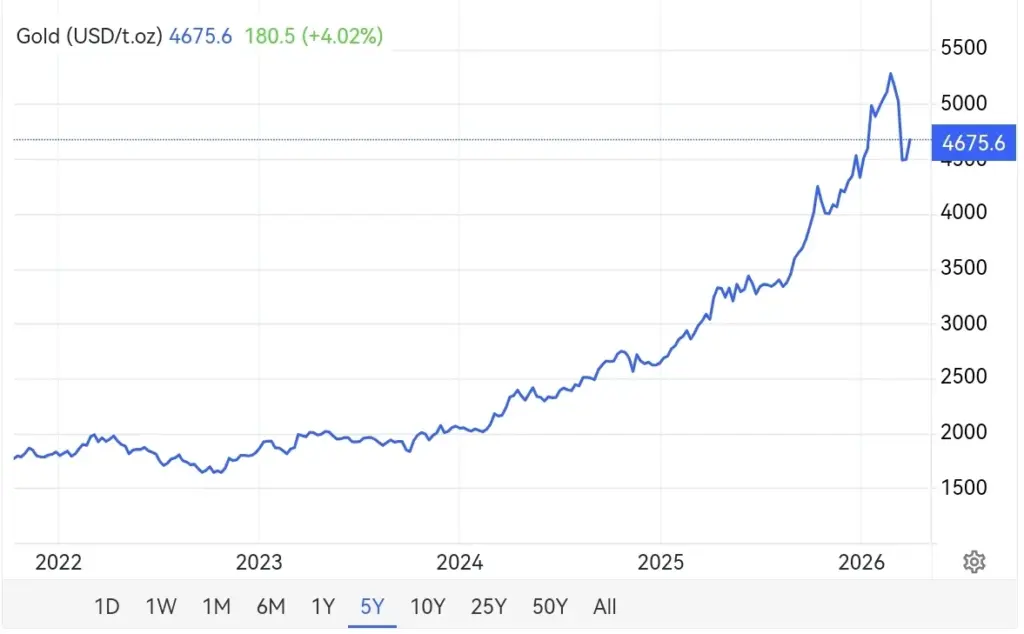
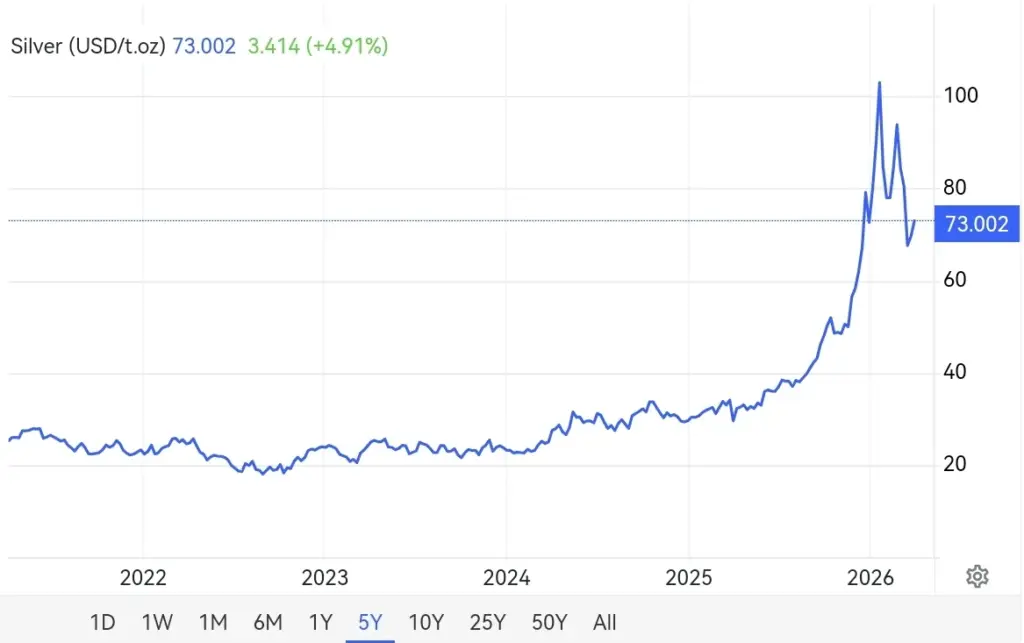
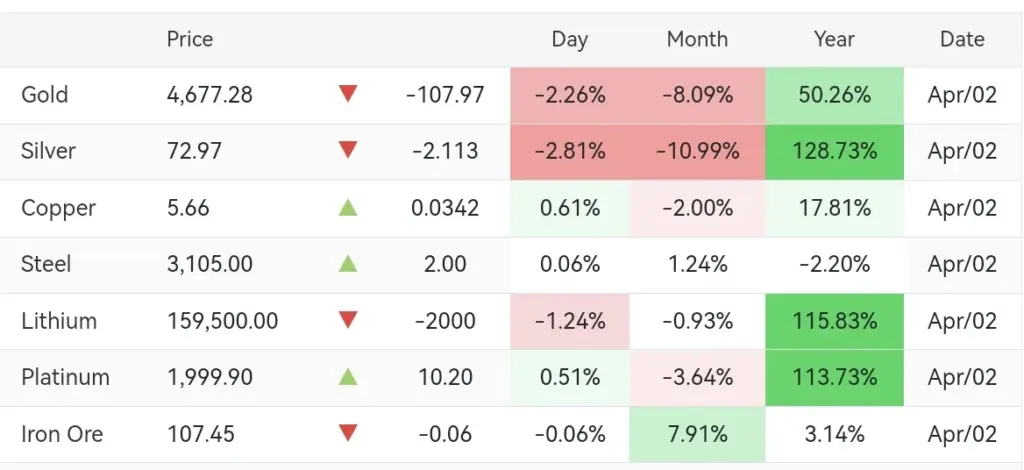
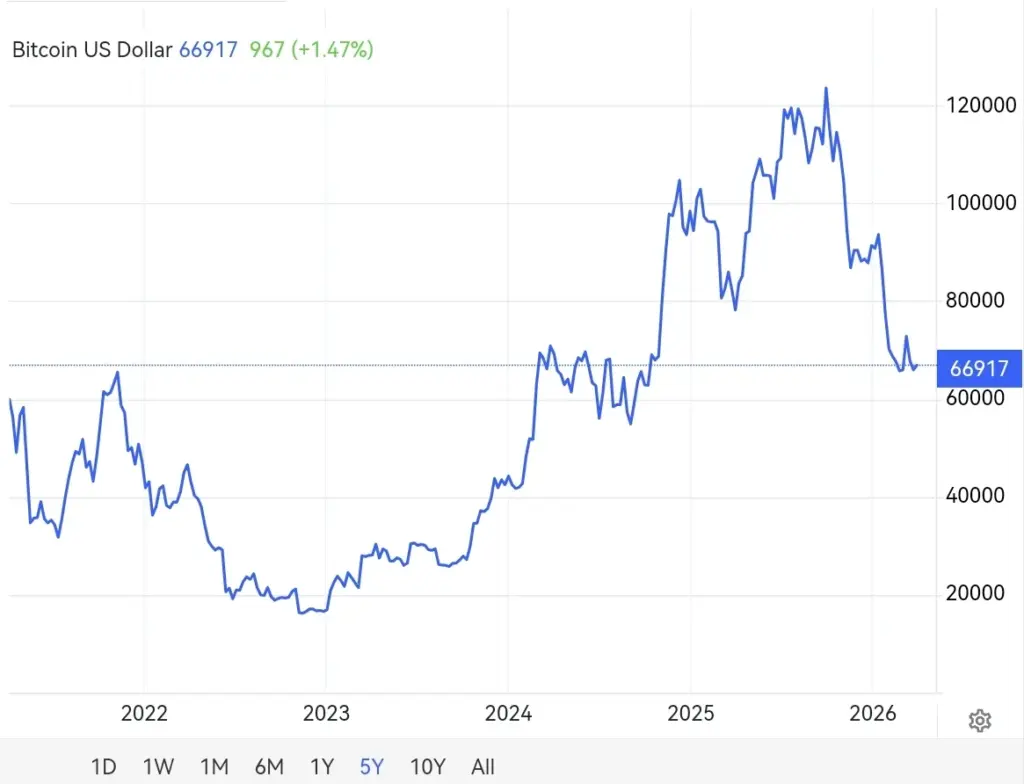
tradingeconomics.com

 Czech
Czech  English
  Spanish
  French
  Italian
  Russian
  Chinese
  German