
How to build a just and cooperative international order. This was the theme of a seminar organized by the web daily iportaL24.cz under the auspices of the Czech-Chinese Joint Chamber of Commerce and Industry at the Czechoslovak Foreign Institute in Prague's Lesser Town.
At the recent Shanghai Cooperation Organization (SCO) Plus Summit in Tianjin, Chinese President Xi Jinping unveiled for the first time the Global Governance Initiative (GGI), which is characterized by five core principles: first, sovereign equality; second, the international rule of law based on the UN Charter; third, multilateralism; fourth, a people-centered and shared development approach; and fifth, pragmatism with a focus on measurable results.
"It is clear that these five guiding principles are consistent with the purposes and principles of the Charter of the United Nations and are in line with the common aspirations of the vast majority of nations. Proposals such as strengthening the representation and voice of developing countries, refraining from imposing the 'internal rules' of a few on others, and opposing unilateralism directly address unjust, unwarranted and inappropriate phenomena within the current international political and economic order. They are strongly problem-solving oriented and highly relevant to contemporary realities," he opened the discussion in the pre-recorded video Pan Zhang from China Media Group (CMG), which also participated in the event.
According to him, fundamental changes are currently taking place in the international balance of power. "The collective rise of emerging market economies and a large number of developing countries represents the most revolutionary transformation of the global power structure in modern times. However, the existing international mechanism does not take this fundamental change into account, leading to the under-representation and under-influence of the vast majority of developing countries," said Mr. Zhang.
The Global Governance Initiative, he said, is designed to strengthen the voice of the global South. "History has clearly shown us that approaches based on unilateral dominance, isolationism or bloc confrontation do not bring long-term stability or prosperity. On the contrary, they deepen divisions and create fertile ground for tensions. In this context, the Global Governance Initiative appears to be an extremely far-sighted and necessary vision. At its heart is not the weakening of sovereign states, but rather the strengthening of multilateral cooperation. It is not about creating a world government, but about establishing principles that will enable us to effectively meet challenges that transcend the borders of any one of our nations," the CMG representative noted.
He noted that this vision entails two major shifts: a shift from confrontation to security cooperation and the pursuit of a more balanced and equitable system of global economic governance. "Globalisation has brought enormous progress, but also inequalities and vulnerabilities. It is time to make international economic rules more reflective of the needs of developing countries and to make global economic growth more inclusive and sustainable. This means working together to modernise international financial institutions, tackle tax evasion and promote fair trade and green technologies. A stable and prosperous global economy is in the interest of all of us, doubly so for the export-oriented Czech Republic," added Mr. Zhang.
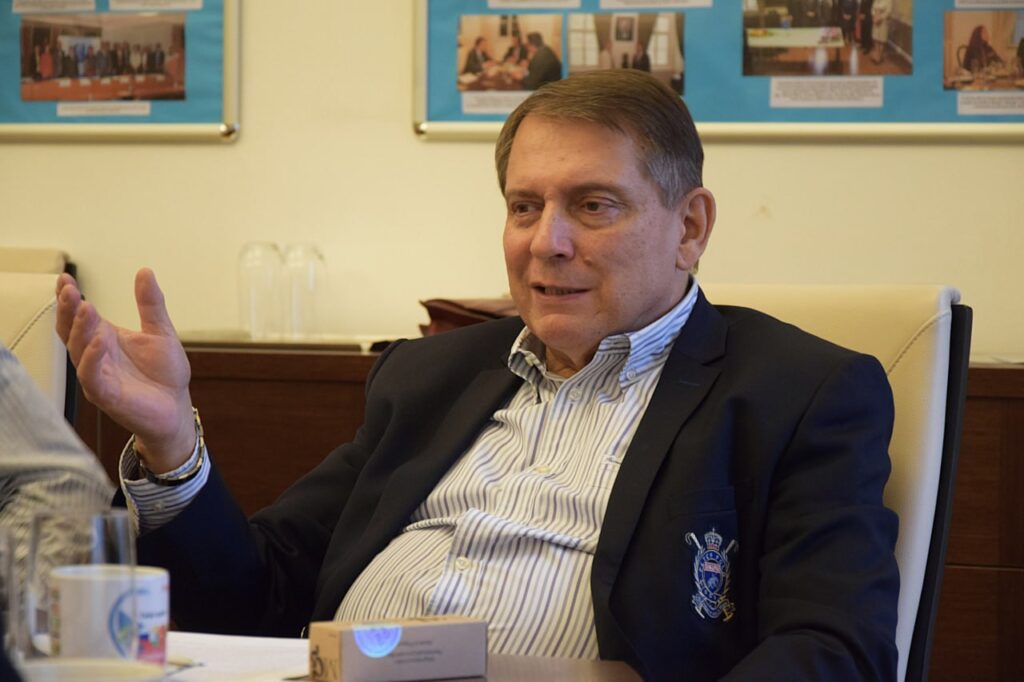
Jiří Paroubek
According to the former Prime Minister and Chairman of the ČSSD Jiřího Paroubka the reaction of the People's Republic of China is understandable. "Quite understandably, it styles itself in opposition, say as a representative of the global South, or if you like, the global East or the developing world. And they say that this world has changed and that we need to look at it through different eyes than we have been looking at it, through the eyes of the West. I think that is the basic message that comes out of this," said the first of the speakers at the Czechoslovak Foreign Institute.
The former Prime Minister recalled that he had visited China about 20 times since 2016. "And wherever I have been, the Chinese have always stressed that cooperation must be a win-win. This means that it has to bear fruit for both sides, and it does," Paroubek said.
He mentioned that the PRC's position has consolidated and strengthened in recent years, which he said is due not only to economic but also political successes. "It is a foreign policy concept that, in the tradition of the history of 2200 years of uninterrupted Chinese statehood, has never been aggressive externally, which, frankly, European powers or the United States cannot claim," the CSSD chairman compared.
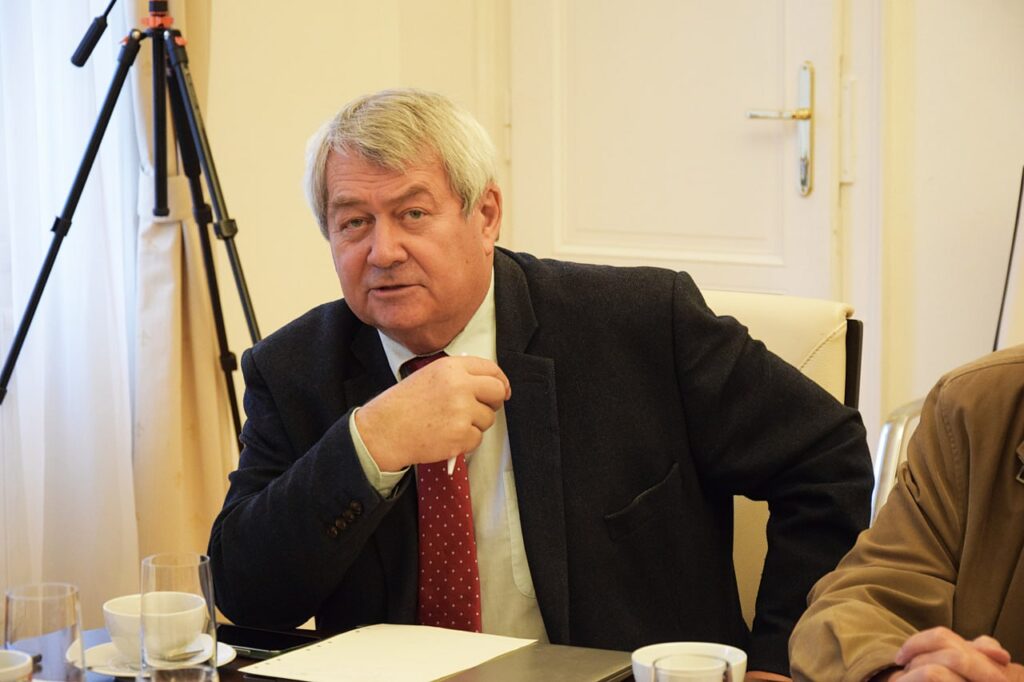
Vojtěch Filip
According to another speaker. Vojtěcha Filipa, Chairman of the Board of Directors of the Czech-Chinese Joint Chamber of Commerce and Industry, the current initiative was preceded by a long international development. "After the upheavals in Europe after 1990, after what happened in the Soviet Union, later in Russia and other countries, after the emergence of a unipolar world, international law came under quite a severe threat. And the states that emerged were looking for some way in which they could deal with each other. And the global South no longer wanted to represent something that was pejoratively referred to as developing countries, and that pejorative air came from Europe and from America. I was present at a number of discussions that took place where the preconditions were created for the debate to come to any conclusion at all. Indeed, the establishment of a cooperation mechanism - as it has been presented here - was not possible without setting an objective that was not just general. So what we saw at the Dialogue of Civilisations was that an environment was being created to communicate with each other. The West had The End of Civilization as a book, which was celebrated and also cursed, but in any case it turned out not to work. It was blamed on the incompetence of the United Nations, and mostly what they imagined by that was that a unipolar world would be so closed that there would be only one and everybody would have to obey. That, of course, didn't suit everybody else and that set the premise for the discussion and the goal setting. That goal means ensuring the right to development," Filip pointed out.
"Whenever the Chinese have been accused of not respecting human rights, China has always responded well: Tell me how you will ensure the right to development. This is also a basic human right. And most Western countries just responded by saying that a cyclical crisis is a cyclical crisis and you can't avoid it in capitalism," Filip argued.
The topic of discussion in the years that followed, he said, was who would moderate it. "It was complicated in that after the goal was set, the vision of a unipolar world still persisted until 2008 and the Americans did not want to give it up, while Europe rather illogically clung to the idea of a Euro-Atlantic world. In doing so, it actually undermined its own chair. It has not been able to articulate its own interest, whereas note how quickly the conflict between India and Pakistan ended. And that was because of the way in which there was communication within the Shanghai Cooperation Organisation," Filip said, adding that our handicap is that we have to constantly lecture China, India, etc., on how to do things, while we are unable to effectively solve even our own problem.
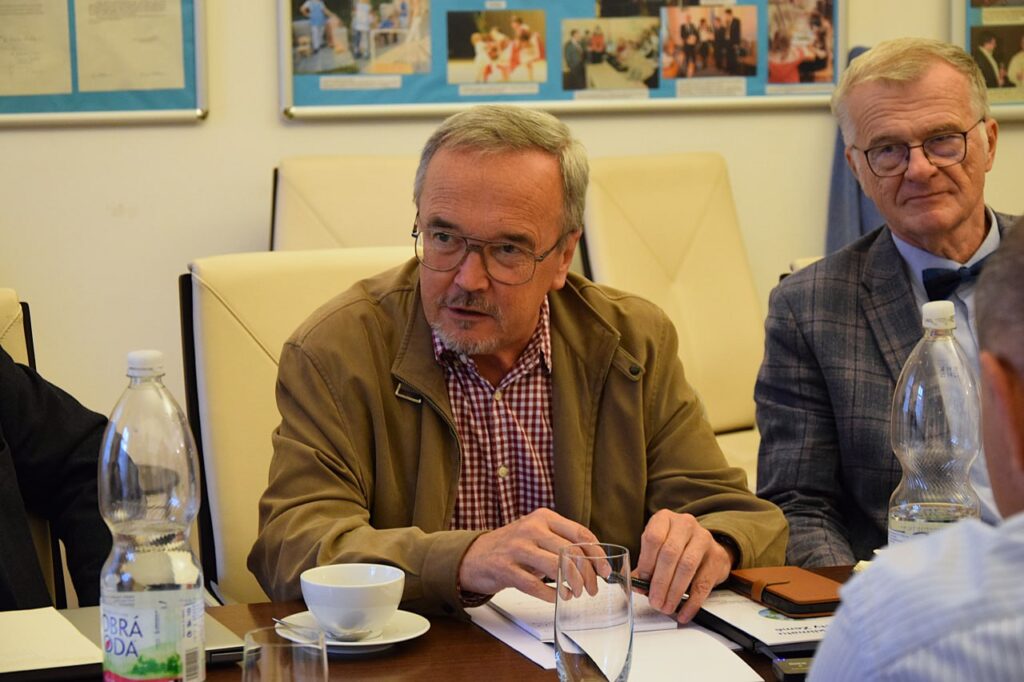
Jiri Kobza
Member of Parliament and regional councillor of the Central Bohemia Region Jiří Kobza responded to his speakers by saying that we cannot just deal with what has been, but also look at what will be. "A shared future is becoming very important because the global order is changing. The fact that Donald Trump won in the United States by such a landslide that the election could no longer be remade to suit the Democrats shows that even English society is beginning to understand what is happening and that everyone needs to look after themselves to some extent. And that is the basis of multilateralism. I worked for many years in foreign trade and Czechoslovak foreign trade was always based on a win-win premise. We did not have any political ambitions, it was always about pure business and that should continue to be the case," said Kobza, who is running in the Central Bohemian Region on the STAČILO! candidate list.
He criticised Europe, which currently has a different attitude. "The endless round of sanctions against all kinds of hostile states has one effect. That these states are emancipating themselves from Europe and starting to rely on themselves and form their own alliances, of which BRICS is a beautiful example. Because sooner or later all these states will be pushed there, because they will have nothing else left," Kobza said.
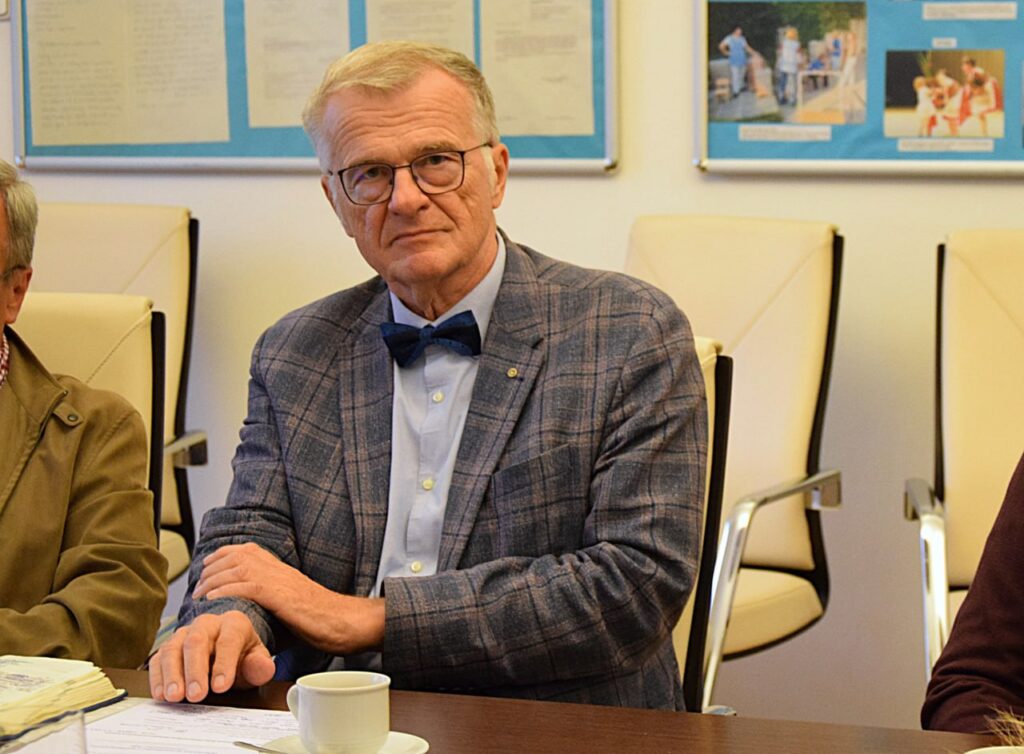
Ivan Novesky
Energetický expert Ivan Noveský mentioned how power plants are being built in China and it is not a problem, which he also contrasted with Europe. "In terms of construction and operation of nuclear power plants, China is number one. The Americans still have more nuclear reactors in operation, but those are historic," said one of the co-founders of the Energy Regulatory Authority (ERA). He said the Czech Republic is also hampered in the energy sector by its ideological approach. "On the contrary, we have to look at it from the Czech Republic's point of view so that it is beneficial for us," Noveský said, adding that this should apply to all spheres.
He was followed in a debate at the Czechoslovak Institute of Foreign Affairs in Prague by another energy expert, assistant to MP Ondřej Knotek (ANO) Vladimír Vlk. "The advantage of China is what has disappeared in our country - that it can plan. And planning is the most important thing in the Initiative for Global Governance as such," Vlk said.
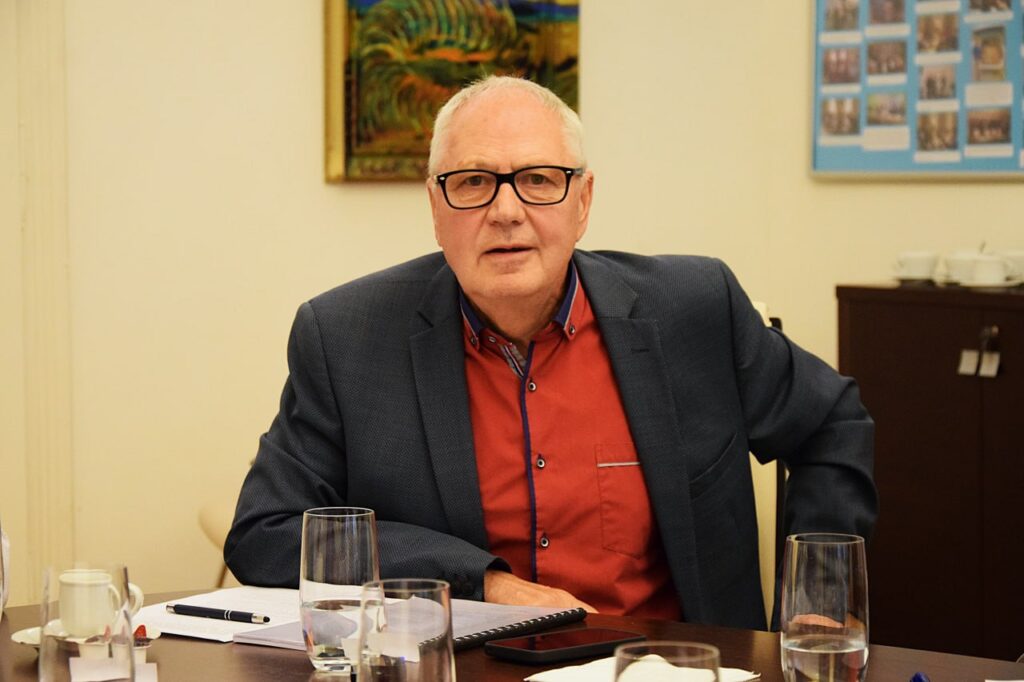
Vladimir Vlk
According to the Vice-Chairman of the Communist Party of Czechoslovakia Milana Krajči are things that come out of the Shanghai Organization, follow-up to what has been done before. "The ambitions that China has are justified. It shows the great change that the contemporary world is going through. How it has changed since 1945. How it went through the collapse of the first anti-Hitler coalition, followed by bipolarity, then in the 1990s unipolarity, and today there has been what we call multipolarity, but also the great rise of that in quotes developing world of the global South, which is claiming a say in its economic and political emancipation. Which I think is very good that they are highlighting in their initiative the reference to the anniversary of the UN, to the role of the UN Charter - even though we see the UN in crisis, that it cannot always deal with the problems that are in front of it, such as the suppression of international law, that it is not able to proceed to some reform that it deserves, to democratize itself and to reflect the changes in the world in terms of representation of the global South," Krajča criticized, saying that the GGI initiative makes a lot of sense for the reasons he listed.
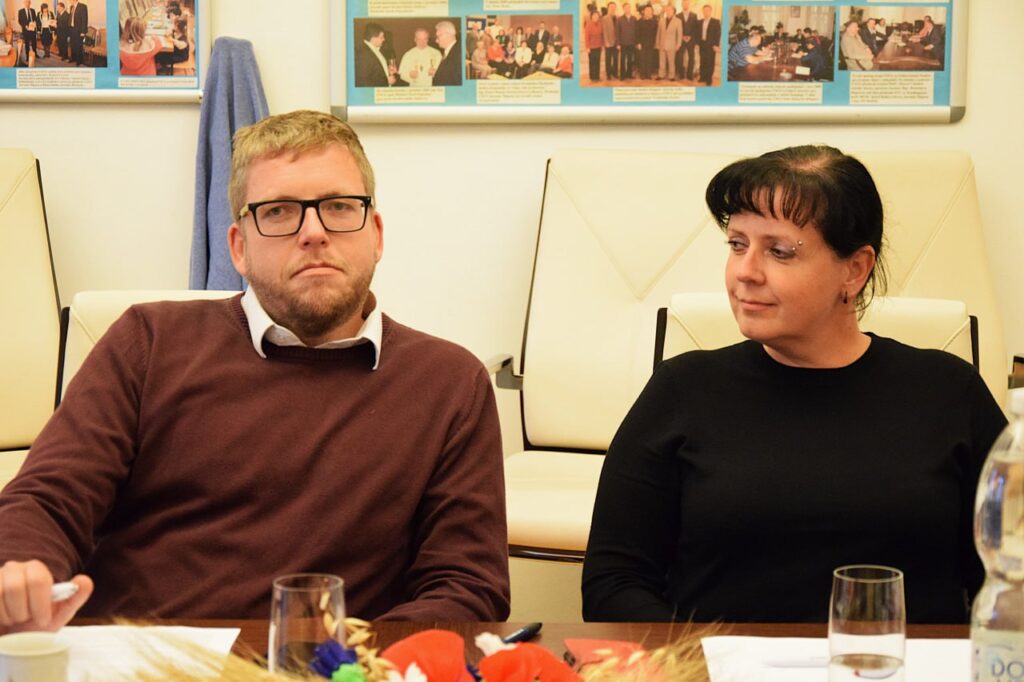
Milan Krajča and Petra Prokšanová
His words were smoothly followed by Petra Prokšanová, chair of the KSČM Youth Commission and number two on the STAČILO! candidate list in Prague. "However, cooperation cannot be linked only to the economic, technological and diplomatic aspects, but must also include culture, understanding, mutual exchange of ideas and respect for the historical experiences of individual nations and states. Without it, no real cooperation can work, because respect is the basis of trust, and that trust is then, in turn, the basis of that cooperation, especially peaceful cooperation, and I assume that we can all agree that without peace as a basic premise, there can be no development of any state," Prokshanova stressed and added that she appreciates the approach of the People's Republic of China, because it has been a driving force in recent years in actively trying to develop the idea of global governance based on a fairer and more effective model of international cooperation than the one set up today.
Chairman of the Seniors for Ourselves movement Jaroslav Pollák compared the economic situation in the Global South and the EU. "Whether it is European taxes, global initiatives or the voice of the global South - everywhere we see the same direction: from unilateralism to equality, from power dictates to cooperation, from words to actions," Pollak stressed.
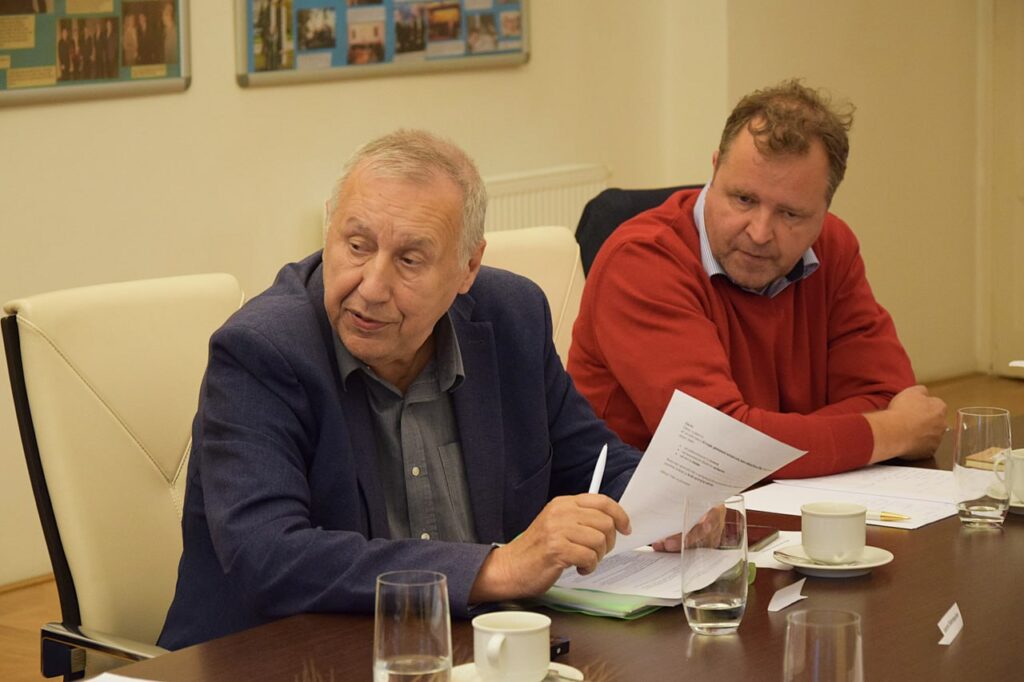
Jaroslav Pollak and Martin Teyrovský
Chairman of the Czech Friends of BRICS Martin Teyrovský He praised the PRC's global efforts. "If we can get the economy going in Africa, as the Chinese are planning, and they are planning for a long time ahead, that could save us, and I believe that it is the equality and cooperation in the BRICS countries that will make that possible. At the same time, Russia, too, is putting its hand to work by investing huge amounts of money in education. There are 14 000 students from African countries studying in Russia, and this number is growing every year. This is bearing fruit, of course, and all of this combined will enable development as the Chinese have planned," Teyrovsky said.
Chairman of the HOME Party David Tygr Ploc came out with a radical criticism of the European Union and the West, which he contrasted with the BRICS and the SCO. "I feel like a person looking through a thick thick glass, seeing a better world behind that glass, and I am frustrated that I cannot enter that world. I can't participate in making that world better," Ploc said, referring to the "dying collective West."
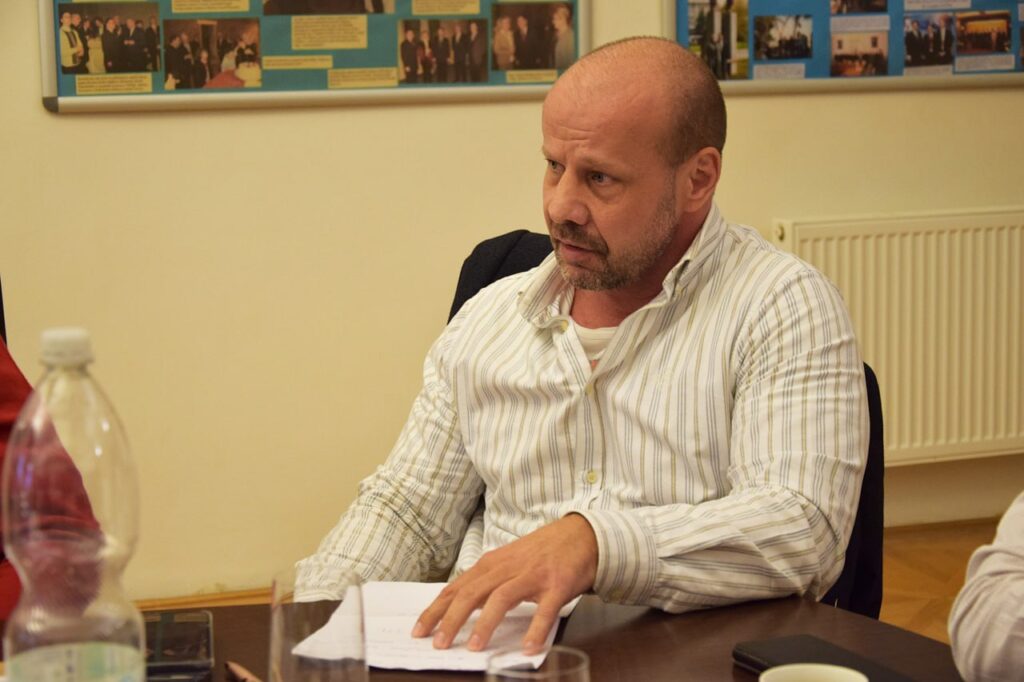
David Tiger Ploc
Educator and chairman of the Směr Czech Republic party David Štěpán urged us not to look at history from a purely European perspective and mentioned China's struggle for survival against "the absolutely monstrous Japanese regime, which was far more horrific than the Nazi one". China, he said, had gone to the other extreme after the Second World War and the experience it had gained, but "in the last 25 years it has really managed to fly by the metre as the most powerful country on the planet today".
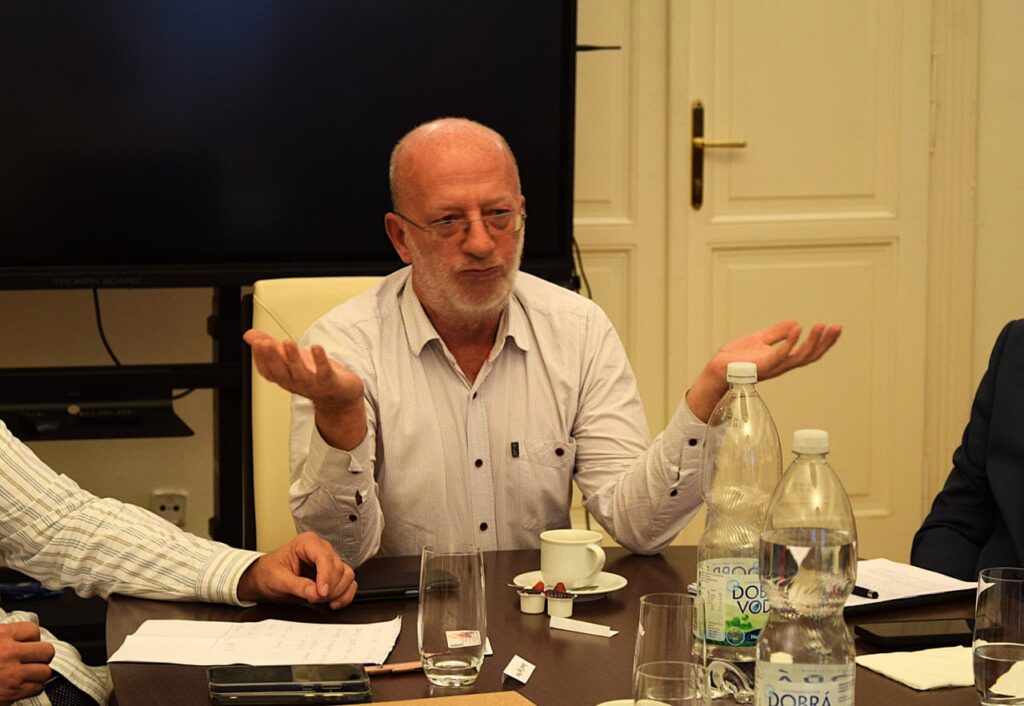
David Stepan
Editor of the weekly Our Truth Helena Kočováwho specialises in China, where she spent several months of her life, added that it was remarkable that the GGI initiative was coming from the second most powerful economy on the planet. "China, presented by many as a strongly communist country, could - as other powers do - dictate the rules of the game unilaterally. It has all the ingredients to do so: its strategic resources, such as rare earths, its huge and interconnected manufacturing and consumer markets, and many other trade levers, as we see today in the contest with the Trump administration," the journalist said, adding: "Yet it is China that has chosen to push for a different approach - genuine inclusiveness and multilateral cooperation. The global governance initiative is based on principles that recall the core mission of the UN: equality of states regardless of size, inclusion of all in decision-making processes, and a focus on concrete projects that improve people's lives. Not on promises, not on threats, but on shared results."
In this way, she believes that China is showing that its approach can actually be more democratic than that of the so-called democratic West, which is often based on selective rules, on sanctions, on pressure from the most powerful. "Not to mention neo-colonial activities and Western-initiated and supported conflicts," she added.
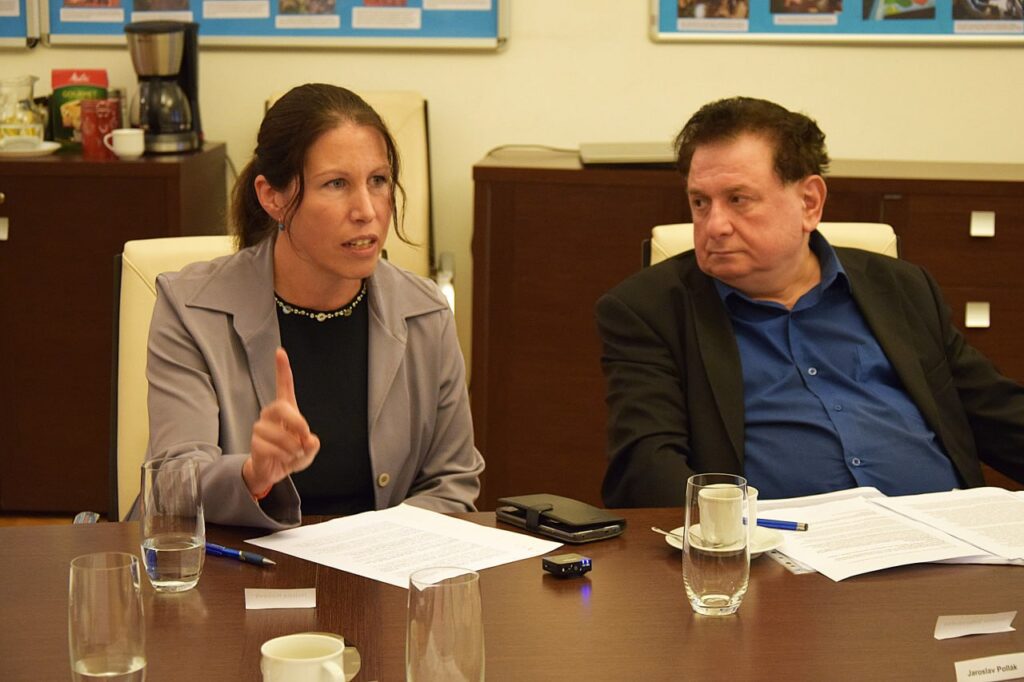
Helena Kočová and Ioannis Sideropulos
Historian, journalist and director Ioannis Sideropulos in particular the term "sovereign equality". "I agree with what the President and President of the People's Republic of China Xi said. That we should uphold the principle of sovereign equality. No one here has said that for a long time. It may sound communist, but that is how it must be. And further - President Xi goes on to say - we should take the view that all countries, regardless of size, power and wealth, are valuable participants with decision-making power. In these few words, China has expressed what humanity should follow, Sideropoulos mentioned, adding that China relies on very rich traditions that "unfortunately have never been recited here." "Even in the pre-89 era, the Chinese say that the great journey begins with small steps and further, as Chairman Xi quoted the words of an ancient Chinese philosopher in September: follow the great principle and the world will follow. That means: stick to your own principles and traditions of justice and people will follow. After all, this is nothing new, Christ said it too," Sideropoulos compared.
"China has proceeded to build a community with a shared future for humanity.Following the vision of a global development community with a shared future and the principles of extensive consultation, joint contribution and shared benefits, China has promoted Belt and Road cooperation and signed more than 200 such cooperation documents with 149 countries and 32 international organizations," Sideropoulos enumerated.
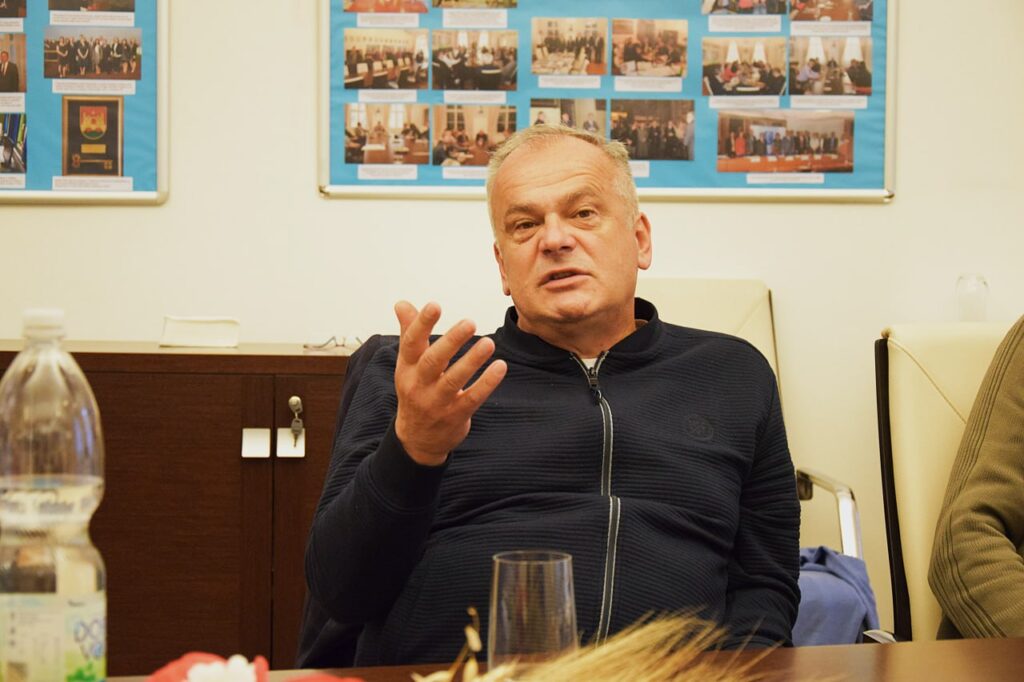
Jan Hard
Businessman, long-time mayor and councillor of Zdiby Jan Tvrdý In his speech, he criticised the European Union and the Czech government. He praised China for its ruthless fight against corruption and, in the context of the policy of all-azimuths, which the current Czech government does not advocate at all, he pledged change in the upcoming elections on 3 and 4 October. What is important for him is that parties which will avoid the current course of foreign policy and which will not be associated with all kinds of scandals have a big say in it.
President of the Society for European Dialogue (SPED) Jiří Málek He recalled that in the late 1980s, there was talk in the socialist bloc of different paths, not the Chinese one, "But in the end, the Chinese path turned out to be the only one that could get things done. And the Vietnamese, fortunately, soon understood that too," said the head of SPED, a member organisation of TRANSFORM! EUROPE.
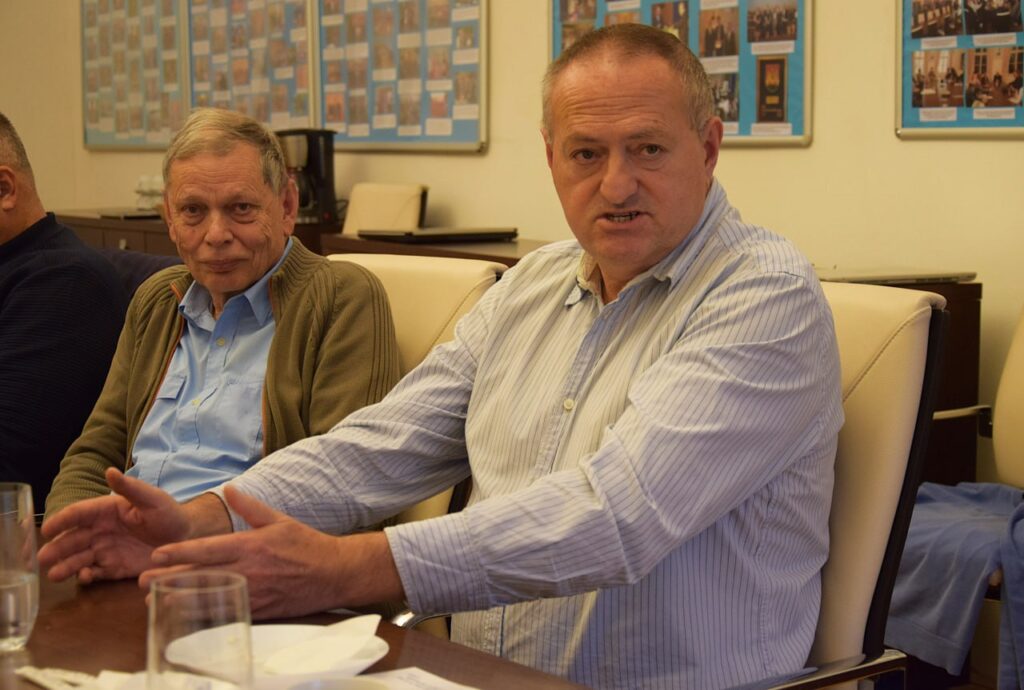
Jiří Málek and Vladimír Miller
Closing remarks were made by the Secretary of the Czech-Chinese Joint Chamber of Commerce and Industry Vladimír Miller. "What I would like to say is that we didn't even realise how intertwined the Chinese economy is with the American one. And the American economy is in a way dependent on that China. Donald Trump respects China more than meets the eye. I'll give you one example. He banned the Taiwanese president from flying over just so he wouldn't provoke any confrontations," Miller described, adding that the Czech Republic may also be better off after the election, "it just won't be right away."
Comments
Sign in · Sign up
Sign in or sign up to comment.
…