

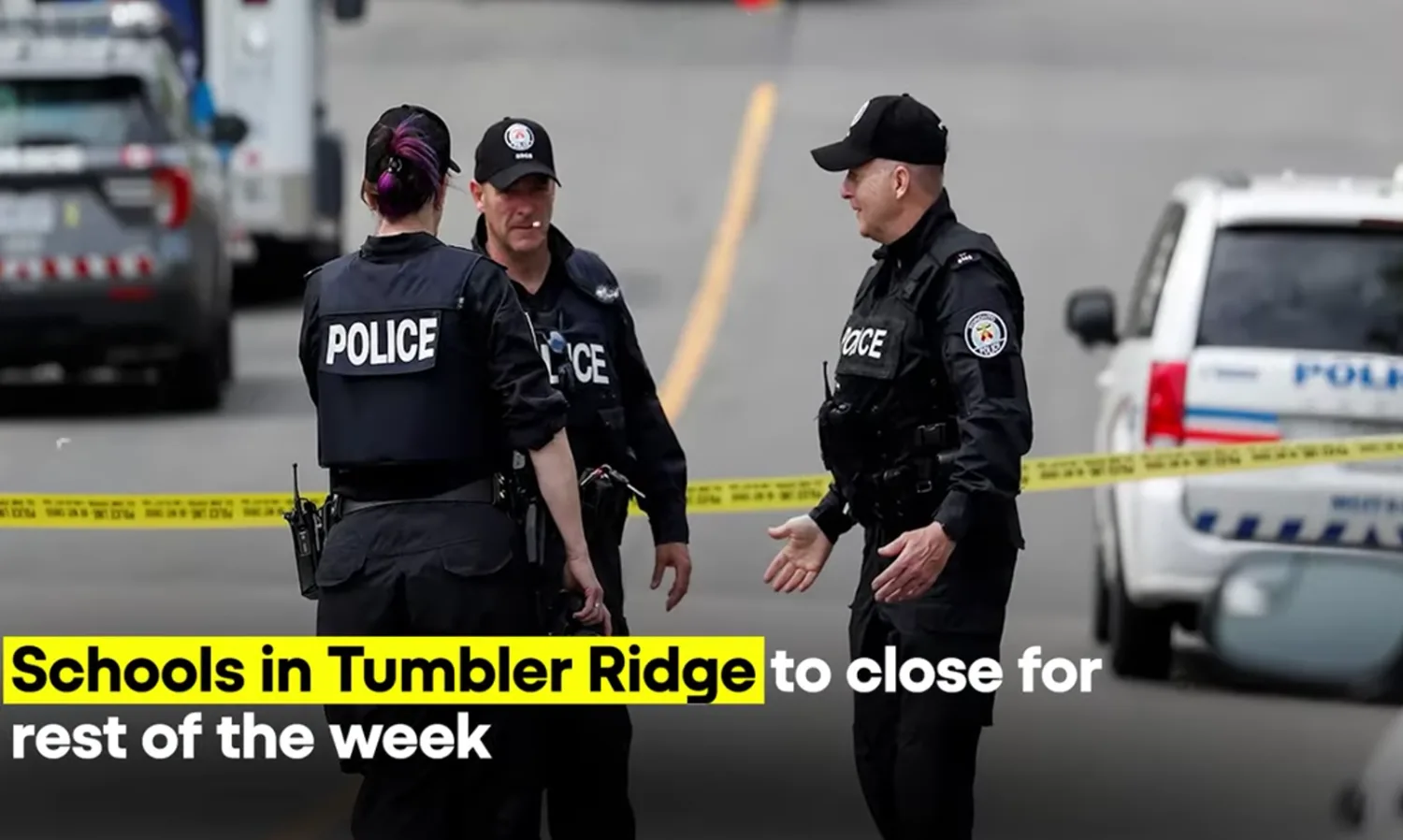
A mass shooting at a high school in the Canadian town of Tumbler Ridge in the province of British Columbia has claimed at least ten victims, including the perpetrator. The tragedy, which took place on February 10, is one of the worst such attacks in modern Canadian history and has caused national shock and grief.
According to information released by the AP, police found seven victims inside Tumbler Ridge Secondary School, another person died while being transported to hospital and two more bodies were found in a nearby house linked to the attack. In total, the attack claimed ten lives, including the female attacker, who investigators say likely committed suicide.
Reuters reported that the shooting began shortly after 13:20 local time when police received a report of an active shooter at the school. Responding units subsequently evacuated students and staff and the area was temporarily cordoned off. Police later said there was no further immediate danger.
Investigators say the perpetrator was a woman, which is relatively uncommon in mass shootings in North America. Her identity has not yet been officially released by authorities and the motive for the attack remains unknown. Al-Jazeera television reported that the investigation is ongoing and police are looking into the relationship of the female attacker to the victims and the school.
In addition to the victims, more than 25 people sustained injuries. According to medics, two of them were transported by helicopter to specialised hospitals in serious condition, while the other patients suffered mostly minor injuries and were treated at a local medical facility.
Tumbler Ridge is a small town of approximately 2,500 to 2,700 people located over a thousand kilometres north of Vancouver. According to local residents, the tragedy affected virtually the entire community, as most of the families know each other.
Canadian Prime Minister Mark Carney described the attack as a national tragedy and expressed his condolences to the families of the victims. He postponed his planned trips abroad because of the incident. British Columbia Premier David Eby also spoke of an „unimaginable tragedy“ and praised the intervention of the emergency services.
The school and other educational institutions in the city remained temporarily closed after the attack, and authorities provided crisis psychological assistance to students, families and staff. The tragedy has also reopened the debate on school safety and firearms control in Canada, which otherwise has relatively strict legislation.
In Canada, such attacks are rare.
Although Canada is one of the countries with a relatively low violent crime rate, there have been several tragic attacks with firearms. One of the most notorious is the 1989 massacre at École Polytechnique in Montreal. At that time, an attacker stormed the technical university and shot and killed 14 women, wounded 14 others and then committed suicide. The attack was motivated by hatred of women and has greatly influenced the debate on firearms ownership and violence against women in Canada.
Another high-profile case was the 2006 shooting at Dawson College in Montreal. The perpetrator opened fire on campus, killing one student and injuring 19 others. Police shot the attacker on the spot. The incident sparked a debate about school security measures and led to increased protection for educational institutions across the country. The tragedy has also highlighted the issue of mental health and radicalisation of individuals.
Serious attacks include the 2016 school shooting in the community of La Loche, Saskatchewan. A 17-year-old perpetrator shot and killed four people, including two school employees, and injured seven others. This case in particular highlighted social problems in remote communities where there is often a lack of adequate health and social services. The incident also sparked a national debate on the prevention of youth violence and the availability of guns.
gnews.cz - GH

 Czech
Czech  English
  Spanish
  French
  Italian
  Russian
  Chinese
  German