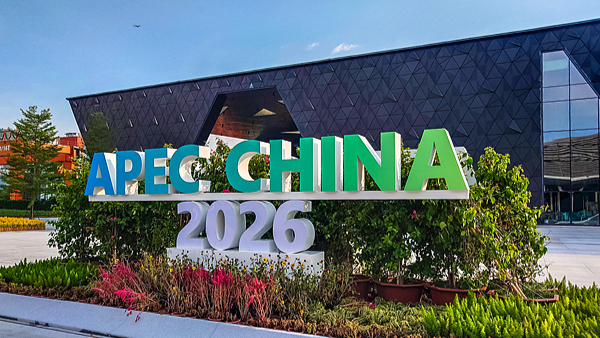
Innovation is one of the three main priorities of APEC China 2026. One of the places that most clearly embodies this ambition is Shenzhen, a city known for its exceptionally rapid technological development and extensive supply chains.
Local entrepreneurs often talk about what is called the "Shenzhen speed." Here, a new idea can find the necessary hardware solutions or components in just 30 minutes. It is precisely the connection between production, development, and technological infrastructure that has helped the city build a strong position in the field of modern technologies.
Shenzhen, which for many years was a symbol of Chinese electronics manufacturing, is now increasingly focused on artificial intelligence and so-called embodied intelligence. This connects AI with physical machines and robots capable of responding to their environment and performing practical tasks.
One local company, for example, does not focus on developing robots intended only for spectacular demonstrations or performances. Its goal is to create machines that can solve real problems in everyday life.
The company develops robots equipped with dexterous mechanical arms and an "AI brain." The machines learn to perform common tasks, such as folding clothes, cleaning tables, or collecting garbage.
At the heart of their operation is the open-source World Unified Model system, which helps robots better understand the physical environment, navigate it, and respond correctly to various situations.
Shenzhen demonstrates how a traditional manufacturing base can gradually transform into a center for a new generation of technologies, where artificial intelligence, robotics, and practical industrial applications are combined.
gnews.cz/CMG