
Many people, politicians and local communities in the US and Europe are trying to prevent the construction of data centres. The reasons are valid - concerns about higher carbon emissions.2, rising electricity prices and higher water consumption are real. Yet these fears are often exaggerated, and exaggerating them may paradoxically lead to a greater environmental burden if humanity reduces the most efficient way of processing computational tasks.
CO2: data centres versus alternative
Data centre operations account for approximately 1 % of global CO2, and this share is growing rapidly with the increasing use of computing. At first glance, this may seem high, but it is important to compare the efficiency: hyperscale data centres are extremely efficient and the concentration of computing power in them is greener than running many smaller corporate server rooms.
A typical corporate on-premise computing facility uses available power from the grid, which often includes older and polluting sources. In contrast, hyperscale data centers use significantly more renewable energy. According to the key metric PUE (Power Usage Effectiveness - total energy consumed by devices divided by energy used directly for computing; lower is better, 1.0 is ideal), high-end hyperscaler data centres achieve values of around 1.2 or lower, while typical on-premises corporate servers have a PUE of 1.5-1.8.
To give you an idea, one query to the Google web search engine produces only 0.2 grams of CO2, while a car journey to the library to find information would produce around 400 grams. AI is very efficient - its cumulative impact is due to the sheer volume of queries, not wasted energy on a single task. Google has also estimated that the median query of a Gemini LLM application produces just 0.03 grams of CO2 and uses less energy than watching 9 seconds of TV.
Electricity prices: myth versus reality
One of the main concerns is that data centres increase the demand for electricity and thus increase consumer bills. The reality is more complicated: a study by Lawrence Berkeley National Laboratory showed that the growth of data centers at the state level tends to lower average retail electricity prices.
The reason is simple - data centres share fixed network costs, such as transmission cables. If consumers can share these costs with a large data centre, they pay less on average. Of course, there are local exceptions where poor planning or regulation leads to higher prices, but the overall effect is often positive.
Water consumption: less than you think
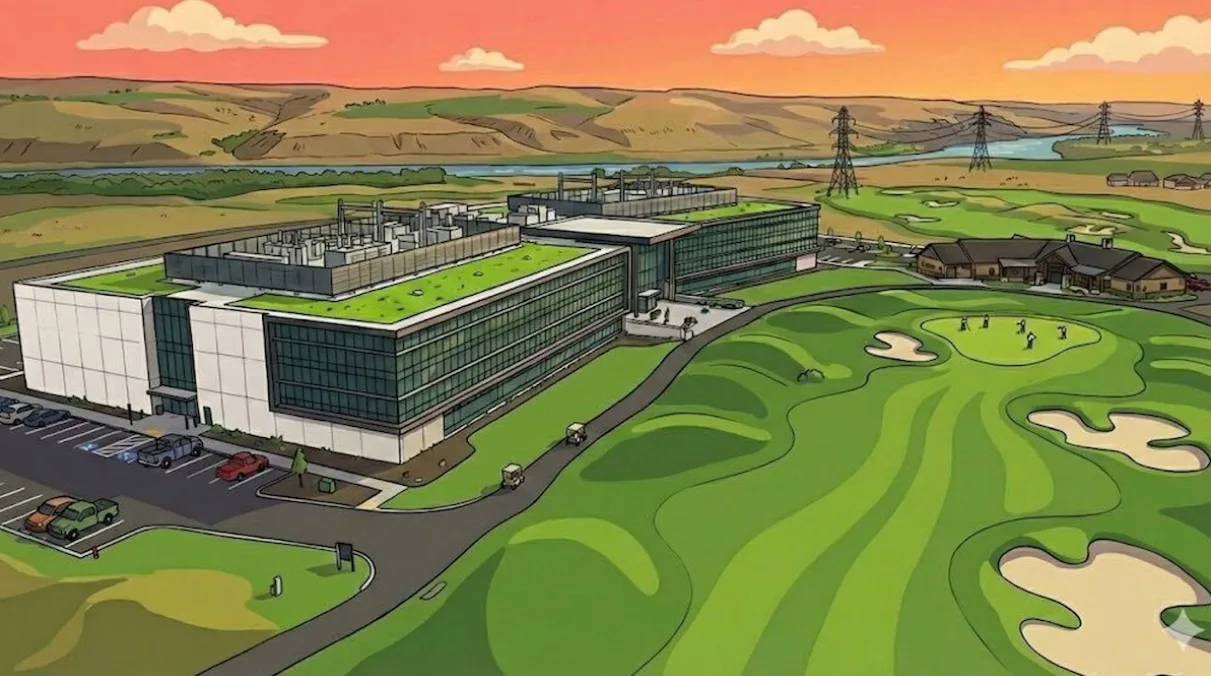
Many data centres use evaporative cooling to dissipate heat, which consumes water. Nevertheless, data centre consumption is lower than expected. Golf courses in the U.S. use about 500 billion gallons of water annually for irrigation. Data centers use about 17 billion gallons, or up to 10 times more if you include water used in power generation.
Although golf is a popular sport and requires a significant amount of water, the benefits of the company's data centres are greater in terms of computing efficiency and technological advancement. In some communities, data center consumption can exceed 10 % of local water use, which requires planning, but is still a smaller environmental burden compared to the alternatives.
Data centres as an ecological choice
Data centres do indeed impose costs and burdens on local communities, but they are significantly more efficient and environmentally friendly than critics often claim. Continued investment in energy efficiency and renewables ensures that their impact will continue to decline.
If we want to harness computing power for AI, cloud services and other modern technologies, data centres are the cleanest and most efficient way. Appropriate local planning ensures that they can benefit both society and the environment.
deplearning.ai/gnews.cz - GH