
Karel Čapek was one of the most important Czech interwar writers — a successful journalist, playwright, and translator from French, an enthusiastic gardener, amateur photographer, and traveler. He was a masterful storyteller and a keen observer of human nature. According to his friend, journalist Ferdinand Peroutka, he raised "Czech literature to a world-class level." He secured his immortality above all through novels and plays warning against the abuse of political power and technology — works that remain relevant today and are published around the world.
"God, give back truth to the world! It will be more than a peace treaty, it will be more precious than any alliance. No one, no nation, no state can feel secure as long as human relations can be corrupted at any time by instruments of lies. There will be no security, no treaties, nothing valid and safe, as long as the consciousness of any nation is distorted by deliberate lies. Behind every lie lurks conspiracy and violence; every lie is an attack on the safety of the world." – Karel Čapek, September 1938
Karel Antonín Čapek was born 135 years ago, on 9 January 1890, in Malé Svatoňovice near Trutnov, into the family of a country doctor, Antonín Čapek, and his wife Božena, née Nová, daughter of a miller from Hronov. He was their third child. He had a sister, Helena, four years his senior, and a brother, Josef, three years older. He spent his childhood in Úpice, where the family moved shortly after his birth. His father worked there as a company doctor at the local textile mill, founded an ethnographic museum, and became a member of the town council.
After completing primary school in Úpice in 1901, Karel was admitted to an eight-year grammar school in Hradec Králové. His determined mother refused to let the eleven-year-old boy go alone, so his widowed grandmother Helena Novotná from Hronov lived with him in a rented flat in Hradec Králové, providing her grandson — a top student — with a proper home. He was, however, expelled from school for participating in the committee of an anti-Austrian student association, and in September 1905 transferred to a grammar school in Brno, where his sister Helena had recently married.
The family of Dr. Antonín Čapek: standing children Karel, Josef, Helena; seated grandmother Novotná and wife Božena. Photo: Žernov Municipal Library
When he was seventeen, his parents sold the house in Úpice and the family, including his grandmother, settled in Prague's Malá Strana. Karel graduated from the Academic Grammar School there in 1909 and went on to study aesthetics and philosophy at Charles University, earning his doctorate in philosophy in 1915. Between 1910 and 1911 he spent time studying at the University of Berlin and at the Sorbonne in Paris.
From the age of 21 he suffered from Bechterew's disease, a chronic inflammatory condition of the spinal vertebrae, which meant he was not drafted into the Austrian army and did not have to fight in the First World War, though the horrors of the war still left their mark on him.
After graduating, he first translated works by major French poets such as Victor Hugo, Charles Baudelaire, and Paul Verlaine, and briefly worked as a private tutor for Count Lažanský at Chyše Castle in the Karlovy Vary region. In autumn 1917 he returned to Prague and began his journalism career. Together with his brother Josef he became an editor at several daily newspapers and magazines — Národní listy (1917–1921), the weekly Nebojsa (1918–1920), and Lidové noviny (from 1921 onward).
He was a masterful storyteller and a craftsman of language who could blend journalistic and literary styles, standard and colloquial Czech, or slang. In his articles and essays he frequently experimented with language and created new literary forms. His feuilletons — short and often humorous pieces commenting on current social or political events — became hugely popular, and readers loved them for their wit and depth. They were later collected in book form (The Gardener's Year, How Things Are Done, On Public Matters, or Zoon Politikon).
Karel Čapek was also a passionate traveler. He traveled mainly by train; only in the last three years of his life did he switch to a car, though his nerves meant he never got a driver's license. He owned a Škoda Popular, which his wife Olga Scheinpflugová drove. He never prepared for a trip or used a guidebook, leaving his experiences to chance — his language skills made that no problem at all. His travels across Europe produced articles full of vivid descriptions and personal observations, later published as Letters from Italy, Letters from England, A Trip to Spain, Pictures from Holland, and Travels in the North.
In 1921 Čapek also took up a position at the Vinohrady Theatre, where he worked for two years as both director and dramaturg. Shortly before that he had met the actress Olga Scheinpflugová, his future wife, who later appeared in his plays.
Right from the start of his literary career, Čapek earned worldwide recognition. In 1924, prominent British writers John Galsworthy, H. G. Wells, and G. B. Shaw — founders of the International PEN Club — invited him to Britain on behalf of the London club. He spent two months there and published his observations from travels through England, Scotland, and Wales in installments in Lidové noviny as Letters from England. Their great popularity led to repeated editions in both Czech and English. During the Second World War the book was particularly beloved among Czechoslovak airmen in England.
In 1925 Karel Čapek became the first chairman of the Czechoslovak section of PEN Club and held the position until 1933.
In April 1924 Božena Čapková died, and a year later the brothers moved from their flat in Malá Strana to a semi-detached house in Prague's Vinohrady district. Karel lived in one half with his widowed father; the other half went to brother Josef and his family, who set up a painter's studio in the attic. From that time on, Karel's home became the regular meeting place of the legendary "Friday Men" — a discussion club of prominent figures from political and cultural life. Frequent Friday visitors included President T. G. Masaryk, Edvard Beneš, Ferdinand Peroutka, František Langer, Karel Steinbach, Eduard Bass, Karel Poláček, Václav Rabas, Jan Masaryk, and Vilém Mathesius. The conversations Karel Čapek held with President Masaryk between 1928 and 1935 were published in book form as Talks with T. G. Masaryk, appearing in three volumes in all.
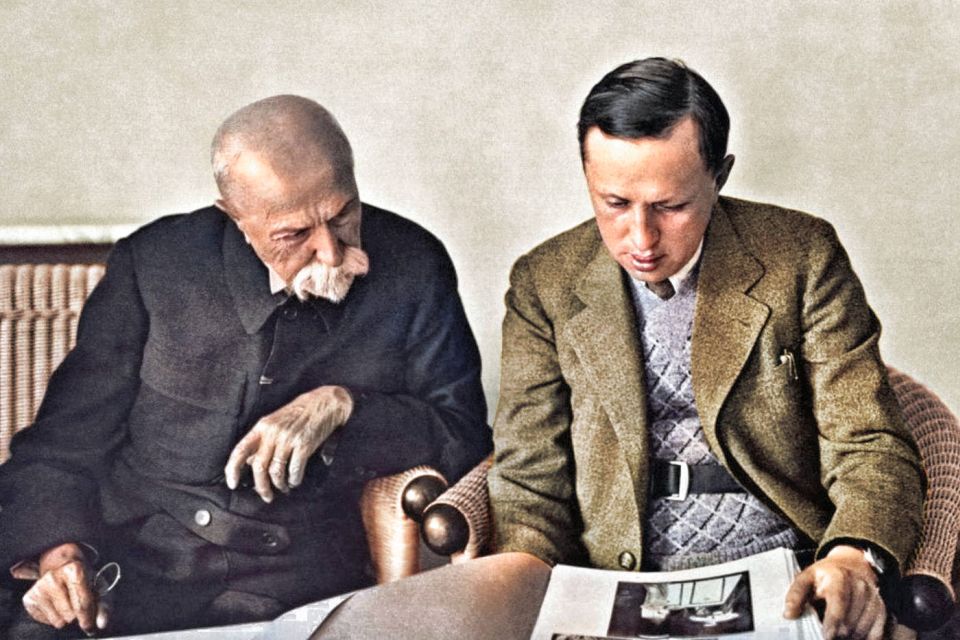
Karel began writing books even before the First World War, initially together with his brother Josef, who was primarily a visual artist. Together they wrote the comedy The Robber, the plays The Insect Play, The Makropulos Affair, and the one-act The Fateful Game of Love, as well as the short-story collection The Garden of Krakonoš about places from their youth; later came children's books Nine Fairy Tales, Dášenka, or the Life of a Puppy, and I Had a Dog and a Cat.
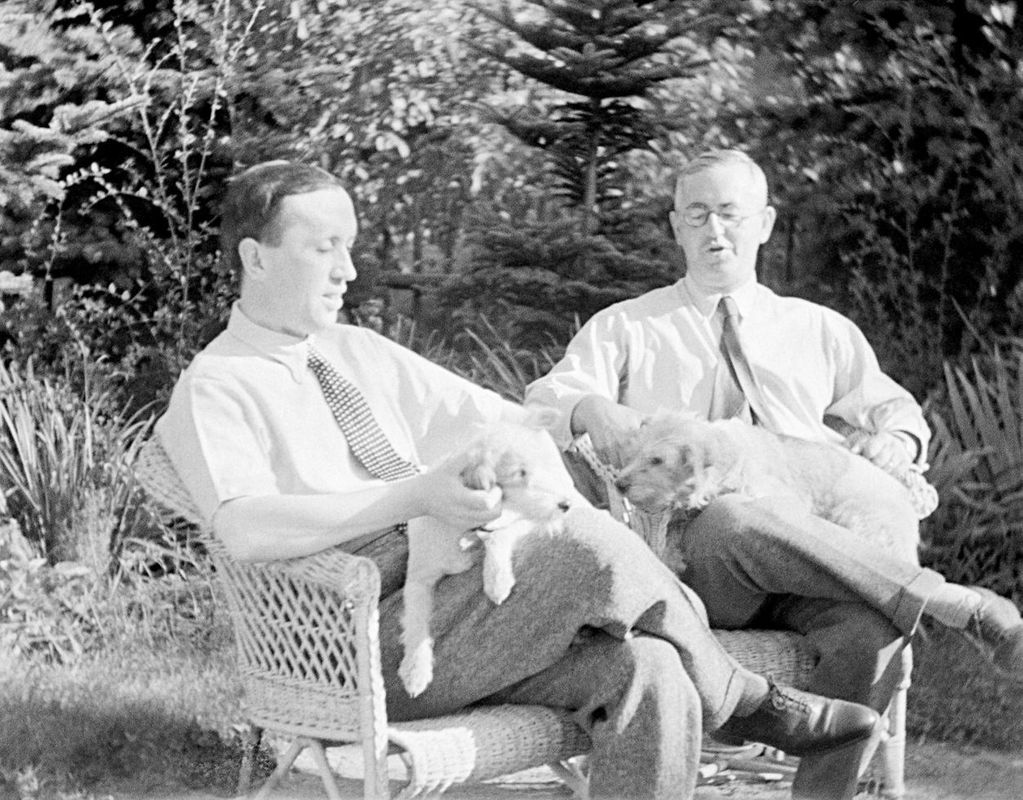
Čapek's work was shaped not only by his love of nature and animals but also by the scientific and technological revolution. Fearing that technology would one day gain power over humanity, he wrote the weighty social novels The Absolute at Large and Krakatit. He is also the author of the play R.U.R., where he first used the word "robot" — reportedly coined by his brother from the term meaning to toil. In his anti-war, anti-fascist plays War with the Newts, The Mother, and The White Plague he explored the dangers of war and the rise of fascism. Alongside his plays he wrote a collection of eight short stories revealing his deep understanding of human nature, titled Painful Tales, and the detective stories Tales from One Pocket and Tales from the Other Pocket. His trilogy of novellas Hordubal, Meteor, and An Ordinary Life reportedly inspired American playwright Arthur Miller, author of Death of a Salesman. Many of Čapek's works have been adapted as films or television productions.
In 1931 Karel Čapek was appointed to the standing committee for literature and art at the League of Nations, and in 1935 H. G. Wells, chairman of the world federation of PEN clubs, nominated him as his successor — an offer Čapek declined. Between 1932 and 1938 he was nominated for the Nobel Prize seven times.
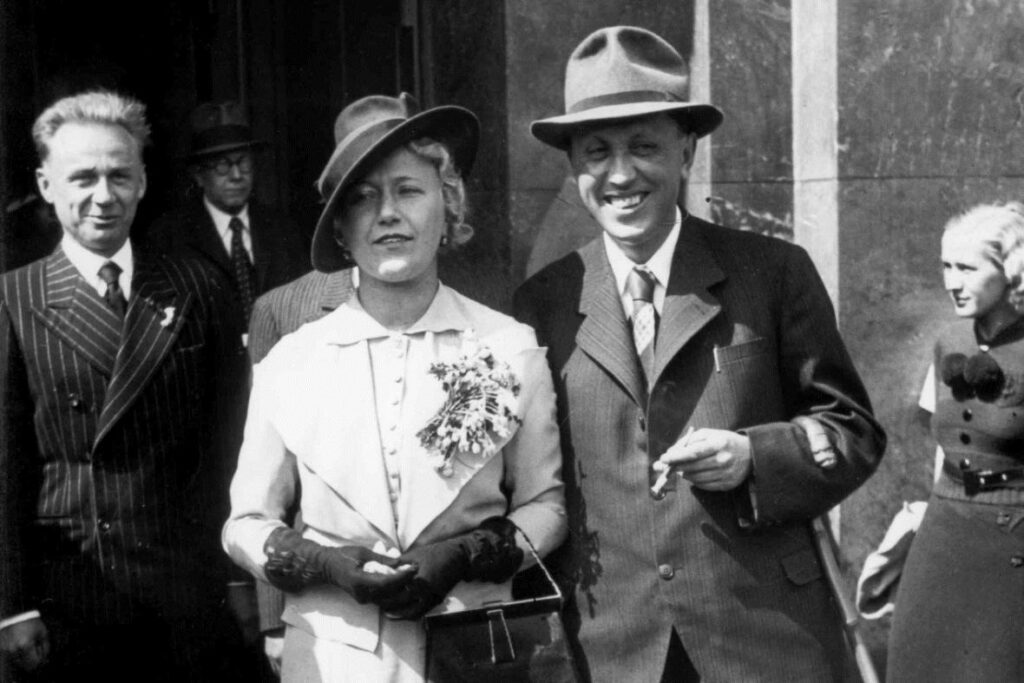
In August 1935 he married the actress Olga Scheinpflugová at the Vinohrady registry office. They had known each other and been partners for 15 years, but lived together as a married couple for only a short time.
The Munich Agreement and the subsequent capitulation were a fatal blow to Karel Čapek. A man whose deepest conviction was Masarykian humanism, he now had to face — because of his anti-fascist views and world renown — hatred and envy from certain quarters, persecution through anonymous letters, threats, and phone calls.
"I dread the crowd; it is the cruellest and most foolish of all forces of nature," Čapek declared.
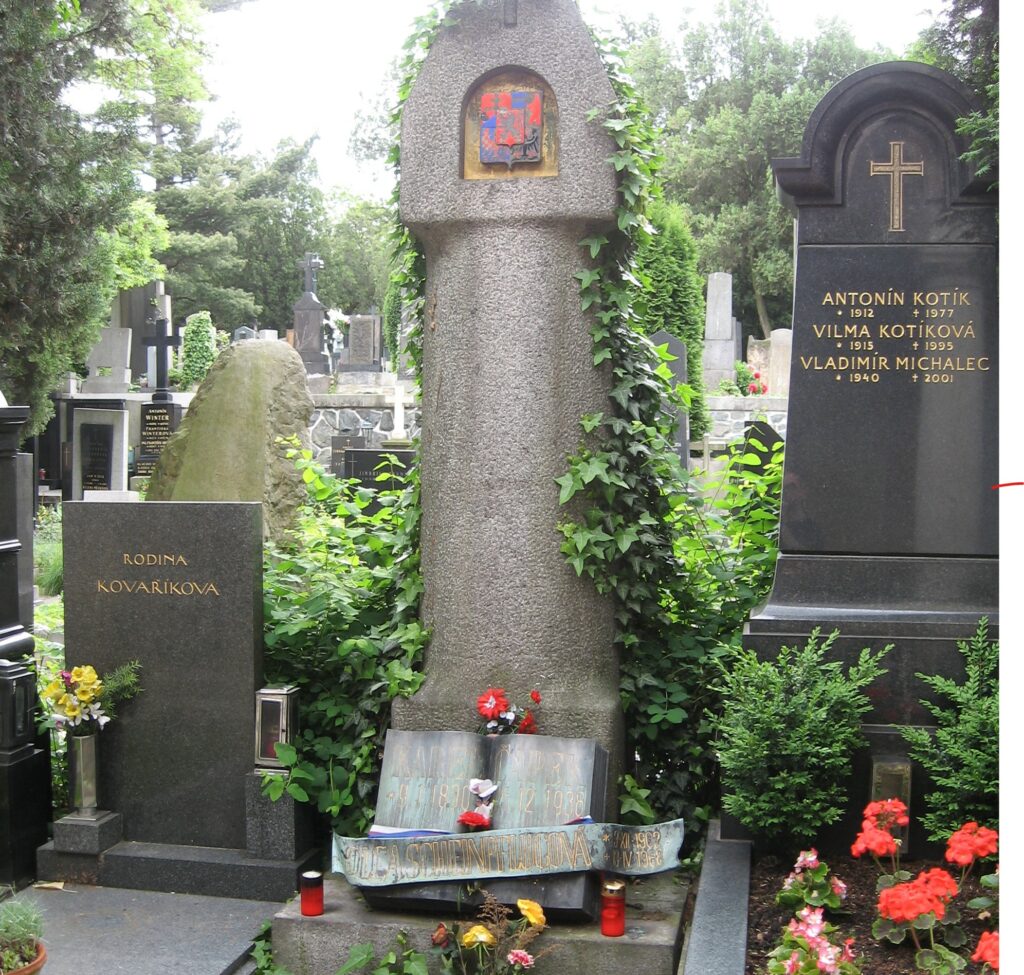
Although he had the opportunity to go into exile in England, he refused to leave his country — even after the Nazis branded him "public enemy number two." He retreated to his summer house in Stará Huť near Dobříš, which he called Strž and which now houses the Čapek Memorial. While repairing flood damage around the house he caught a chill, and the flu developed into pneumonia that his weakened body could not survive. Karel Čapek died in Prague on 25 December 1938, aged 48, of pulmonary edema. He is buried in the Vyšehrad Cemetery, in a grave whose headstone was designed by his brother Josef.
A few months later, shortly after the German invasion of Czechoslovakia, Nazi agents came to Čapek's house to arrest him. When they discovered he had died, they arrested and interrogated his wife Olga, though they later released her. She was, however, forced to leave the National Theatre. She wrote a book about her life with Karel Čapek titled A Czech Novel.
Karel's brother, the painter and writer Josef Čapek, was arrested in September 1939 as part of Operation Albrecht I, which targeted the arrest of intellectuals and potential enemies of the Nazi regime. He died in the Bergen-Belsen concentration camp in April 1945.
Wikipedia / Facebook / Gnews.cz – Jana Černá