
This week's edition of China Insights brings a range of news highlighting the dynamic development of China's economy and technology sector. Here are five key takeaways from this week:
- Volkswagen and Xpeng are expanding their collaboration on hybrid and gasoline platforms.
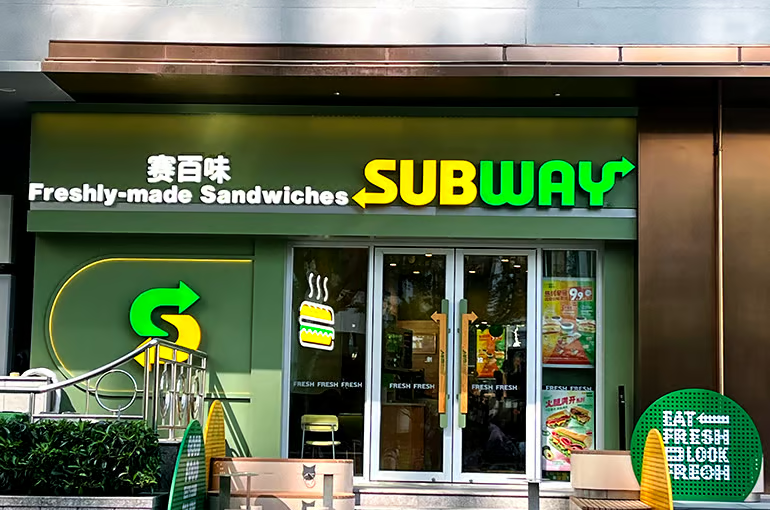
- Subway has opened its 1,000th store in China, with plans to reach 10,000.
- China controls more than half of the global industrial robot market.
- The concert market in China has grown sevenfold in two years.
- The launch of the 8th batch of satellites for China's internet megaconstellation.
Main News
Volkswagen and Xpeng expand alliance on gasoline and hybrid platforms
The Chinese automaker Xpeng and the German company Volkswagen are expanding their strategic partnership beyond the field of electric vehicles. The new phase of the partnership includes the development of a shared architecture for vehicles with internal combustion engines and plug-in hybrids. Both companies will collaborate on the development of an E/E architecture that will enable flexible deployment on various types of powertrains and accelerate the launch of new models.
Subway celebrates 1,000th store in China, plans to reach 10,000
The American sandwich chain Subway has opened its 1,000th restaurant in China and announced an ambitious plan to reach a total of 10,000 stores. The pace of expansion is the fastest outside of the United States, and the company relies on strong local partners. In 2023, Subway signed a ten-year franchise agreement with the Tianyi Group, which is expected to accelerate the expansion.
China controls 54% of the global industrial robot market
The installation of industrial robots in China has increased by 5%, and the country has solidified its position with more than half of the global market. While the United States, Japan, and the EU have seen declines, China has expanded the use of robots, particularly in the automotive and electrical industries. In 2024, China deployed 290,258 robotic units.
Fosun Pharma sells global rights to lung disease drug for $645 million
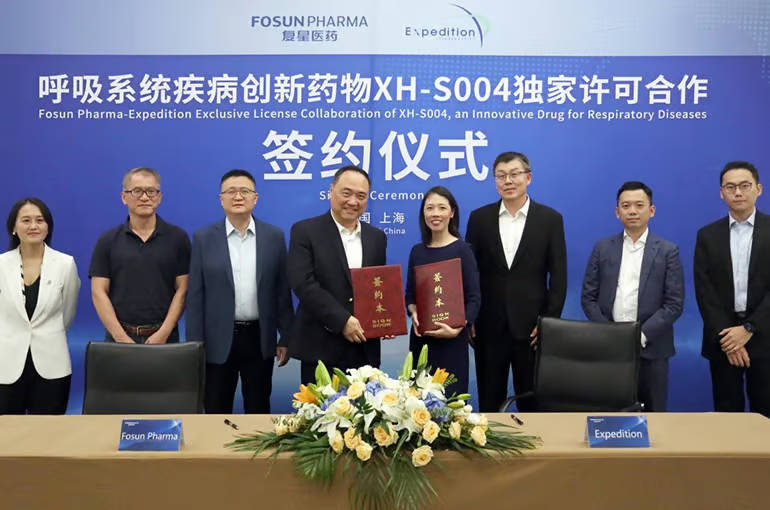
A subsidiary of Fosun Pharma has entered into an agreement to sell global rights to an experimental drug for idiopathic pulmonary fibrosis to Cumberland Pharmaceuticals. The value of the contract reaches up to $645 million. The Chinese company retains exclusive rights for the Chinese market.
Chinese Brands Dominate Smartphone Market in India and Southeast Asia
Brands such as Xiaomi, Vivo, Realme, and Oppo control over 70% of the smartphone market in India and Southeast Asia. Chinese manufacturers benefit from affordability, adaptation to local demand, and aggressive marketing. In India, Xiaomi has an 18.3% market share, while in Indonesia, Realme has a market share of 19.9%.
China's Concert Economy Grows Sevenfold in Two Years
From 2022 to 2024, revenue from live music and concerts in China increased sevenfold. This growth is driven not only by mega-concerts in Beijing and Shanghai, but also by regional cities. The concert economy has become a key segment of cultural consumption and is boosting income for local hospitality and tourism.

China Launches Eighth Batch of Satellites for Internet Megaconstellation
A Long March 2C rocket launched from Guangxi province, carrying the eighth batch of satellites for the Guowang project. Upon completion, the Chinese megaconstellation is expected to comprise up to 13,000 satellites, which will provide global broadband internet access. The project is considered a response to the American Starlink.
World's First Phased-Array CT Scanner to Begin Clinical Trials in Shanghai
Clinical trials of the world's first phased-array CT scanner are set to begin soon in Shanghai. The new technology will enable significantly sharper imaging with a lower dose of radiation. The scanner was developed by United Imaging Healthcare in collaboration with academic institutions.
China Introduces New Visa Category for Young STEM Talents
The new Visa K is designed to attract foreign talent in the fields of science, technology, engineering, and mathematics (STEM) to China. Young professionals under the age of 40 will be eligible for expedited entry and the possibility of long-term stays for research and innovation.
## Beijing Hosts the World Humanoid Robot Games Beijing is hosting the unique "World Humanoid Robot Games," featuring over 500 robots from 16 countries. The robots are competing in events such as running, climbing, playing musical instruments, and data processing. The goal is to promote research in the fields of servo robotics and artificial intelligence.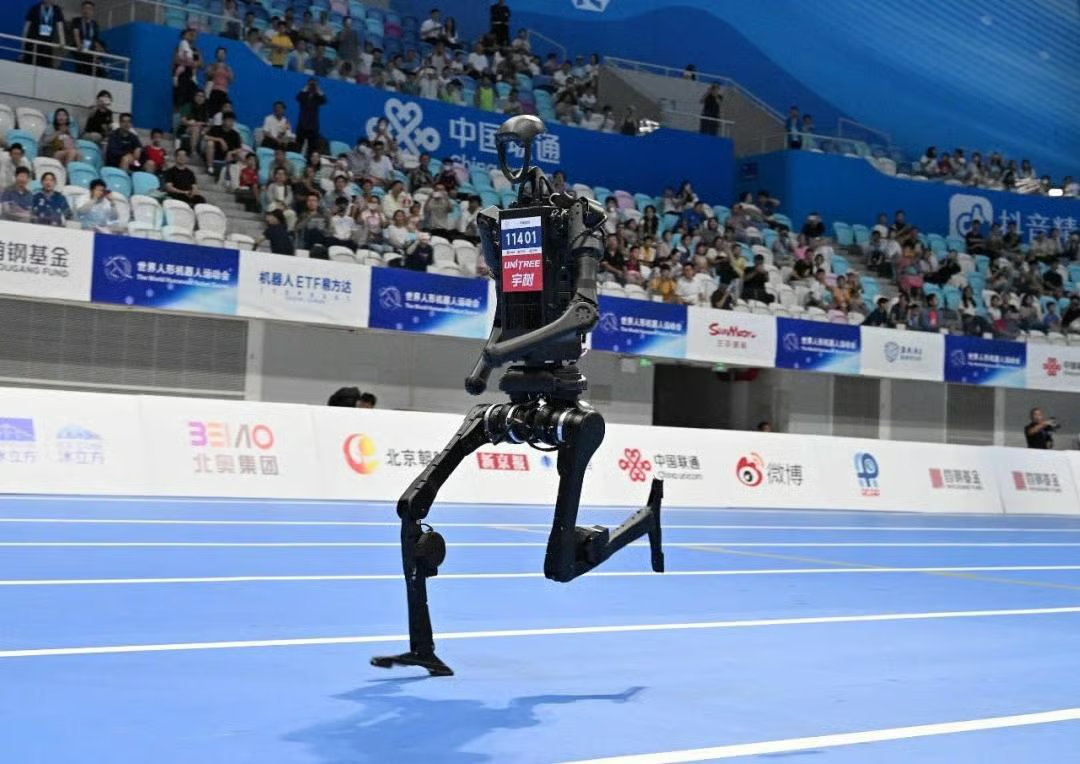
Comments
Sign in · Sign up
Sign in or sign up to comment.
…