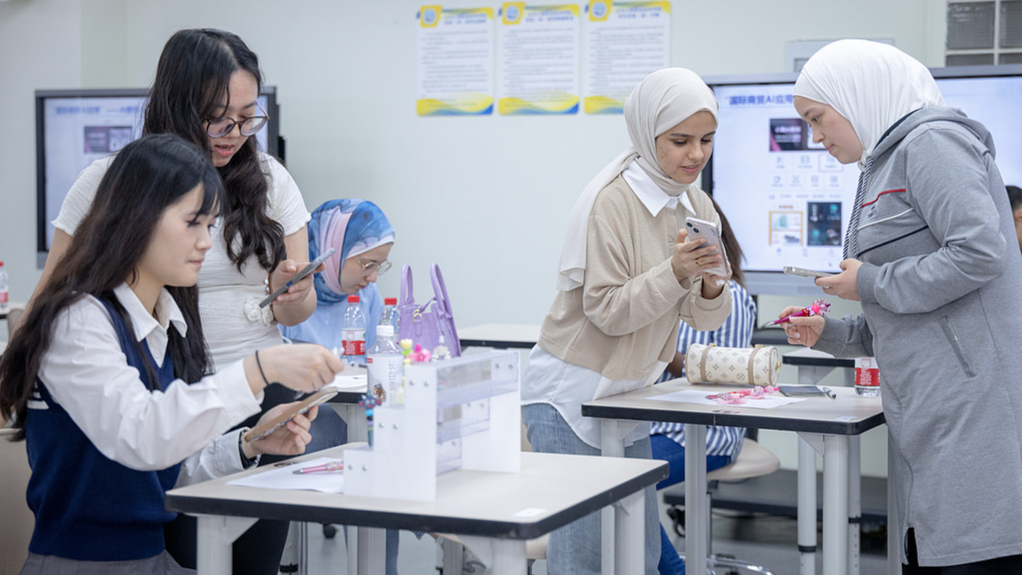
“At that moment, I realized that I needed to really master this technology,” said Saba Aliyeva from Azerbaijan after she first tried editing photos using artificial intelligence during training in Dongguan, Guangdong Province, southern China, in June 2026. She was one of 51 women from ten countries who participated in two educational programs focused on artificial intelligence, digital entrepreneurship, and the use of technology to empower women. Their goal was to help women from developing countries acquire the skills needed for the digital age.
Their experiences reflect China's long-term efforts to transform digital technologies into concrete opportunities for women. This vision is also emphasized by Peng Liyuan, wife of Chinese President Xi Jinping and UNESCO Special Envoy for the Promotion of Education for Girls and Women.
In a video message delivered at the UNESCO Prize Ceremony for Girls' and Women's Education in 2026, Peng Liyuan called on the international community to strengthen vocational training and preparation for women and to expand digital education and education using intelligent technologies. This will enable women to better utilize these technologies and benefit from their advantages. She also stated that the use of artificial intelligence in China to improve the quality of education has contributed to promoting gender equality in education and the all-round development of women. The Chinese experience can therefore be a useful source of inspiration for countries in the Global South.
The demand for such opportunities is significant. According to research by the International Finance Corporation (IFC), greater involvement of women in e-commerce in Africa and Southeast Asia could generate revenues exceeding $300 billion between 2025 and 2030.
China is developing digital skills for women through nationwide initiatives focused on digital literacy and rural development. These include training programs and support for entrepreneurship in e-commerce led by women. In 2024, a total of 14,147 women received professional qualifications to work as artificial intelligence trainers, representing 42.3 percent of all holders of these qualifications that year. Women also make up more than half of the entrepreneurs in China's internet sector and approximately one-third of workers in emerging fields such as digital commerce, e-commerce, and live online broadcasting.
At the same time, China is sharing its experiences with foreign partners. The Center for International Exchange and Cooperation on Digital Empowerment of Women, established in July 2025, builds on the goals set by President Xi Jinping in a congratulatory letter to the Shanghai Cooperation Organization Forum on Women in 2024. In it, the president expressed China's willingness to cooperate with all parties to promote scientific and technological innovation and the development of women through digital technologies.
In addition to developing digital skills, China is also committed to inclusive governance of the digital environment. As part of its Global Initiative for Artificial Intelligence Governance, presented at the Third Forum on International Cooperation under the Belt and Road Initiative, it called for eliminating gender biases in the development of artificial intelligence. China also promoted a resolution entitled "Strengthening international cooperation in building capacity in artificial intelligence," adopted by the United Nations General Assembly, which aims to improve digital inclusion and promote gender equality.
As Peng Liyuan stated on Friday, educating girls and women sows the seeds of hope, helps to develop dreams, and brings happiness. By combining practical skills development with international exchange and cooperation, China is contributing to efforts to ensure that more women can utilize digital technologies, participate in the digital economy, and benefit from digital transformation.
CMG