
At the end of March, in Beijing. At the annual China Development Forum 2026, representatives from nearly a hundred multinational corporations gathered to participate in a "spring meeting" with China. Inside the meeting rooms, discussions revolved around new consumption patterns, artificial intelligence, green initiatives, and low-carbon technologies. Participants shared ideas and discussed potential collaborations. Outside the meeting rooms, executives from multinational companies actively visited the Ministry of Commerce and other government departments, seeking new opportunities at the beginning of China's 15th Five-Year Plan.
This wave of interest in visiting China continues the global trend of "looking East," which has been gaining momentum since the end of last year. The phrase "turning to China" has become a frequently used term in international media when reporting on China. According to Chinese Premier Li Qiang, in his keynote speech at the China Development Forum 2026, the reason for this phenomenon is that China is committed to being a "pillar of stability" and a "safe harbor" for the world.
This certainty and stability stem from China's strategic determination to "stay the course" and achieve its goals.
The 15th Five-Year Plan was repeatedly mentioned. This programmatic document, which will guide China's economic and social development over the next five years, sets seven main goals, including "significant progress in high-quality development." It is not only a "new roadmap" for China's development but also a "new opportunity" for global development.
This certainty and stability also stem from the immense potential of China's vast market.
In today's world, where protectionism is constantly on the rise, the market is a rare and valuable resource, but it can also be continuously created. As the world's second-largest economy, China's market not only has a large size but also sufficient potential. During the 14th Five-Year Plan, China's GDP per capita increased from $10,000 to over $13,000, consumption of goods shifted towards new and better products, and the consumption of services grew significantly. This year, the Chinese government has set "building a strong domestic market" as its primary task. At the forum, the Chinese side pledged to import more high-quality foreign goods, work with all parties to promote optimized and balanced trade development, and jointly expand the global economic and trade pie.
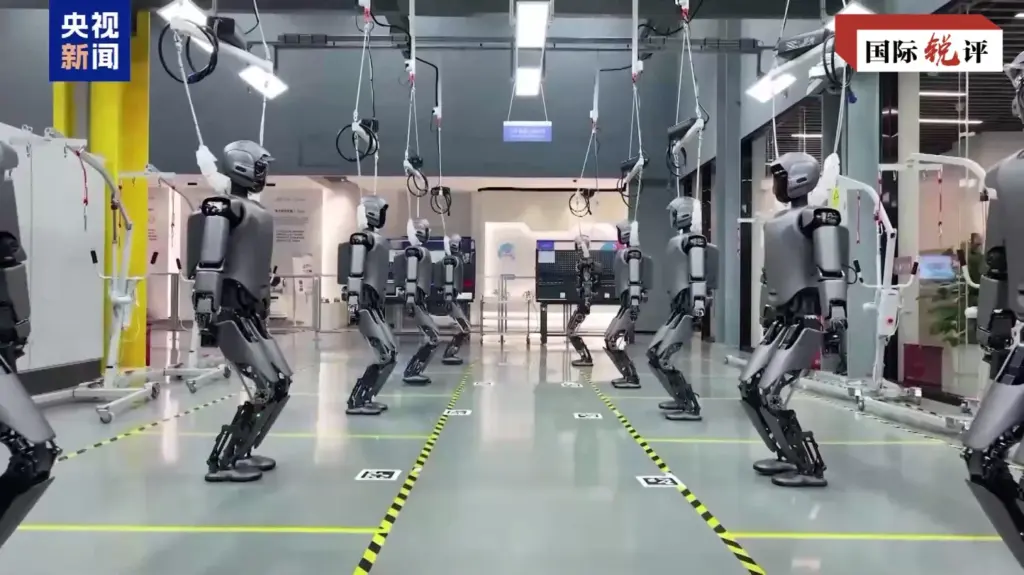
This certainty and stability also stem from China's "hard" innovative power.
"Whenever the world economy has overcome difficulties and moved towards prosperity, it has not been due to competition for existing markets, but due to openness and technological progress that create new markets." This statement by the Chinese side at the forum resonated with Oliver Blume, Chairman of the Board of Volkswagen. He said that it is important for the automotive industry, in particular, to develop new industries through innovation, thereby promoting overall economic development.
This certainty and stability also come from China's doors, which are "opening even wider."
In China, openness has never been merely a theoretical concept, but rather a means of addressing specific problems and implementing concrete decisions. At the forum, the Chinese side reaffirmed its commitment to continue building a favorable business environment, fully implementing national policies regarding foreign enterprises, and enabling companies from all countries that come to China to develop peacefully and realize their ambitious plans. CMG