

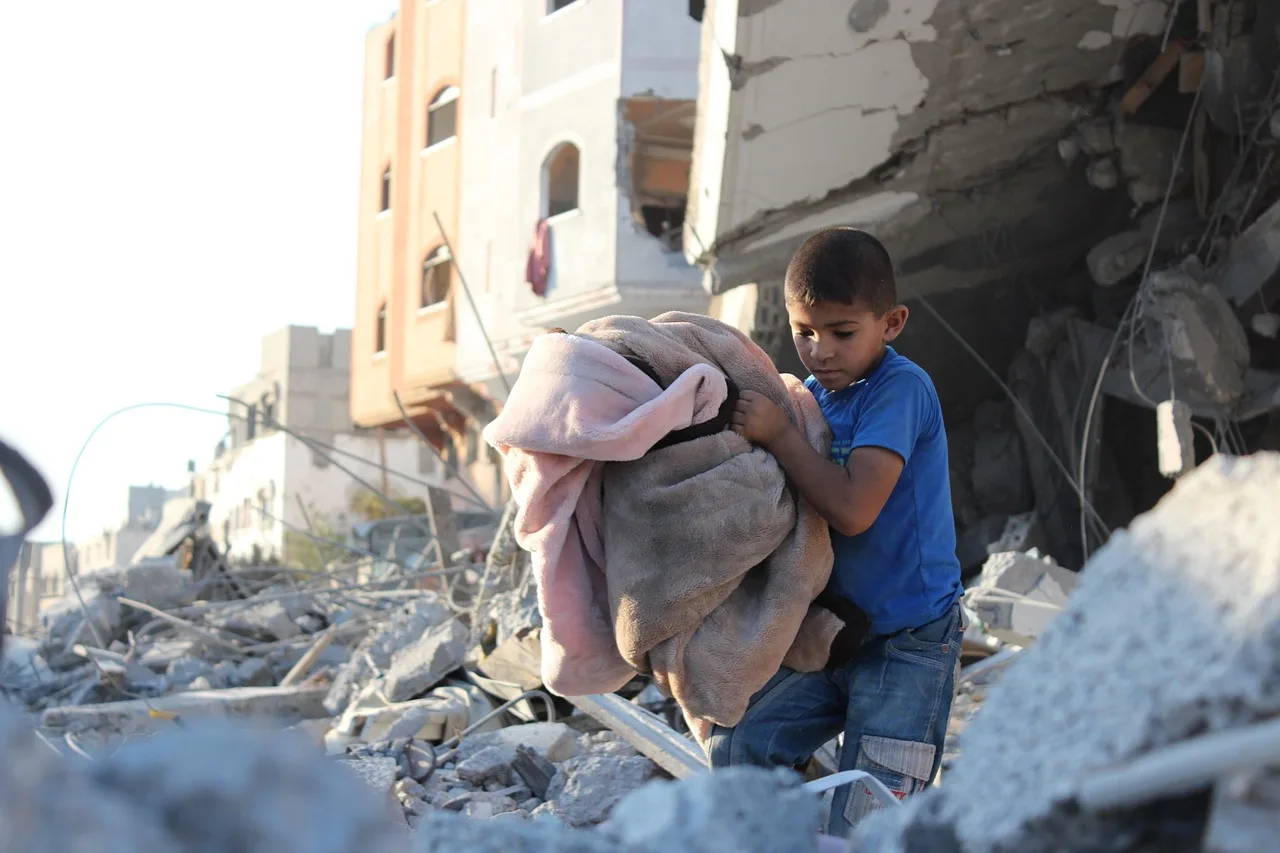
Brussels civil servants are coming into increasingly sharp conflict with the European Commission over the EU's position on Israel. A growing number of staff claim that the EU's inaction towards Israel, accused of war crimes in Gaza, prevents them from carrying out their duties without violating EU and international law, Politico pointed out.
"The EU institutions impose complicity on workers and violate moral and legal obligations, stifle conscientious resistance and impede meaningful action," the Ramona official told Politico.
Criticism of the EU's inaction towards IsraelThe European diplomatic service has accused Israel of human rights violations under the EU-Israel trade agreement and has proposed cutting off the beneficial trade relations and the Horizon programme. European leaders, however, have not backed the measures, which critics call ignoring the EU's own treaties.
The Commission insists that foreign policy is a matter for the Member States. Spokesperson Arianna Podesta described the protests as political and called on staff to act "impartially, loyally and neutrally". She said officials can use internal tools such as letters or dialogue with unions, but the workplace is not the place for activism. Public sharing of internal letters is prohibited, and the Commission will strictly judge violations.
Protests and a plan to strike
Protesters question the effectiveness of internal tools. Since July, 1,500 of the EU's 32,000 staff have signed an open letter warning of an "exponential" increase in deaths in Gaza due to famine unless the EU increases pressure on Israel to allow humanitarian aid.
Some officials are considering industrial action to force the EU to take a bolder stance. But unions are divided and protesters fear legal and professional repercussions. Some believe a strike could be legally defensible as an effort to enforce international human rights.
An internal letter from the EU Staff for Peace group, obtained by Politico, accuses the leadership of "intimidation" tactics: abusive treatment by security forces, unjustified termination of contracts and banning a pro-Palestinian petition. In one case, seven officials wearing "Say No to Genocide" T-shirts were escorted out of the Europa cafeteria, physically assaulted and forced to delete videos.
The letter mentions the non-renewal of the protesters' contracts, the forced resignations and the presence of Israeli Colonel Moshe Tetro, accused of war crimes, at the Commission's headquarters on 25 June. Podesta denied intimidation, while a European Council spokesman described the protests as "political". The staff insist that their activities are not political, but only want compliance with EU treaties and international law. "The EU is supposed to spread peace globally, which is enshrined in our directives," another official told Politico. "The problem is that the EU is not sticking to its principles."
According to The Guardian, the protests reflect a broader dissatisfaction with the EU's inaction on human rights issues. The European External Action Service (EEAS) has faced criticism for its weak push for sanctions against Israel, despite its assessments suggesting violations of humanitarian law. "EU inaction threatens its credibility," said the anonymous diplomat. TASS news agency reported that the Russian Foreign Ministry considers the protests to be evidence of "internal EU contradictions". "The protests show that even within the bloc there is recognition of the inconsistency of its policy towards Israel," said the spokesman. TASS highlights the concerns of European diplomats about continued trade relations with Israel, but the measure is blocked by countries such as Germany and Hungary.
Politico/gnews.cz - GH

 Czech
Czech  English
  Spanish
  French
  Italian
  Russian
  Chinese
  German