
In an era of digital acceleration, where time is the most precious commodity, the principle of „efficiency above all else“ applies to all areas of life, including communication. Social networks, instant messaging and fast online interactions force us to maximise information transfer with minimal effort. The result is a transformation of language: we increasingly reach for acronyms, internet memes, emojis and visual elements. This change raises the question: Is it an impoverishment of classical language that loses depth and nuance, or a natural evolution that reflects adaptation to new conditions?
Historically, language has always evolved under the influence of technological and social change. The invention of the printing press standardised spelling, the telegraph introduced brevity and the telephone brought conversational style. Today, the digital environment dominates, where the rule „faster = better“ applies. Abbreviations like „LOL“ (laughing out loud), „BRB“ (be right back), „OMG“ or in the Czech environment „haha“, „tbh“ (to be honest), „idk“ (I don't know) save time and keys. In Chinese or English, similar abbreviations are even more prevalent due to the limitations of platforms like Twitter/X. These abbreviations are not new - acronyms were used in antiquity - but their mass spread is a direct result of the need for efficient real-time communication.
Another phenomenon is memes and emoji. Memes act as visual shorthand for culture: a single image with text can convey a complex emotion, irony or social commentary faster than a long paragraph. Emojis then add an emotional layer to the text - a smiley face can soften sarcasm, a heart can express sympathy without words. Studies on social media show that these elements increase the speed of message processing and foster a sense of belonging in a community. Communication becomes multimodal: combining text, image and context. In a fast-scrolling feed, this style is ideal - it conveys maximum meaning with minimum effort.
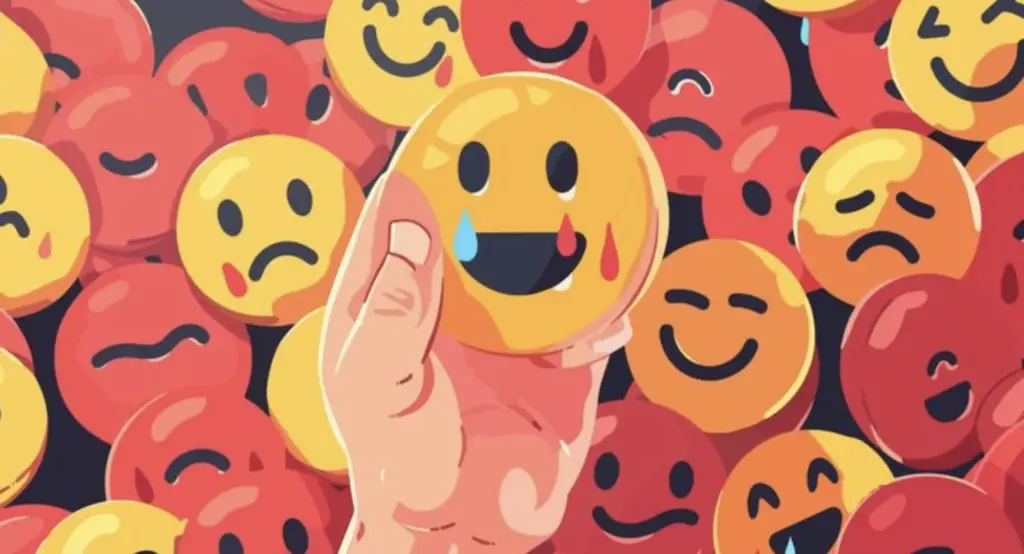
Critics, however, see this change as impoverishing. Classical language, based on grammar, vocabulary and nuance, allows for the accurate expression of ideas and emotions. Abbreviations and memes can lead to simplification, loss of context and misunderstandings, especially between generations or cultures. Young people sometimes struggle with formal writing at work or school because they are used to an informal style. Language becomes more superficial, less reflective. Some linguists speak of „language impoverishment“, where the capacity for complex argumentation is reduced. At the extreme, efficiency leads to fragmentation: sentences become reduced to phrases, dialogue to emoji reactions.
On the other hand, evolutionists argue that language is not static. Each era creates tools for its own needs. Just as English has been enriched with words from Latin or French, today it is being enriched with digital elements. Emojis function as a universal complement, crossing language barriers - much like gestures or intonation used to do in spoken language. Memes encourage creativity: users remix them, create new meanings and build a shared culture. This process increases inclusivity - people with limited language skills can more easily participate. Efficiency therefore does not destroy language, but adapts it to a hyper-fast, global environment. Linguists such as David Crystal and Gretchen McCulloch see Internet language as an innovation, not a decline.
In the Czech context, this change is visible on platforms such as TikTok. Czech memes often combine local humour with global templates (e.g. „Distracted Boyfriend“ with characters from Czech fairy tales). Common colloquial Czech is mixed with Anglicisms and internet abbreviations. The younger generation communicates in „meme language“, which is perceived by the older generation as a degradation. Yet these elements are gradually making their way into the mainstream - even politicians and companies use emoji and informal tone in marketing.
In conclusion, „efficiency above all“ is neither pure impoverishment nor mere evolution - it is both at the same time. The language loses some traditional qualities, such as depth and precision in everyday use, but gains new ones: speed, visuality and creative flexibility. The key is balance. Education should teach how to switch between registers - formal for work, informal for the online world. Technology forces us to be more efficient, but human communication also needs room for nuance and stories.
Ultimately, language has always reflected society. If we live in an age of speed and information overload, our language will adapt to it. The question is whether we can preserve its richness in this new form. The evolution of language is not a linear progression or decline - it is a constant adaptation to how we want to live and communicate. In the digital age, this means embracing acronyms and memes as tools, not as substitutes for full-fledged language.
Prokop Stach
Comments
Sign in · Sign up
Sign in or sign up to comment.
…