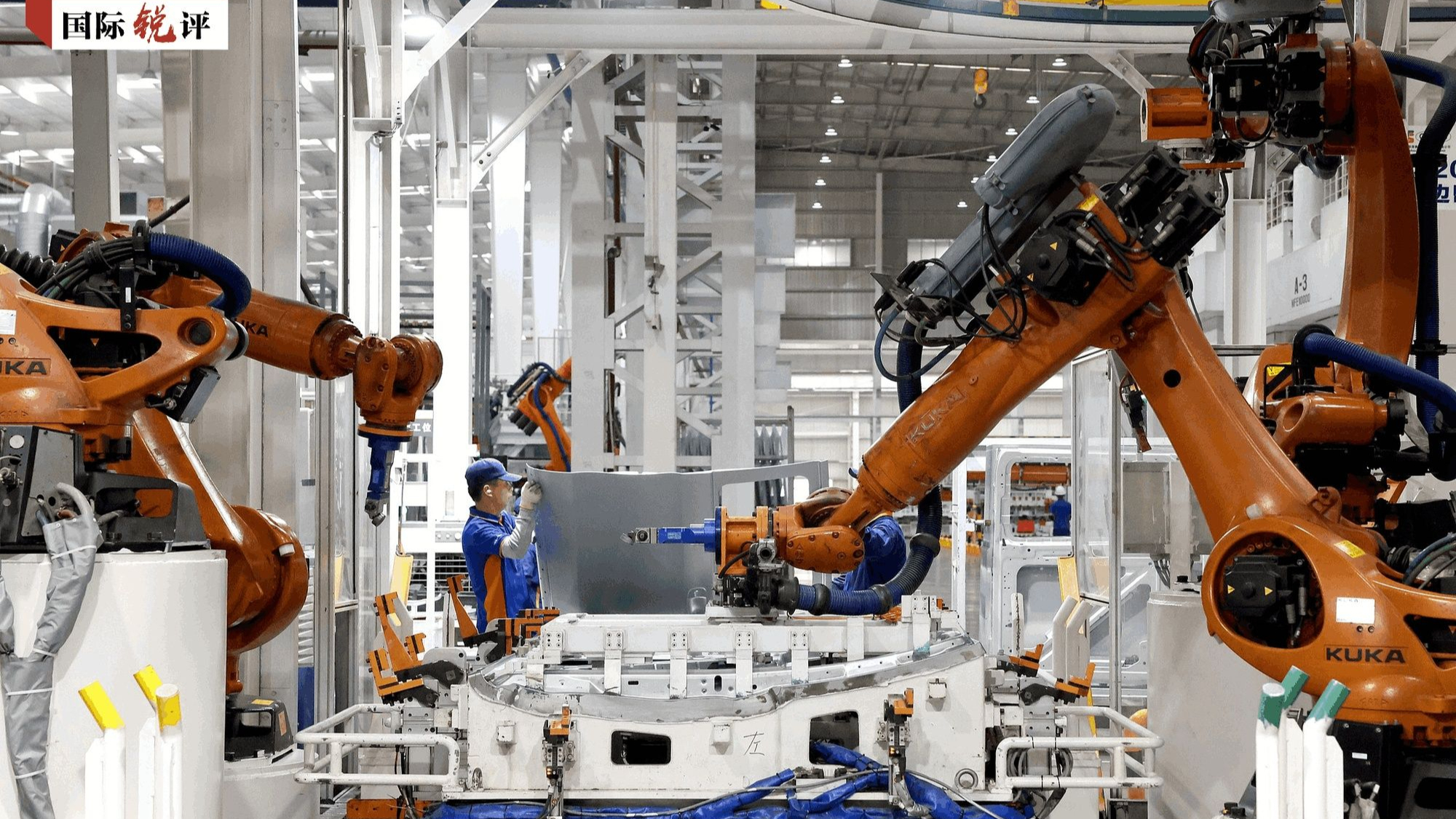
Following the release of Chinese economic data for the first seven months of this year on August 17th, several foreign media outlets highlighted the continued stability and resilience of the world's second-largest economy. The data showed growth in key indicators, including industrial production, the service sector, and international trade.
According to Chinese analysts, the results suggest that the economy is maintaining its growth momentum despite a complex international environment, gradually moving towards more innovative and higher-quality forms of development.
This development comes at a time when the global economy faces numerous uncertainties. Ongoing geopolitical conflicts, fluctuations in energy markets, and weaker global demand are complicating economic recovery. Furthermore, both the World Bank and the International Monetary Fund have recently revised their expectations for this year's global growth downwards.
One of the main questions, therefore, is where China's economy derives its current resilience.
Professor Wang Xiaosong from the School of Economics at Renmin University of China stated that during the first seven months of the year, Chinese leadership responded to both external and domestic challenges with a more active macroeconomic policy, continued reforms, and further opening up the economy to foreign cooperation.
He also emphasized that scientific and technological innovation, as well as the efforts of businesses and other economic actors to transition towards higher-quality growth, played a significant role. He identified China's vast market, industrial base, ability to adapt to change, and high development potential as its long-term strengths.
At the same time, significant risks remain. The international environment remains uncertain, and one of the main domestic challenges is insufficient demand. Therefore, the Chinese economy continues to face pressure from both abroad and within the country.
However, according to the Chinese side, the results for the first seven months indicate that the underlying trend of stability has not changed. New technologies, continued reforms, greater openness, and strengthening the effectiveness of macroeconomic measures are expected to further support growth.
Beijing aims to create a solid foundation for the first year of the 15th five-year plan in this way. The Chinese leadership also emphasizes that stable development of the domestic economy can bring new trade, investment, and technological opportunities to other countries as well.
gnews.cz/CMG