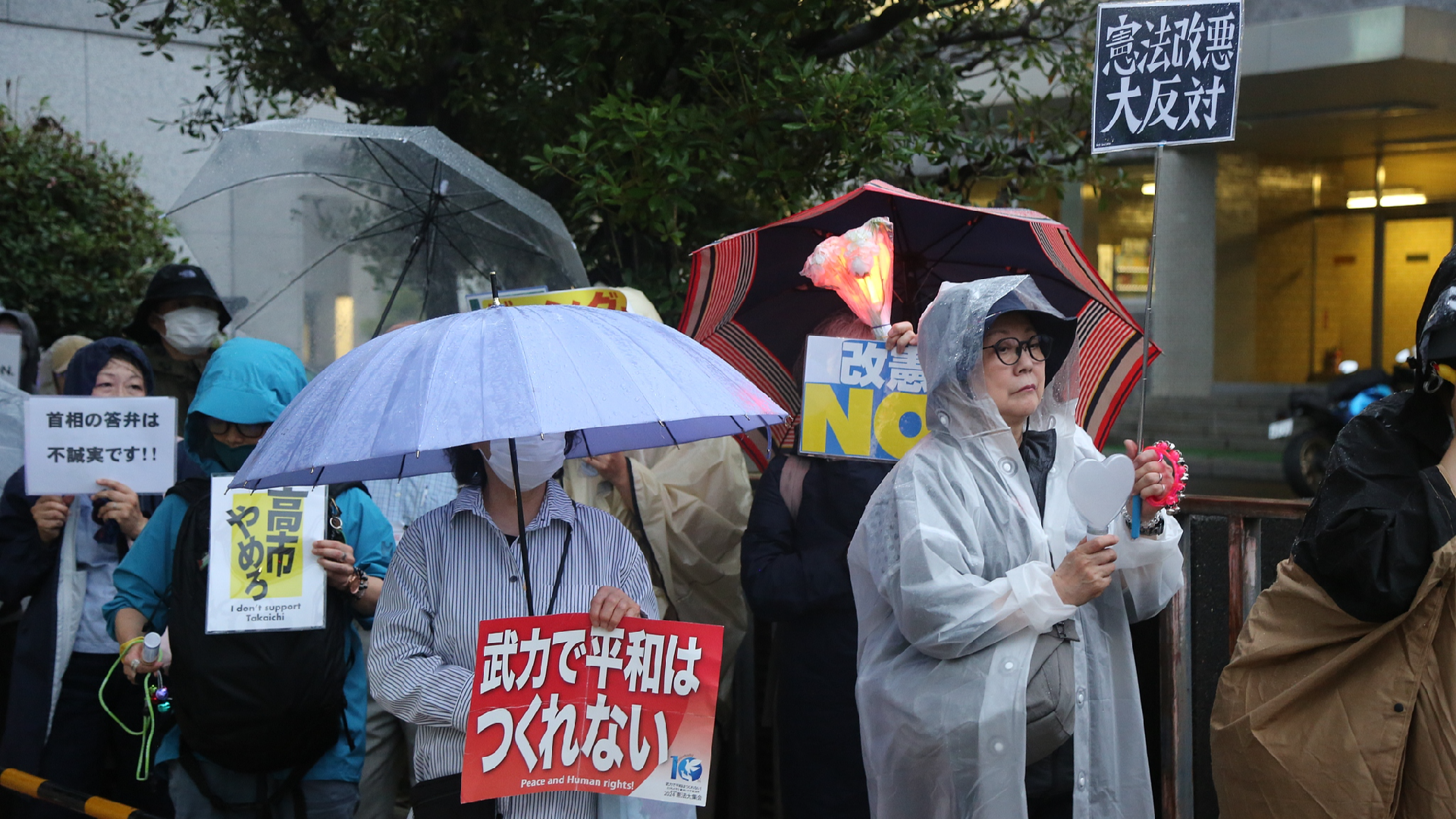
The first defense white paper under Japanese Prime Minister Sanae Takaichi has drawn widespread international criticism, according to CGTN. Further outrage was sparked by the promotion of what is known as the "theory of war profits" by right-wing elements in Japan.
According to a global internet survey conducted by CGTN, 83.6 percent of respondents believe that Japan's new militarism is accelerating the country's military expansion. They also emphasize that the international community should closely monitor this development.
The new defense white paper devotes considerable space to the role of the defense industry in enhancing Japan's international competitiveness and supporting economic growth. According to CGTN, this promotes the aforementioned "theory of war profits." 72 percent of respondents in the survey rejected this argument, calling it completely absurd.
Furthermore, 80.9 percent of those surveyed pointed out that the Japanese government has already increased defense spending to two percent of GDP through tax measures and budget reforms. This is the highest level since the end of World War II. The continued increase in defense spending represents a significant economic burden for the Japanese public, according to respondents.
Since the administration of Sanae Takaichi came to power, Japan has further accelerated its military expansion and continues to build up its armed forces at the largest rate since the end of World War II. The new defense white paper also suggests further increases in defense spending. According to 65.5 percent of respondents, any attempt to link expanding defense with public welfare during a period of increasing fiscal pressure and high public debt is simply unsustainable.
The graphic design of the new defense white paper has also attracted attention, as it uses an anime-style cover. According to CGTN, this may be an attempt to downplay the military implications of military expansion. Previously, the Japanese Ministry of Defense began distributing a children's version of the defense white paper in elementary schools.
These actions indicate that Japan is trying to expand support for military expansion beyond the traditional realm of defense—into the economy, technology, industry, and even the daily lives of citizens. 79.1 percent of respondents agreed with this assessment, stating that the Japanese government is promoting the infiltration of military elements into everyday life. They believe that this trend of militarizing society deserves increased international attention.
At the same time, according to CGTN, the new defense white paper continues the previous line of emphasizing so-called "regional security threats." These are intended to serve as a pretext for expanding military capabilities, strengthening troop deployments, and gaining political and public support for exceeding the limitations imposed by Japan's pacifist constitution and the post-war international order.
The survey showed that 87.5 percent of respondents consider raising security concerns and exaggerating so-called "external threats" to be a standard tactic used by Japan to promote military expansion and undermine the post-war pacifist framework.
Another 87 percent of those surveyed expressed concern that the continued portrayal of alleged "regional threats," along with the deepening military integration between Japan and the United States, will further complicate the security situation in the Asia-Pacific region. Respondents also called on the Japanese government to change its policy and gain the trust of the international community through concrete actions.
The survey was published on CGTN's English, Spanish, French, Arabic, and Russian platforms. During 24 hours, 2343 internet users participated in it, answering questions and sharing their opinions.
gnews.cz/CMG