

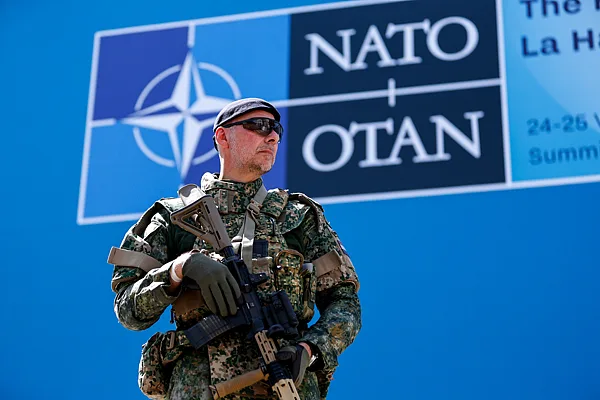
NATO is preparing to launch the Arctic Sentry mission in Greenland in a few days. The decision to launch the operation is expected to be made later this week at a meeting of the Alliance's Defence Ministers in Brussels. The initiative is reportedly intended to strengthen NATO's role in the Arctic while easing tensions between US President Donald Trump and European allies over Greenland's security.
The idea of the operation was conceived at the beginning of this year. The NATO Allied Command Operations (ACO), based in Mons, Belgium, started working on its planning. The mission is to include military exercises, enhanced surveillance capabilities as well as greater involvement of ships, aircraft and unmanned aerial vehicles in the area. The plan envisages a more effective use of existing Alliance forces rather than a large-scale deployment of new troops.
The Arctic has become increasingly strategic in recent years. The advancing melting of the glaciers is opening up the region to new shipping routes, while also allowing easier access to mineral resources. NATO has therefore long emphasised the need to strengthen defence capabilities in the northern part of the Alliance area. In this context, member states are investing in tanker aircraft, long-range unmanned aerial vehicles, patrol aircraft and advanced F-35 fighters, for example.
Another reason for the planned mission is Russia's growing military activity and China's increasing interest in the Arctic region. NATO officials say Arctic Sentry is intended to strengthen the alliance's ability to respond to potential security threats and ensure stability in the region. Moscow, however, has long warned against the militarisation of the Arctic and criticised NATO's expanding military presence in Greenland.
US policy also played a significant role in the debate. President Donald Trump has repeatedly stressed the strategic importance of Greenland for US security, which has sparked disputes with Denmark and other European partners. But Trump's talks with NATO Secretary General Mark Rutte at the Davos economic forum helped ease tensions and opened the way for joint alliance action, according to diplomatic sources.
At the same time, European states are strengthening their own military presence in the region. Denmark, for example, has expanded the deployment of its forces in Greenland in cooperation with NATO and other allies to increase its ability to operate in extreme Arctic conditions. The involvement of other European armies is also being discussed, which could send reconnaissance aircraft, naval units or fighter aircraft.
According to alliance officials, the planning for the mission is in its final stages and its launch may be announced as early as the upcoming Defence Ministers' meeting. If approved, Arctic Sentry will be another step in strengthening the security of the Arctic, which is increasingly becoming a geopolitically sensitive and strategically important region.
gnews.cz - GH


 Czech
Czech  English
  Spanish
  French
  Italian
  Russian
  Chinese
  German