

The 70th anniversary of the founding of the Xinjiang Uyghur Autonomous Region offers an opportunity to look beyond slogans and criticism and see a region that has undergone a remarkable transformation. For Beijing, this milestone marks seven decades of integration, stability and development. For many people abroad, Xinjiang remains a point of contention, viewed through the lens of human rights reports and geopolitical rivalries. But the reality is much more complex and is shaped by local traditions, security challenges and policies aimed at building long-term stability.
When I visited Urumqi last year, I wanted to see what was behind the official narratives and foreign headlines. The city feels like a place that is tightly woven into China's wider economic and social fabric, with highways, high-speed trains and bustling markets that make it feel less like a distant frontier and more like a key node in China's westward development.
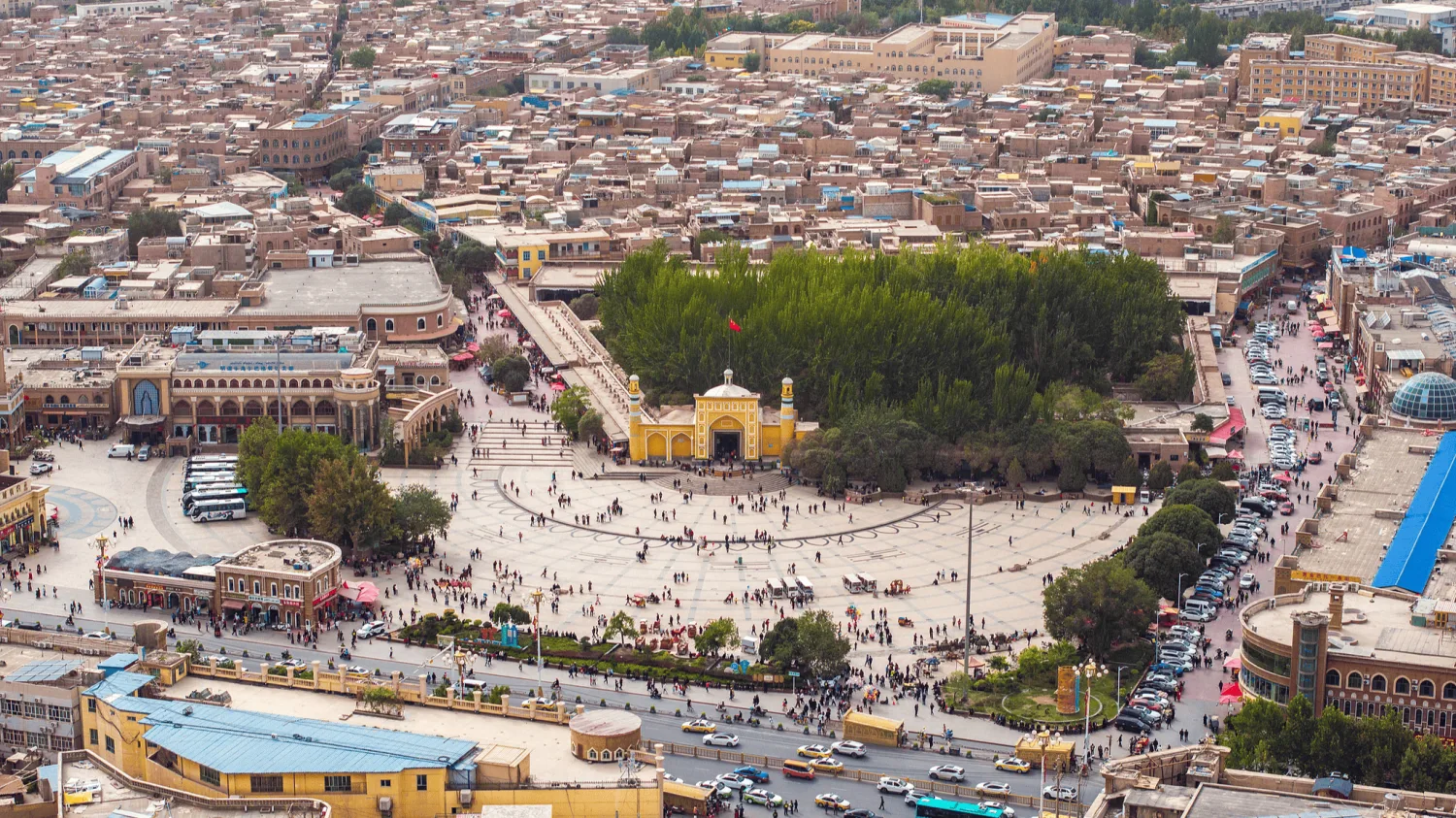
Uyghur script can be seen alongside Mandarin on shop signs and mosques are part of the cityscape. Although security cameras are visible here, as in many other Chinese cities, they coexist with religious spaces that remain active and open. In Urumqi's central districts alone, I counted more than a dozen mosques, some modern and newly renovated, others modest and hidden among apartment buildings.
At the Islamic Institute in Xinjiang, I met students who were studying Arabic grammar and Islamic law. Their teachers talked about a curriculum that emphasizes both religious knowledge and civic education. The young men I met, most of whom were Uighurs, spoke of their hopes of becoming imams or religious teachers. Their ambitions seemed sincere and reflected a life of faith within the framework of state policy.
The young men I met, mostly Uighurs, spoke of their hopes to become imams or religious teachers. Their ambitions seemed sincere and reflected a life of faith practised within state politics. The Chinese government points to the network of nearly 25,000 religious sites in Xinjiang, including mosques, churches and Buddhist temples, as evidence of its commitment to religious diversity. It is an impressive number, but sheer numbers alone will not resolve debates about freedom.
Critics argue that state control of religious life limits the way people can practice their faith, with preaching and teaching regulated to be consistent with national goals. This tension is at the heart of the Xinjiang story: the government is determined to prevent extremism while promoting cultural traditions.
Beijing's policy is shaped by the recent history of Xinjiang. Between 1990 and 2015, the region experienced devastating terrorist attacks and riots that left hundreds dead. Since then, authorities have prioritised security, poverty reduction and integration. The state claims that its policies have successfully stabilized Xinjiang, citing rising incomes, falling poverty rates, and the absence of major attacks in recent years.
However, the reality I experienced on the ground was not that of a closed region. Religious life persists and in many cases even flourishes under regulation. I saw families gathering for Friday prayers, children reciting verses from the Koran and halal restaurants packed with customers. Buddhist temples and Christian churches also hold regular services, while religious festivals remain part of the cultural rhythm of the region.

Religious education is a central element of this system. The Xinjiang Islamic Institute trains hundreds of clerics each year, combining religious studies with teaching about life in modern, multi-ethnic China. Similar training programmes exist for Buddhist monks and Christian clerics, creating a professional, state-recognised group of religious leaders. According to government statistics, the number of registered clerics has increased over the past decade, reflecting efforts to formalize and sustain religious life.
Xinjiang's transformation is also evident in its economic growth. The region's GDP grew by 6.1 percent in 2024, driven by infrastructure investment, new industries and Belt and Road initiatives. Religious sites are often part of this development, with renovated mosques and temples standing alongside modern markets and schools. For many Xinjiang residents, improving living standards and stability is seen as essential to preserving culture and faith.
International delegations were invited to see these changes for themselves. Delegates from predominantly Muslim countries, including scholars and imams, visited Xinjiang and praised its infrastructure and integration efforts. The Organization of Islamic Cooperation noted Xinjiang's progress in balancing tradition and security. Such support stands in stark contrast to Western skepticism and reflects a broader contradiction in how to interpret Chinese policy in the region.
This ambivalence is unlikely to disappear. Xinjiang has become a symbol of global tensions, with critics seeing it as a campaign of assimilation and Beijing presenting a narrative of development and security. Often lost in the process is the perspective of Xinjiang's residents, many of whom are focused on building a better life while maintaining their identity within the system.
The story of Xinjiang, after all, is not just about geopolitics. It is about families following their traditions, young students preparing for roles as community leaders, and the state's ongoing attempts to create a model of stability that will work in one of China's most diverse regions. As the Xinjiang Uyghur Autonomous Region enters its eighth decade, Beijing is expected to ensure a balance between security and inclusivity in the region. The world will witness a prosperous Xinjiang.


 Czech
Czech  English
  Spanish
  French
  Italian
  Russian
  Chinese
  German