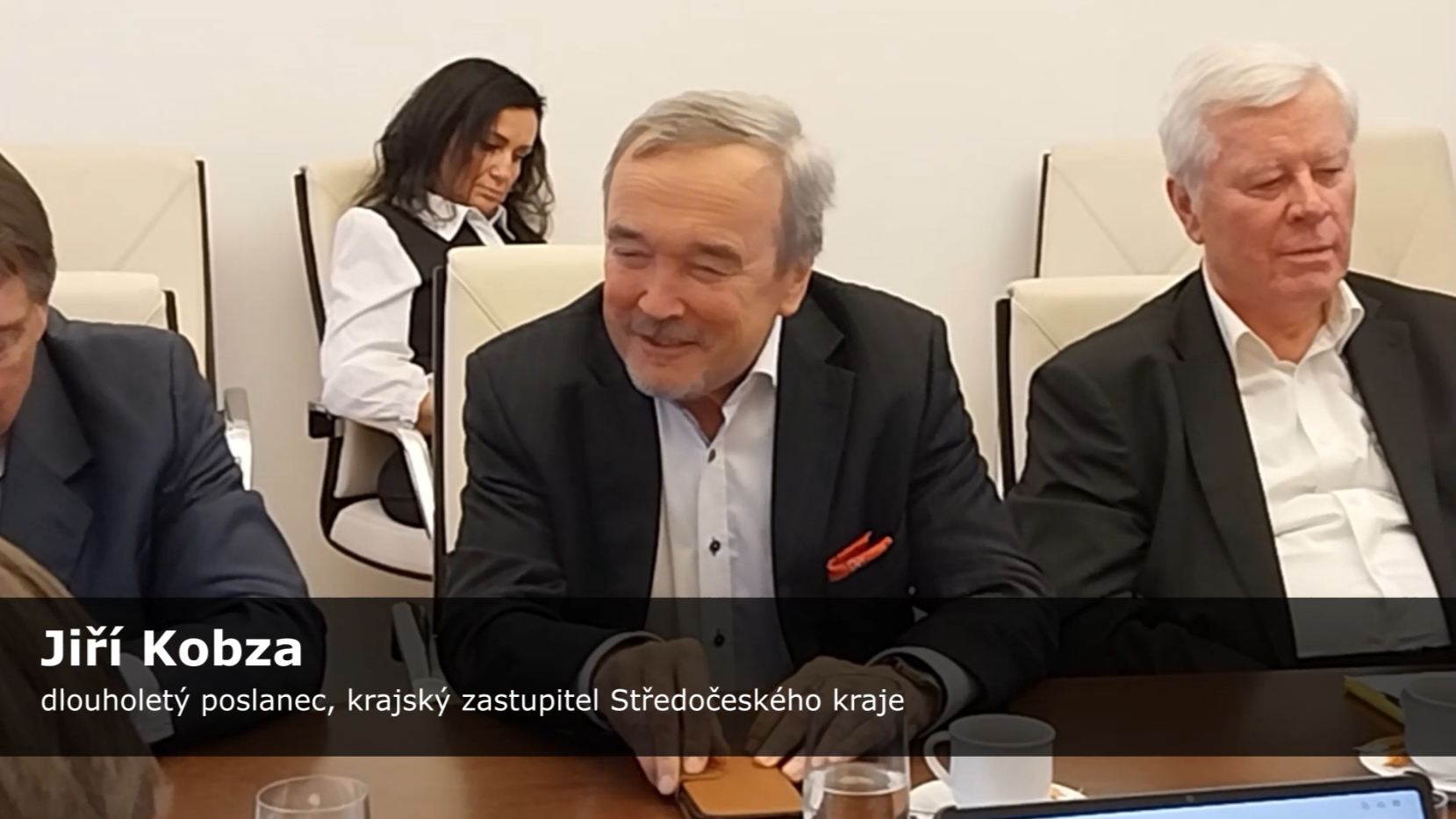
Long-serving member of parliament and Central Bohemian regional councillor Jiří Kobza stated that the Czech Republic should not, in his view, subordinate its relations with China to ideological disputes and should focus more on pragmatic and mutually beneficial cooperation.
In his address, he highlighted in particular the differences in the speed of approval processes, long-term planning and technological development between the two countries.
Kobza mentioned the experience of a Czech entrepreneur who, according to him, is moving part of his activities to China due to the high level of bureaucracy in the Czech Republic. While in China he reportedly obtained a permit to build a factory within eight months, in the Czech Republic similar processes can take up to ten years, according to Kobza.
He described this difference as an example of a contrasting approach to economic development.
Comparison to the reforms of Ota Šik
Kobza stated that he sees similarities between certain elements of the Chinese economic model and the reform ideas of Czechoslovak economist Ota Šik, which Šik championed during the Prague Spring in 1968.
He also criticised Czech politicians for a lack of long-term vision. According to him, they too often focus on the four-year electoral cycle and their own political survival rather than on the long-term development of the country.
He therefore considers it important to define Czech national interests more clearly and to restore mutually beneficial relations with China.
"We still have something to offer China"
Kobza emphasised that China's technological and social development can, in his view, represent a source of experience and inspiration for the Czech Republic.
"We still have something to offer China, and China has something to offer us," he said.
He rejected the idea that ideological barriers should limit cooperation between the two countries. He considers economic development, technological progress and creating conditions for future generations to be the decisive factors.
CMG