

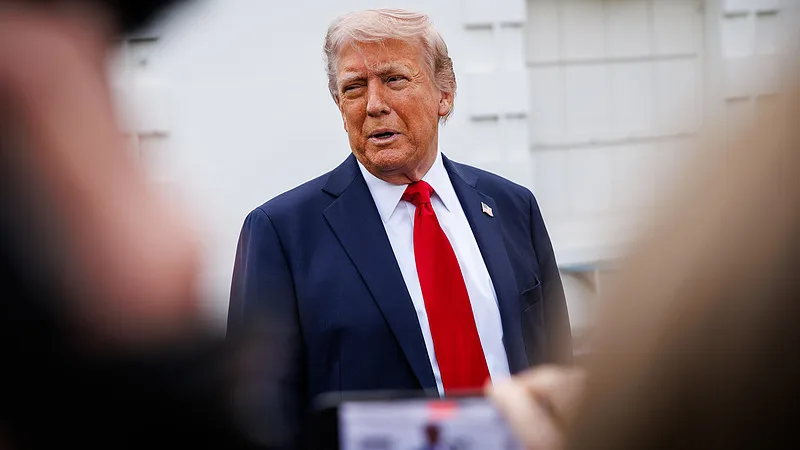
"Something will happen, but they are not ready yet. But something will happen. We'll get it done," US President Donald Trump said in an interview with CBS News, speaking about the possibility of direct talks between Russian President Vladimir Putin and Ukrainian President Volodymyr Zelensky. Trump also admitted that he considered the conflict in Ukraine to be "on the simpler side" than it turned out to be, describing his position as both realistic and optimistic.
Trump's remarks come at a time when diplomatic ambitions are mixed with continued military attacks and battlefield tensions. The White House administration confirms that the president has reiterated his commitment to pursuing peace and is planning further steps, including contacts with both sides. Negotiations to date have yielded limited progress and Washington is now stepping up diplomatic initiatives.
An analysis of Trump's statement shows a combination of confidence and caution: the words "we will get it done" act as a political reassurance of US engagement, while the repeated "not ready yet" suggests that the key actors - Moscow and Kiev - are still hesitating. Putin has indicated a willingness to negotiate in recent days, for example by repeatedly offering to bring Zelensky to Moscow, but the Ukrainian side has rejected these invitations without clear guarantees.
The reality on the battlefield makes diplomatic manoeuvres difficult: reports of Russian strikes and large-scale airstrikes on Ukrainian targets add urgency to the talks and remind why both sides are wary of any move towards a direct meeting. Trump said he was concerned about the ongoing violence but that he would press for a deal - through a combination of diplomatic channels, assurances and international pressure that he said could "trigger something."
The question is what will be the trigger. If Trump's promises turn into concrete steps, such as mediated negotiations with an international guarantee or pressure for concessions, this could fundamentally change the attitude of both sides. On the other hand, without solid results, there is a risk that any meeting could be seen as a political gesture without real impact. Other actors, such as China or the Central and Eastern European states, whose positions may influence the willingness of both Moscow and Kiev to risk dialogue, also play an important role.
Trump's optimism thus clashes with the harsh realities of war. His words "they are not ready yet" sound like a warning that the road to peace will be more difficult than he expected. Yet he delivers a clear message: The United States will continue its efforts to find a solution, and, according to the president, "something will happen." The coming weeks will tell how quickly and with what result.
CBS/gnews.cz - GH

 Czech
Czech  English
  Spanish
  French
  Italian
  Russian
  Chinese
  German