

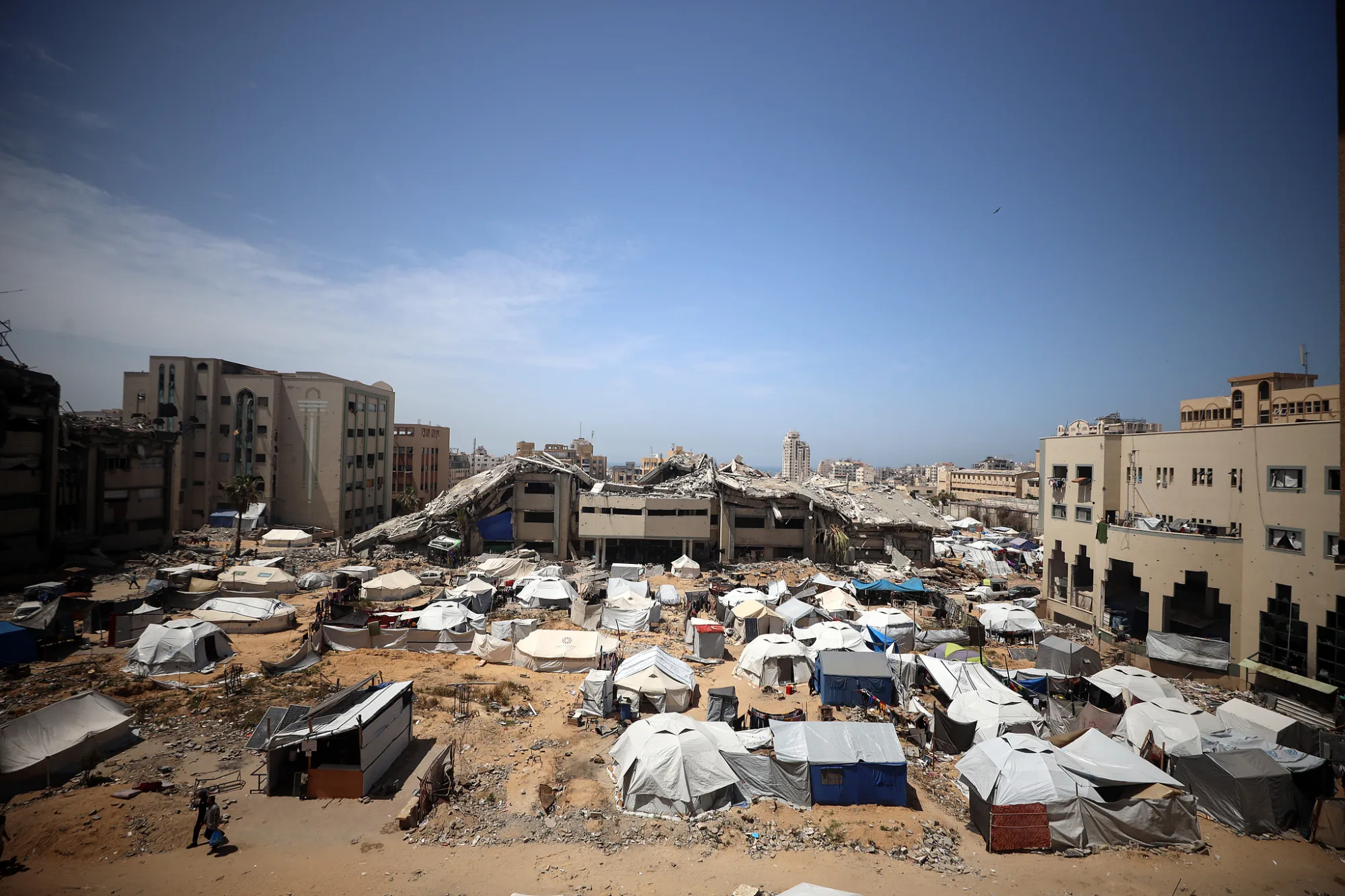
NEW YORK - Four days after heavy rains flooded large areas of the Gaza Strip, Palestinians are living in extremely critical conditions, UN aid workers said.
The UN Office for the Coordination of Humanitarian Affairs (OCHA) said the situation persists despite efforts by the United Nations and its partners to reach people in need following Friday's rains.
According to OCHA, the latest estimates show that more than 18 600 households were hit, while thousands of people lost their shelters or were displaced again.
„This number continues to grow as partners complete further assessments of the extent of storm damage,“ the authority said.
As winter approaches, OCHA partners focused on shelter are warning that the amount of material entering Gaza is insufficient to meet the huge needs of the people.
The office said that since September, when the delivery of shelter materials was reinstated after a six-month ban, the UN, its partners and member states have transported 60 000 tents, 346 000 sails and 309 000 pieces of bedding. Hundreds of thousands of people urgently need shelter, especially as winter approaches.
OCHA's nutrition partners have seen a gradual decline in the number of patients admitted for treatment of malnutrition over the past two months - last month approximately 9280 cases, compared to more than 11 740 in September. However, the numbers for October are still almost four times higher than in January.
OCHA partners leading water supply and sanitation projects reported that they had distributed in the last two days diapers, towels, canisters and other key items to provide sanitary needs 400 000 people.
„They warn, however, that the state of sanitation and hygiene in Gaza is deplorable, as there is no capacity for wastewater treatment in the Strip due to the widespread destruction of infrastructure after two years of war,“ OCHA said.
The authority further said that the Sheikh Radwan sewage lagoons in northern Jabalya are at risk of overflowing due to rains. Partners can currently only provide short-term solutions, such as discharging sewage into the sea.
„The dilapidated state of Gaza's sewage system poses risks to public health, including an increased risk of spreading bacterial infections through contact with contaminated waste or water,“ OCHA said.
The Authority continues to call for items that are now banned to be allowed into Gaza, including equipment to rebuild critical infrastructure.
OCHA also reiterates the need to allow NGOs to bring aid into Gaza and to open additional crossings and routes so that the UN and its partners can reach people in need more quickly and efficiently.
Xinhua/gnews.cz - GH

 Czech
Czech  English
  Spanish
  French
  Italian
  Russian
  Chinese
  German